

By Seedy Jobe
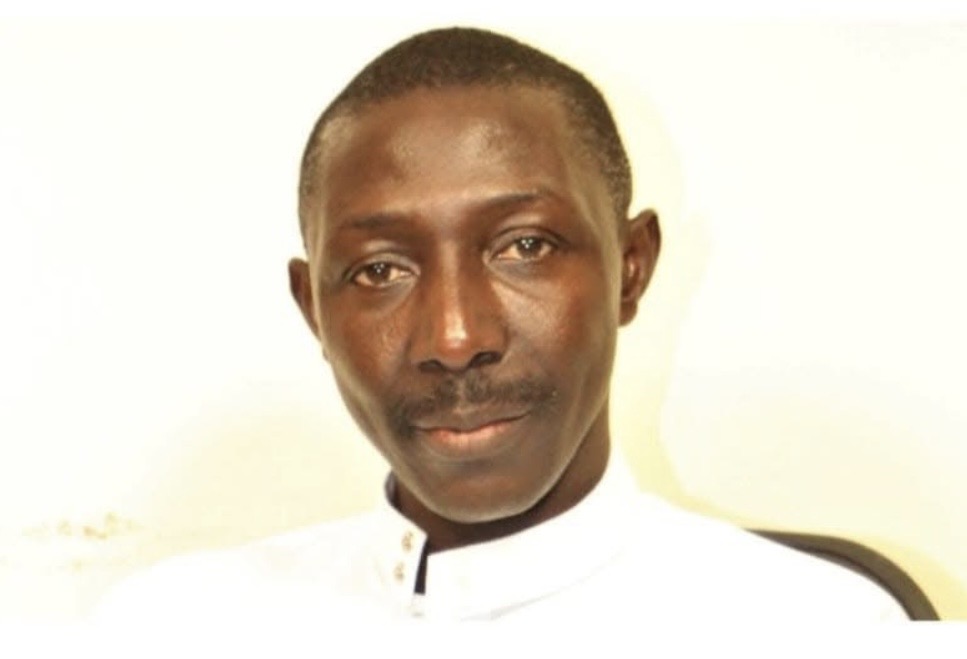
The leader of the People’s Alliance Party (PAP), Ebrima Tabora Manneh, has identified mistrust and leadership rivalries as the principal barriers hindering opposition coalition efforts ahead of the December 2026 presidential election.
In an interview with The Fatu Network on Thursday, Manneh confirmed that PAP is actively engaged in coalition discussions with multiple opposition parties. However, he cautioned that lingering tensions and unresolved issues stemming from the 2016 coalition continue to complicate current negotiations.
“We formed a political party and came up with ideas, and we spell those out clearly; we don’t hide them. What our agendas are, what our plans are, and what our stand is, we say it clearly to everyone,” Manneh said. “That is our position when it comes to these coalition talks.”
He emphasized that the party avoids personality-driven politics, focusing instead on governance and policy. “We don’t do personality politics. We don’t talk about any individual, whether within the government or among the opposition,” he said. “We have a problem with the government. The government is the one running the country. Our taxes are given to the government, and that’s what we want to change.”
According to Mr. Manneh, PAP’s criticism is directed at institutional performance rather than individuals. “We don’t single out President Barrow or any of his cabinet members or the people he has appointed. We don’t target individuals, but we speak against the departments or the way the government is running things, which we are not satisfied with.”
Mr. Manneh also revealed that PAP has participated in several rounds of coalition discussions beyond those currently in the public spotlight. He cited engagements with key opposition figures and parties, including the United Democratic Party (UDP), Mama Kandeh of the Gambia Democratic Congress (GDC), and representatives of other opposition movements.
“The coalition talks are ongoing, and we are also involved. In fact, maybe people only notice this one that we got involved in. But there are other coalition talks we have been involved in,” he said. “UDP engaged us. Mama Kandeh, we spoke with him several times. In fact, we spoke to Mama Kandeh more than to any other political party in this country. We have discussed it with the UMC people, I mean, all opposition parties, most of them.”
He identified two central issues dominating negotiations: trust and leadership. “We believe the issue is that political parties don’t trust each other. There is not much trust between most of them. And there is also fear,” Mr. Manneh observed.
He pointed to the aftermath of the 2016 Gambian presidential election as a cautionary example. While the coalition succeeded in removing former President Yahya Jammeh, it later fractured, leaving participating parties wary of repeating the experience.
“The 2016 coalition happened, and all of us have seen the outcome. The outcome was that after the coalition, the parties that joined parted ways,” Manneh said. “Our concern, many people’s concern, is that if we form a coalition, who are we going to choose to lead? Who will not betray us when he assumes power? That is, he will not betray the Gambians; that is the question.”
He acknowledged that leadership ambitions among opposition parties present a major challenge. “In the coalition, each says they will lead. I said I will lead. UDP’s candidate said outright that they will lead, they want their party to lead, so UDP will lead. Their candidate will be the presidential candidate for them, and that is not even open for discussion,” he said.
Referring to previous election results, Mr. Manneh said the UDP’s electoral strength gives it a strong claim to leadership but warned against a winner-takes-all approach. He argued that while larger parties may have numerical advantages, smaller parties are concerned about being marginalized after a coalition victory.
“Based on the last figures, UDP I think got 235,000 something votes. I think Mama Kandeh got 105,000 something, then i think PDOIS had 38,000 or 35,000, then Essa Faal, who ran as an independent, got about i think 18,000,” Manneh said. “So obviously, common sense, it’s only common sense.”
“So that’s why i said, if it’s about who got what, UDP got the most. I will tell people we would want to lead, it’s simple common sense,” he said. “But also, what UDP must not do is insist that they are the biggest party, ‘we have this and that, come and join us.’”
He emphasized that smaller parties fear being sidelined after contributing to a coalition victory.
“Anybody who forms a party obviously forms it on the basis of wanting to lead, to work on their plans and ideas to make sure they materialize,” Manneh said. “But the effort, energy, time, and resources if you tell them to put all that aside to come and join you, then tomorrow if you assume power and tell them they are small parties that don’t contribute anything, obviously they will have fear, Manneh explained.
Manneh concluded that resolving leadership disputes will depend on building confidence among stakeholders. “Build trust and remove that fear between us.”
Comments are closed.