


By Seedy Jobe
The Ministry of Lands, Regional Government, and Religious Affairs on Monday inaugurated two committees charged with advancing the implementation of The Gambia’s National Land Policy, a decade-long framework designed to overhaul land administration, strengthen tenure security, and address persistent disputes over land ownership.
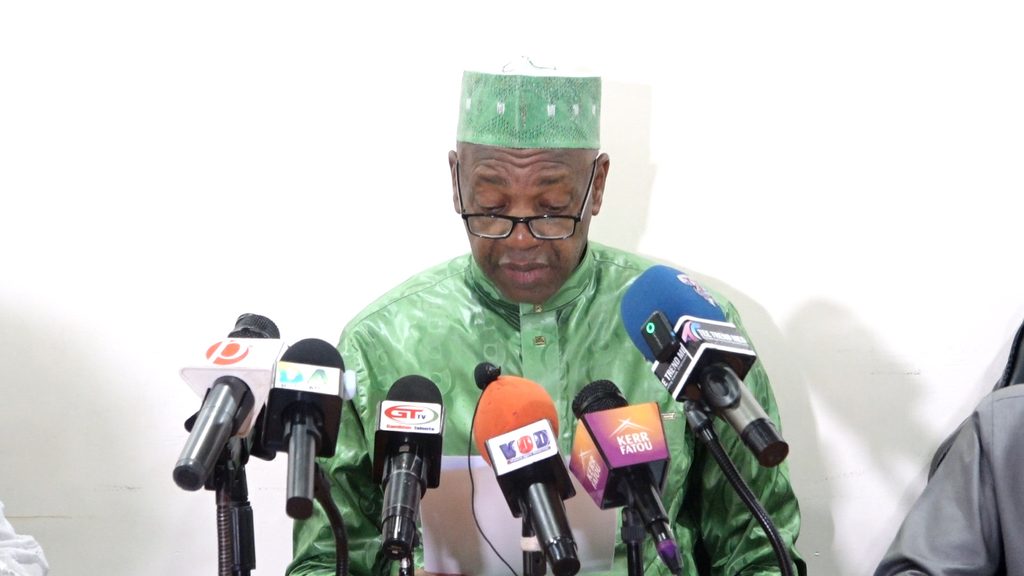
The National Land Policy Implementation Steering Committee and the Mansa Mbengo Committee were inaugurated at the ministry’s conference room in Banjul. The ceremony brought together Lands Minister Hamat N.K. Bah, the deputy governor of the West Coast Region, senior government officials, representatives of the real estate sector, and members of the media.
The ministry described the inauguration as an important step in efforts to improve land administration, strengthen the management of land resources, and promote sustainable development.
Speaking at the ceremony, Mr. Bah said land remained central to The Gambia’s development, underpinning agriculture, housing, infrastructure, investment, livelihoods, and environmental protection.
But he acknowledged that longstanding problems involving land governance, administration, access, planning, and management have continued to fuel disputes and hinder development.
Mr. Bah said those challenges prompted the government to develop the National Land Policy 2026-2035, a broad framework for reforming the country’s land sector. The policy, he said, emerged from extensive consultations and reflects the experiences and concerns of communities, institutions, and other stakeholders across the country.
The minister said implementing such an ambitious policy could not be the responsibility of the Lands Ministry alone and would require cooperation across government and society.
The steering committee brings together representatives of key government institutions, traditional authorities, the private sector, civil society, and other stakeholders. Mr. Bah said its composition reflects the far-reaching nature of land issues and their impact on nearly every sector of national life.
The committee will provide strategic direction, policy oversight, and high-level coordination throughout the implementation process. Its responsibilities include setting priorities, reviewing implementation plans and annual work programs, supporting resource mobilization, and helping resolve major institutional and cross-sectoral challenges.
Mr. Bah urged members to ensure that the National Land Policy does not remain merely a set of commitments on paper but produces measurable improvements for Gambians.
Among the policy’s long-term objectives are strengthening land administration and governance, modernizing land records and information systems, improving land-use planning, expanding access to land, strengthening tenure security and developing more effective mechanisms for resolving land disputes.
Salieu Taal, a private legal practitioner and member of the Gambia Bar Association who participated in developing the policy’s legal framework, described it as the first comprehensive national land policy in the country’s history.
Mr. Taal said the policy was developed through a broad, multi-stakeholder process intended to address some of the most persistent problems facing the country’s land sector.
He warned that unresolved land disputes could have consequences extending well beyond disagreements over individual properties, noting that research has identified land-related conflicts as a significant source of instability in parts of Africa.
As land becomes increasingly scarce, Mr. Taal said, its management must be approached judiciously and with the national interest at the forefront.
Ngillan Faye Frazer, general manager of Global Properties, said the policy offered an opportunity to address longstanding problems — including delays, disputes and fragmented administrative processes — that have discouraged investment in the land and property sector.
She welcomed the policy’s emphasis on digitization, institutional coordination, environmental protection and equitable access to land.
Mrs. Frazer said digitizing land records could reduce opportunities for corruption and help restore public confidence in land administration. She also said stronger protections for wetlands and forests would be important to preserving the country’s environment as development expands.
Samba Sow, head of the Department of Planning, said implementation of the policy began in January 2026, following its launch by President Adama Barrow in December. Several activities are already underway, he said, and a strategic implementation plan has been completed and is awaiting validation.
Mr. Sow said the Lands Ministry, working through the Ministry of Agriculture under the GIRAV project, had secured approximately $10 million to support major land reforms, including the development of a national land information system.
The proposed system would allow land records to be registered and managed digitally, helping authorities reduce competing claims over the same properties and improve the accuracy and reliability of ownership records.
Mr. Sow said the national land information system is expected to be completed before the end of 2027.
The inauguration of the two committees marks another stage in the government’s effort to translate the National Land Policy from a planning framework into institutional reforms aimed at modernizing land administration, reducing disputes and improving the management of one of the country’s most important resources.
Comments are closed.