


By Makutu Manneh
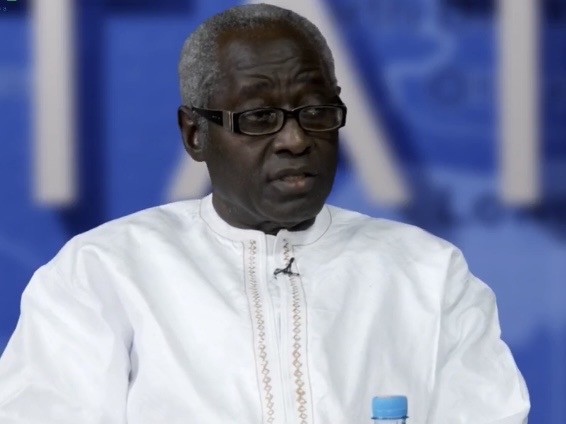
The veteran Gambian politician Halifa Sallah has criticized both the Gambian and Senegalese governments for failing to offer what he called a credible explanation for the demolition of a Gambian military perimeter fence in Foni Bullock by Senegalese soldiers on July 16.
Speaking on QTV, Mr. Sallah, a co-founder of the People’s Democratic Organisation for Independence and Socialism and a former member of the National Assembly, said neither government had responded in a way that suggested the matter was being taken seriously.
“There is no handling because nothing is being said that shows the two governments sat and are now discussing how to finalize the border issue,” Mr. Sallah said. “You just sent a junior minister to a president; what can a minister do with a president? What message are you transmitting to that president?”
He added that if the two countries were serious about resolving the dispute, they should either bring in a neutral mediator or, if relations were genuinely strong, issue an immediate joint apology and set a date to begin border discussions in earnest.
“If there is seriousness in the matter, you agree either you have an external person helping to negotiate if you cannot sit and discuss,” he said. “But if there is a good relationship, immediately you will apologize to the Senegalese and Gambian people that mistakes have been made, and we as governments have scheduled this day that we will start meeting to look at the border issue, and what happened in Bullock will not recur.”
Asked whether the Senegalese soldiers’ actions could be justified, given that the fence stood on land some consider to be in Senegal, Mr. Sallah said the sequence of events undermined any such justification, noting that the incident occurred shortly after a high-level meeting between Senegalese and Gambian officials at which both sides pledged to strengthen relations. He questioned why soldiers with no formal responsibility for border enforcement had been sent to carry out the demolition, arguing that doing so fell short of standards of good governance.
He said the involvement of soldiers signaled a level of confrontation that could not be justified under any circumstances, describing military deployment as inherently a step from aggression toward confrontation.
“So clearly that cannot be justified in any way,” he said.
Mr. Sallah also questioned who had authorized the Senegalese soldiers to act, warning that if they had done so without orders from above, the implications would be serious.
He characterized the episode as a wake-up call on the question of Gambia’s territorial integrity, noting that people do not merely identify as Gambian but lay claim to a homeland, and that no people can exist without territory.
He traced the underlying problem to a longstanding failure to formally demarcate the border between Gambia and Senegal since independence, saying no Gambian government since then had seriously pursued the task, leaving what he described as a vacuum over questions of ownership.
Mr. Sallah urged both governments to resolve the matter using existing colonial-era agreements, including the 1889 Anglo-French convention, along with principles upheld by the Organisation of African Unity, the African Union, ECOWAS and the United Nations, which hold that the borders inherited at independence should remain intact. He called on both countries to accelerate formal demarcation rather than trade blame, and said any disputes that arise should be resolved through dialogue.
Comments are closed.