

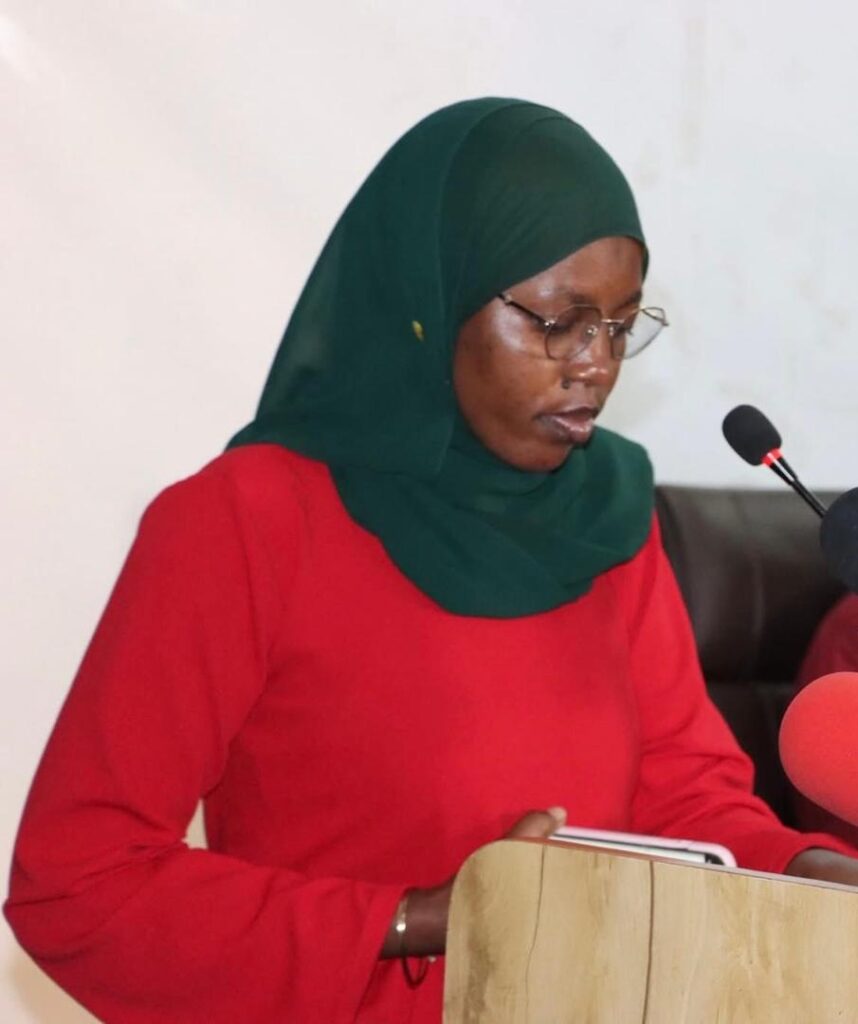
Isatou Keita, President of the Gambia Press Union
By Seedy Jobe
The Gambia Press Union (GPU) and the Media Academy for Journalism and Communication (MAJaC) have called on the government to address attacks on journalists, repeal restrictive media laws, and invest in professional training, warning that recent gains in press freedom remain fragile.
The call was made on Sunday, May 3, 2026, during World Press Freedom Day commemorations held at Bakadaji Hotel. The event, organized by the GPU in collaboration with MAJaC, brought together journalists, media practitioners, and civil society actors to reflect on the sacrifices of veteran journalists and renew demands for stronger protections.
Delivering remarks at the gathering, GPU President Isatou Keita acknowledged improvements in The Gambia’s global press freedom standing but cautioned that progress is being undermined by emerging challenges.
“This year, World Press Freedom Day is being held under the global theme ‘Shaping a Future of Peace: Promoting Press Freedom for Human Rights, Development, and Security,’” she said, noting the critical role of independent journalism and freedom of expression in fostering peaceful societies amid rising global tensions, digital threats, and disinformation.
Keita highlighted that The Gambia is currently ranked 46th out of 180 countries in the Reporters Without Borders (RSF) World Press Freedom Index and 8th in Africa—matching its global ranking in 2023 but still below its best continental position of 5th.
“The Gambia could do better if we are able to overcome the current press freedom challenges that are affecting our performance among our peers,” she said.
She identified key concerns, including the lack of political will to enact protective laws, stalled media law reforms, and the introduction of new legislation that could encourage self-censorship. Other issues raised included selective allocation of government advertising, lack of financial support for private media, harassment and arrests of journalists, threats of legal action, and poor implementation of the Access to Information Act, 2021.
Keita cited several incidents involving journalists, including the arrest of Sheriff Conteh of In-depth Media and Alieu Ceesay of The Alkamba Times during protests in Banjul in May 2025, and the alleged assault of photojournalist Matarr Jassey of The Fatu Network at the same event. She also referenced an ongoing defamation case involving journalist Kebba Ansu Manneh.
She further highlighted the March 11, 2026, incident in which Jollof News editor Momodou Justice Darboe was assaulted and detained by police at the Banjul Magistrates’ Court, as well as a February 2026 case in which journalist Yusef Taylor was reportedly prevented from covering a Central Bank Monetary Policy Committee meeting.
Keita warned that proposed legislation, including the Cybercrime Bill, 2023, and the Communication Bill 2025, contains provisions that could restrict press freedom and online expression, including measures to regulate journalists and social media users.
“These measures contradict international standards on freedom of expression and would severely undermine press freedom,” she said.
She urged the government to abandon plans for state-controlled registration and licensing of journalists, instead supporting media self-regulation through the Media Council of The Gambia. She also called for the implementation of outstanding media reforms and adherence to the UN Plan of Action on the Safety of Journalists and the Issue of Impunity, in line with recommendations accepted from the Truth Commission.
Keita noted that World Press Freedom Day serves as a reminder of governments’ obligations to uphold freedom of expression as enshrined in Article 19 of the Universal Declaration of Human Rights, while also honoring the courage and resilience of journalists.
Speaking on behalf of MAJaC Managing Director Sang Mendy, Director of Training James Badjie underscored the importance of sustained investment in journalism training as the country’s media sector expands.
“Today, we gather not only to commemorate World Press Freedom Day, but also to reflect on the journey of journalism in The Gambia and renew our collective commitment to defending press freedom and responsible journalism,” he said.
Badjie paid tribute to slain journalist Deyda Hydara, describing him as one of the country’s most enduring symbols of press freedom. He said the commemoration also honored other journalists who lost their lives in the line of duty.
He noted that while The Gambia’s media environment has significantly improved from a past marked by censorship and intimidation, the rapid growth of media outlets—including radio, television, online platforms, and digital content creators—requires a corresponding emphasis on professionalism and ethics.
“Young Gambians are increasingly using media platforms to inform, educate, and empower communities,” he said, adding that a vibrant media sector enhances transparency, accountability, and public participation.
Badjie stressed that MAJaC has evolved into a key institution for promoting quality journalism and observed that ethical journalism is not in crisis in The Gambia, with practitioners demonstrating growing professionalism and commitment to public interest reporting.
He urged authorities to consolidate, rather than restrict, press freedom gains, emphasizing that a free press should be seen as a partner in national development rather than an adversary.
“Strong journalism exposes corruption, promotes transparency, and strengthens democracy,” he said, warning that restrictions or an atmosphere of fear could undermine democratic progress.
MAJaC further described investment in journalism training as an investment in democracy, employment, and national development, calling for continued support for media literacy, digital journalism, safety training, and institutional capacity building.
“World Press Freedom Day is not simply a celebration; it is a reminder of responsibility,” the statement concluded. “It reminds us that journalism matters, that truth matters, and that future generations deserve a media landscape that is stronger, freer, more ethical, and more inclusive.”
Comments are closed.