


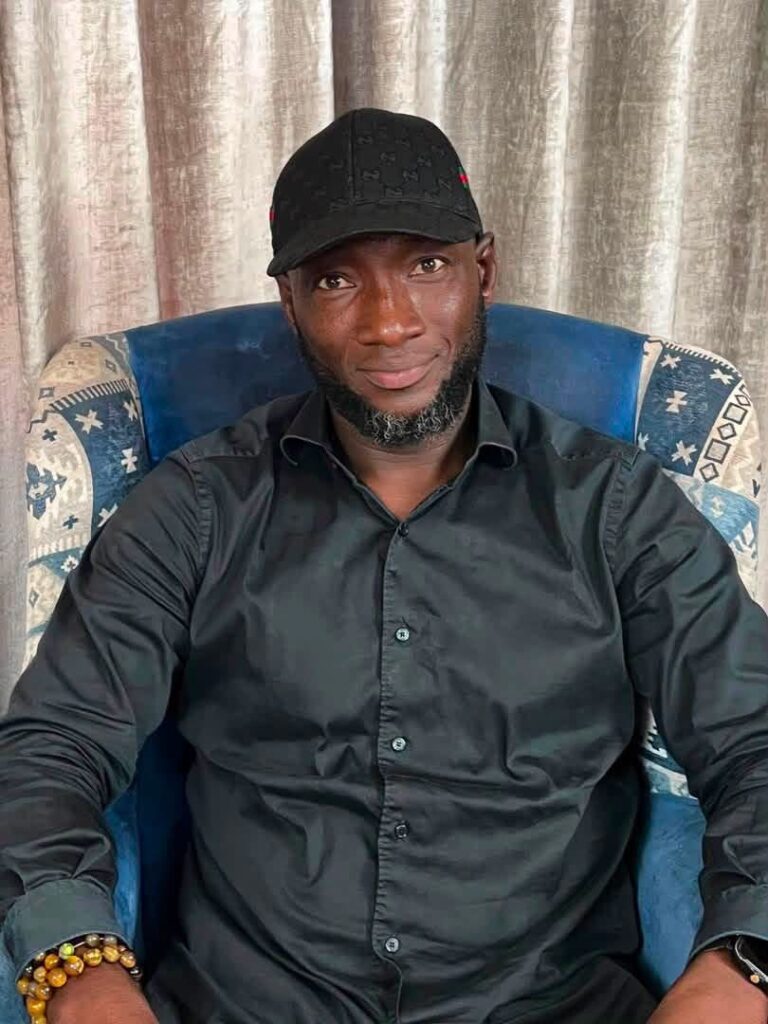
By Seedy Jobe
A former executive member of the ruling National People’s Party in the West Coast Region said he sees little evidence that the party is positioned to win the December 2026 presidential election, pointing to weak engagement with young voters and what he described as a failure to cultivate new leadership within its ranks.
Fanding Baldeh, who recently resigned from the party, laid out his concerns in an interview broadcast Sunday on Kerr Fatou. He said he remains in close contact with voters and youth organizers and senses a rising political awareness among young Gambians that the party has not managed to capture.
“The NPP is making followers, not leaders,” Mr. Baldeh said, arguing that the party has failed to create programs substantial enough to win the loyalty of young people.
As an example, he cited football tournaments the party has sponsored in past years, which he said drew limited public interest. This year’s tournament was an exception, he said, attracting larger crowds because of broader participation.
Mr. Baldeh was also critical of the party’s leadership structure, saying that a party seeking to inspire young people needs to promote figures who give them hope rather than officials whose past public statements have become political liabilities. He pointed to several party figures who once criticized President Adama Barrow but have since become some of his most vocal defenders, calling the reversals emblematic of a deeper problem.
He questioned how a party that has governed for a decade could still lack a clear bench of successors. “When President Barrow says if he leaves now, the party will fail, that shows the party itself is a failure,” he said.
As further evidence of what he called a leadership vacuum, Mr. Baldeh pointed to a previous mayoral race in the Kanifing Municipal Council, in which a sitting government minister ran for the seat, lost, and then returned to a cabinet position.
“After ten years in power, you cannot say you have not built any leadership or produced people to take up leadership positions,” he said.
Mr. Baldeh also criticized the party’s pattern of appointments, saying it has brought back former officials whose prior conduct, in his view, should have disqualified them from returning to government—a practice he said has alienated many young supporters.
He said his break with the party came after a recent NPP gathering in Brikama, where he said his opposition to a third term for President Barrow put him at odds with the direction the party was taking. After listening to several speakers at the meeting, he said he concluded it was time to leave.
“When your principles clash with those of a society, organization, or group you belong to, stepping away is the better option, particularly if your views do not reflect the majority,” he said.
Mr. Baldeh said he had raised his objections internally without success before deciding to resign, adding that he preferred to chart his own path rather than remain with a party moving in a direction he could not support.
Comments are closed.