

Essa Bokarr Sey Says Security Sector Reform Falls Short, Calls NAWEC a National Security Threat

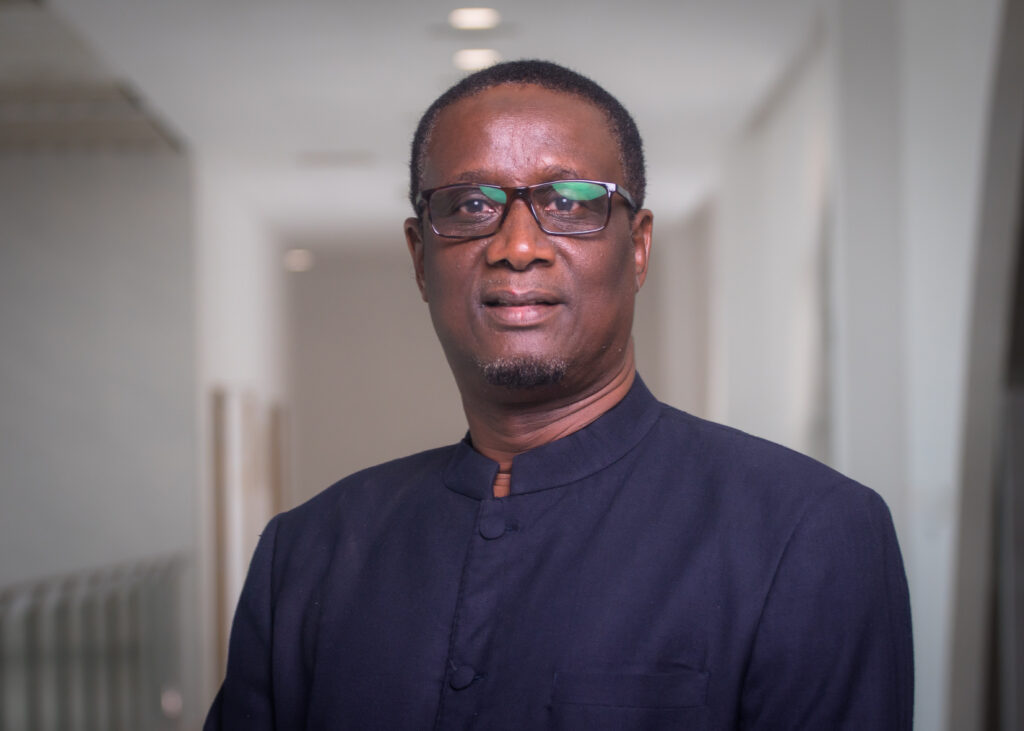
By Seedy Jobe
Former Gambian diplomat Essa Bokarr Sey has criticized the government’s security sector reform efforts, saying the process has largely remained on paper and has failed to produce meaningful changes that ordinary Gambians can see or feel.
“Security sector reform is not being done in practice,” Mr. Sey said during an interview with Mengbe Kering TV, where he discussed the state of national security ahead of the elections.
Mr. Sey argued that the success of security reforms should ultimately be measured by the experiences of ordinary citizens rather than government statements, policy documents, or political speeches. If a market vendor were asked whether the country felt more secure, he said, the answer would likely reveal a gap between official claims and conditions on the ground.
But Mr. Sey’s definition of national security extended well beyond the police, military, and other traditional security institutions.
He identified the National Water and Electricity Company, or NAWEC, as what he described as the country’s “number one security threat,” arguing that The Gambia’s dependence on outside sources for electricity leaves the country vulnerable.
Mr. Sey claimed that about $444 million was invested in the electricity sector between 2019 and 2024 with support from international partners, including the World Bank, the European Union, and others. He challenged government officials who disputed the figure, saying he was prepared to provide documentation supporting his assertion.
He also criticized President Adama Barrow for taking political credit for improvements in electricity supply, arguing that much of the investment had been financed with substantial support from development partners.
Mr. Sey expressed particular concern about The Gambia’s reliance on Senegal’s electricity company, SENELEC, for part of its power supply. He argued that dependence on another country for critical infrastructure could become a national security vulnerability during a diplomatic or regional crisis.
As an example, he pointed to Nigeria’s decision to cut electricity supplies to neighboring Niger following the 2023 military coup, when regional governments imposed sanctions in an effort to pressure Niger’s military authorities.
Mr. Sey said a serious approach to security sector reform must also address the everyday welfare of police officers, soldiers, and their families.
He questioned whether reforms had done enough to address alleged extortion at checkpoints or improve the economic and social conditions of security personnel. He said authorities should be considering affordable housing programs, transportation for the children of officers, medical and insurance support for their families, better equipment, and proper professional orientation.
“Security sector reform is done, but you are not feeding the invisible structure,” Mr. Sey said, arguing that reform cannot succeed by concentrating on institutions while neglecting the people who serve in them.
For Mr. Sey, improving the welfare of security personnel is not separate from national security. Officers struggling with housing, transportation, health care or basic family needs, he argued, are working within institutions whose weaknesses cannot be addressed simply through new policies, training programs or organizational changes.
He also criticized what he described as “TV experts” who regularly comment on security matters without sufficient professional experience, and warned against allowing security policy to become entangled in partisan politics.
Instead, Mr. Sey called for a national forum bringing together people with experience and expertise in the security sector to assess the country’s challenges and develop a more comprehensive approach to reform.
Such a process, he argued, should move the debate beyond government pronouncements and political disagreements and toward reforms that can be measured by how effectively institutions function, and by whether Gambians themselves feel more secure.
Comments are closed.