

Barrow Says He Commands Greater Security Powers Than Jammeh but Won’t Abuse Them

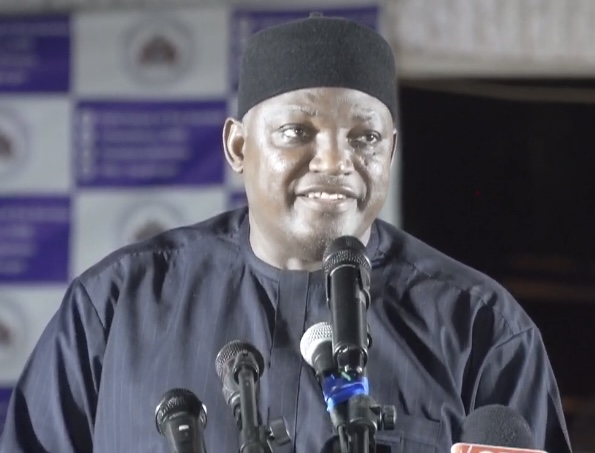
By Makutu Manneh
President Adama Barrow has said he commands greater security powers than his predecessor, Yahya Jammeh, but has deliberately chosen restraint over repression, insisting that political authority should be exercised in the interest of peace and national stability.
Drawing a comparison between his administration and Jammeh’s 22-year rule, Mr. Barrow argued that although the country’s leadership has changed, the constitutional powers of the presidency remain largely the same.
He said he commands the same national security institutions that served under the former president, with the additional presence of troops from the ECOWAS Mission in The Gambia (ECOMIG), giving him what he described as greater security capabilities than his predecessor.
“For the past 20 years we had a president, and we all know him. The things we are doing today, no one would have dared to do that during his era. This is because the leadership is different, but the powers are the same,” Mr. Barrow said.
The president suggested that Gambians now enjoy freedoms that would have been difficult to exercise under the previous administration, attributing the difference not to diminished presidential authority but to his approach to governance.
Reflecting on his nearly a decade in office, Mr. Barrow said Gambians have had ample opportunity to judge his character and leadership style. He maintained that he has consistently rejected confrontation and disorder, arguing that political power does not fundamentally change a person’s character but instead exposes it.
He urged Gambians to safeguard the country’s peace and stability, warning against the temptation to use political authority as a means of intimidation or coercion.
According to the president, demonstrating the full extent of one’s power serves little purpose if it undermines the well-being of the people.
He maintained that abusing presidential authority would benefit neither him nor the Gambian public, stressing that the responsible exercise of power, rather than its aggressive display, remains essential to national progress.
Comments are closed.