

‘Our Democracy Is Under Siege,’ Jobarteh Warns Journalists Ahead of Crucial Elections
By Seedy Jobe
Human rights activist Madi Jobarteh has warned that The Gambia’s democracy remains under threat, urging journalists to confront corruption, abuse of power, and institutional failures through rigorous investigative reporting as the country approaches its 2026–2027 electoral cycle.
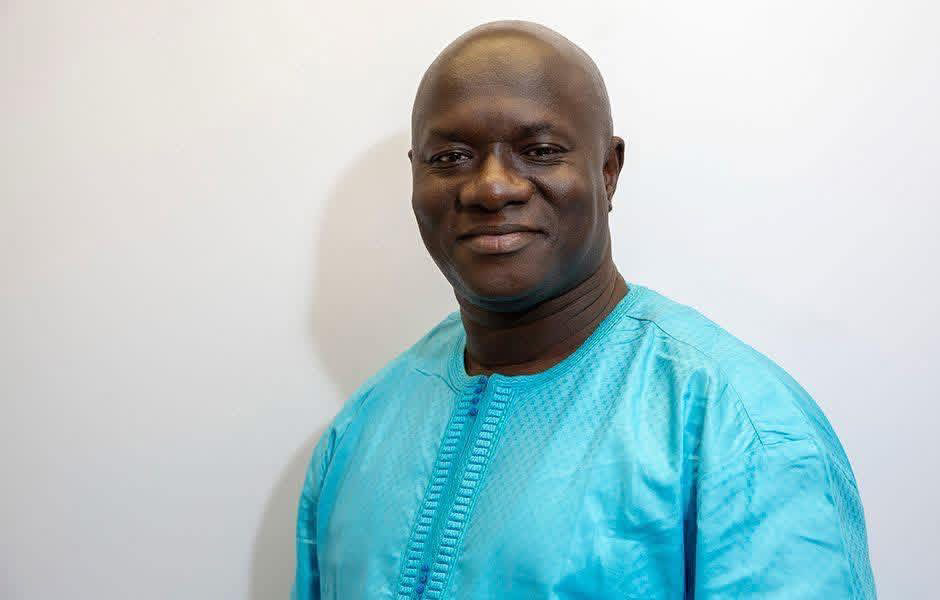
Mr. Jobarteh, executive director of the Edward Francis Small Centre for Rights and Justice (EFSCRJ), delivered the warning on Monday, October 19, 2026, at the opening of a six-day training program on investigative journalism, election reporting and fact-checking.
The training, held at the National Nutrition Agency (NaNA), was organized by the Gambia Press Union (GPU) and The Republic, with support from the National Endowment for Democracy (NED).
The initiative forms part of a newly approved project, Strengthening Electoral Integrity and Accountability, designed to equip journalists with the skills needed to improve public access to credible information and strengthen scrutiny of democratic institutions.
Addressing 25 participating journalists, Mr. Jobarteh acknowledged the legislative reforms and expansion of civic space that followed The Gambia’s democratic transition in 2017. He cautioned, however, that the country’s democratic institutions remained fragile, weighed down by the legacy of 22 years of authoritarian rule.
He identified misinformation, weak institutional transparency, corruption, and a persistent culture of impunity as major threats to democratic consolidation.
Mr. Jobarteh argued that the strength of a democracy depends largely on the quality of information available to its citizens, emphasizing that electoral accountability must extend beyond polling day to encompass the entire political and governance cycle.
He pointed to findings by the National Audit Office, which has repeatedly identified weaknesses in public financial management and instances of unaccounted-for funds, as examples of issues requiring greater journalistic scrutiny.
Despite the significance of such findings, he said, many journalists lack the specialized skills needed to interpret complex audit reports and translate their findings into compelling public-interest investigations.
He urged media professionals to move beyond routine and reactive reporting by examining public expenditure, tracing financial transactions, scrutinizing procurement records, and investigating the asset declarations and backgrounds of individuals seeking public office.
According to Mr. Jobarteh, investigative journalism must serve as a sustained mechanism for holding public officials accountable, rather than merely responding to scandals after they emerge.
He also reminded journalists of their constitutional responsibility, citing Section 207(3) of The Gambia’s Constitution, which establishes the media’s role in holding the government accountable to the people.
Mr. Jobarteh warned that the political transition of 2017 had not eliminated the practices associated with the previous authoritarian era.
Instead, he argued, corruption, abuse of power and disregard for the rule of law had persisted in different forms, requiring journalists to remain vigilant and independent.
He called on the participants to regard themselves as defenders of public accountability, stressing that their effectiveness would depend on professional competence, ethical standards and the courage to challenge powerful interests.
Describing professionalism as their shield and integrity as their sword, Mr. Jobarteh urged journalists to recognize that press freedom must be continuously asserted, defended and expanded.
He concluded with a warning attributed to the American broadcast journalist Edward R. Murrow: “A nation of sheep begets a government of wolves.”
Invoking the quotation, Mr. Jobarteh cautioned that those who abuse power depend on public silence and a weakened press to escape scrutiny.
His remarks underscored the importance of independent journalism as The Gambia prepares for another electoral cycle, with the training intended to strengthen journalists’ ability to investigate public institutions, verify political claims and provide citizens with reliable information.
Comments are closed.