

Gambia Records Employment Gains, but Informal Work Still Dominates, Survey Finds

By Seedy Jobe
The Gambia recorded gains in labor-force participation and employment during the first quarter of 2026, but most workers remained in informal jobs marked by low earnings and limited social protection, according to new government data released on Friday.
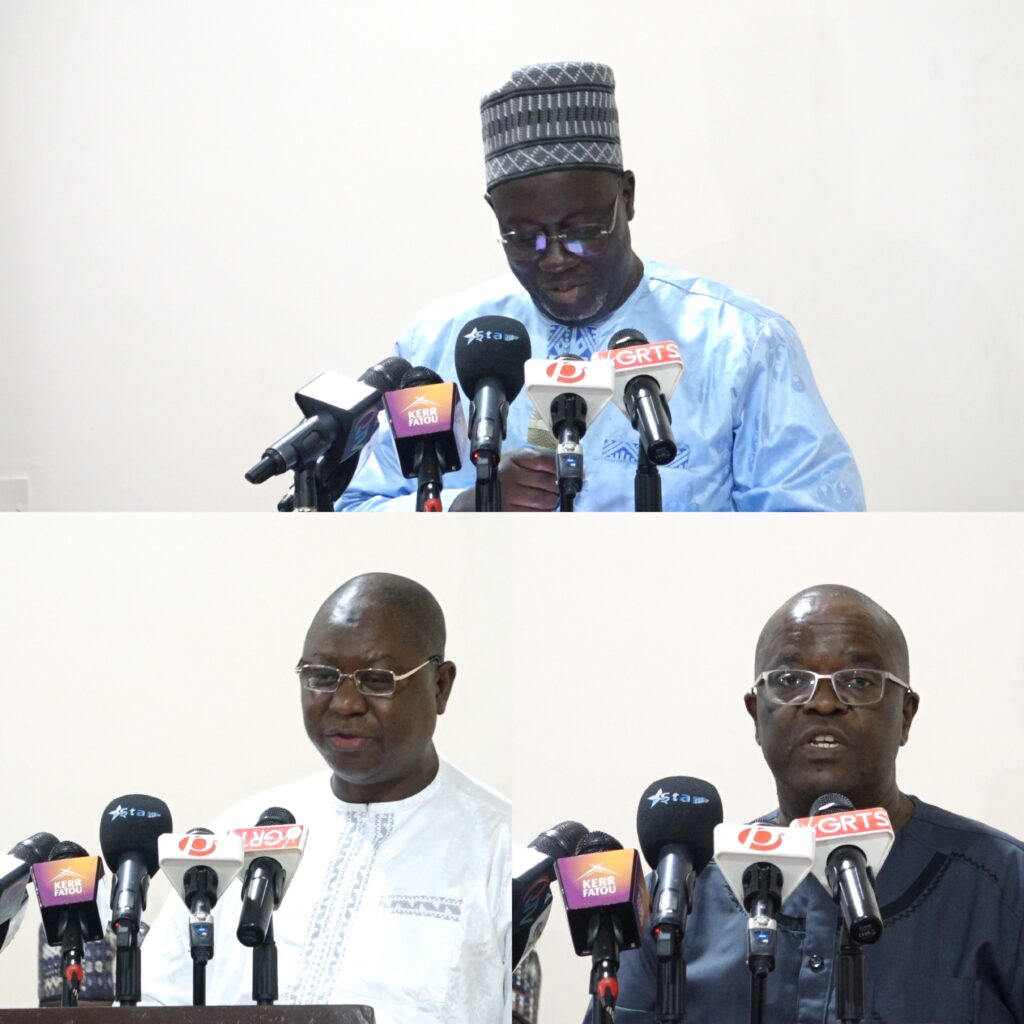
The findings from the first round of the 2026 Gambia Labour Force Survey were presented at a national dissemination workshop in Bakau. The Gambia Bureau of Statistics organized the event with the Ministry of Trade, Industry, Regional Integration, and Employment and support from the World Bank.
Policymakers, development partners, academics, private-sector representatives, and civil society groups attended the workshop to assess the findings and their implications for employment policy and national development.
According to GBoS, The Gambia has an estimated working-age population of 1,434,115 people, defined as those aged 15 and older. Of that population, 781,868 are in the labor force, including 733,364 employed people and 48,504 who are unemployed.
Nyakassi M.B. Sanyang, the Statistician General, said the labor-force participation rate rose to 54.3 percent in the first quarter of 2026, from 43.6 percent during the same period in 2023.
The employment-to-population ratio also increased, reaching 51.1 percent from 40.3 percent, while the unemployment rate declined to 6.2 percent from 7.6 percent.
But the survey underscored the continued dominance of informal work in the Gambian economy. About 85.8 percent of employed people work in the informal economy, where wages tend to be lower, and workers often lack legal and social protections.
Informality was highest in construction, at 98.1 percent, followed by agriculture at 97.7 percent and wholesale and retail trade at 91.5 percent. Women and rural workers faced particularly high rates of informal employment, at 88.7 percent and 91.2 percent, respectively.
The services sector accounted for 57.9 percent of total employment, followed by industry at 24.3 percent and agriculture at 17.8 percent.
The survey also produced what officials described as The Gambia’s first comprehensive national estimates of employment-related income. The average monthly income was D6,238, while the median—the midpoint at which half of workers earned more and half earned less—was D3,000.
Public-sector employees earned an average of D15,095 a month, compared with D7,942 for private-sector workers. Formal workers earned an average of D12,753, more than twice the D5,262 earned by those in informal employment.
The survey covered 260 enumeration areas and used computer-assisted personal interviews. It recorded a household response rate of 97.6 percent.
Mr. Sanyang said the survey used the 2024 Population and Housing Census as its sampling frame. The results were weighted to ensure that they were representative at the national, urban, rural and local government area levels.
He said it was also the first Gambian labour survey to fully apply standards adopted by the 21st International Conference of Labour Statisticians, establishing a new baseline for measuring employment and informality.
Mod K. Ceesay, the minister of trade, industry, regional integration and employment, said the report had arrived at a critical moment as the National Employment Policy for 2022-2026 neared its conclusion.
He described the survey as an important tool for shaping policies on education, skills development, enterprise growth and social protection.
Although he welcomed the reported improvements, Mr. Ceesay warned that the prevalence of informal employment continued to limit productivity, restrict business growth, reduce government revenue and leave workers without adequate protection.
“Formalisation is not merely an administrative process,” he said. “It is a pathway toward higher productivity, improved income, stronger businesses and more resilient economic growth.”
Mr. Ceesay said the gains reflected government economic recovery programmes, investments in productive sectors and policies intended to stimulate private-sector growth. But he cautioned that the improvements should not lead to complacency.
“They instead provide renewed confidence that we are moving in the right direction, while reminding us that considerable work still lies ahead,” he said.
The minister also reaffirmed the government’s commitment to combating child labour through enforcement of the Children’s Act and the Labour Act, as well as measures addressing poverty and limited access to education.
Franklin Mutahakana, the World Bank’s resident representative, described labour-market statistics as a strategic public resource that could help policymakers identify economic opportunities and persistent constraints.
He said the World Bank’s support was intended to strengthen The Gambia’s statistical system and improve the timely and sustainable production of reliable data.
“These investments are critical because strong statistical systems help governments make informed choices, allocate resources more effectively and track progress toward national and regional development priorities,” Mr. Mutahakana said.
He described the reports as both a product of technical collaboration and a demonstration of The Gambia’s commitment to evidence-based policymaking and public accountability.
Mr. Mutahakana said the report’s significance would ultimately depend on how its findings were used. He called on policymakers to apply the data in designing policies, implementing programmes, engaging the private sector and encouraging public discussion about the future of work.
Officials said the second round of the 2026 Labour Force Survey, expected later this year, would provide further data to track changes in the country’s labour market.
Comments are closed.