


By Seedy Jobe
The Gambia Revenue Authority, in partnership with the African Tax Administration Forum, convened tax officials from across Africa on Wednesday for a high-level forum focused on strengthening domestic revenue collection and modernizing the continent’s tax institutions.
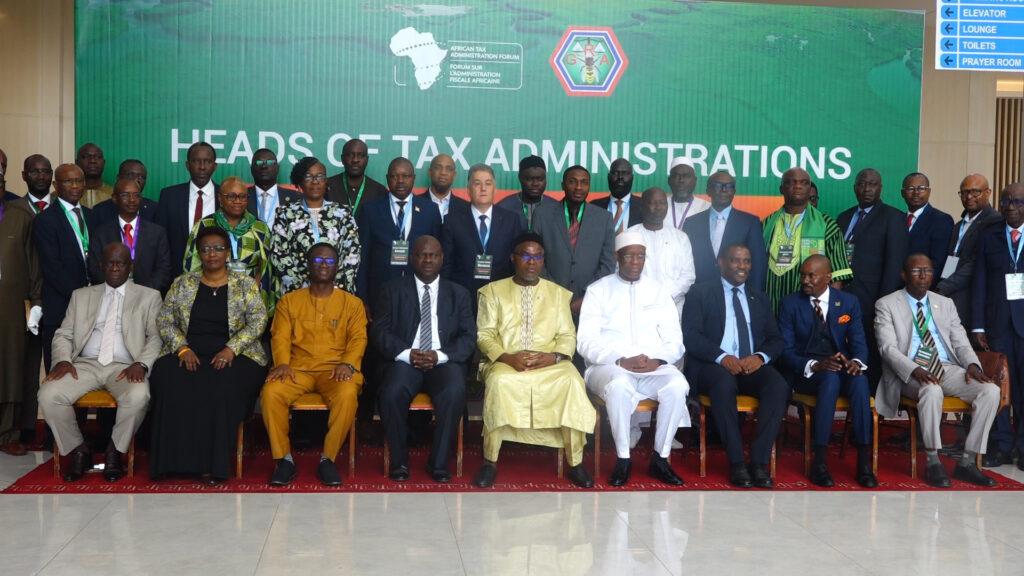
The seventh Heads of Tax Administration Master Class, held at the Sir Dawda Kairaba Jawara International Conference Centre, brought together leaders of national tax agencies to discuss digital transformation, regional cooperation, and the role of institutional leadership in sustaining reform.
Opening the forum, Yankuba Darboe, the GRA commissioner general, said the gathering had become an important platform for cooperation and peer learning among African tax authorities. Several of the GRA’s reforms, including its digital services and compliance strategies, were influenced by discussions at previous editions of the forum, he said.
Mr. Darboe cautioned, however, that technology alone could not guarantee successful reform. Taxation is inherently sensitive, he said, and efforts to change taxpayer behavior or close revenue loopholes often encounter resistance.
“One of my personal rules before embarking on any major reforms or digital transformation initiatives is to first secure political support,” he said.
This year’s theme, “Leading for Greatness: Shaping High-Performance Tax Administration,” reflects the importance of effective leadership in building modern and resilient tax institutions, Mr. Darboe said.
He cited Africa’s tax-to-gross domestic product ratio of about 16.1 percent, compared with nearly 34 percent among countries belonging to the Organization for Economic Cooperation and Development, as evidence of the continent’s untapped revenue potential.
Closing that gap, he said, would require simpler tax systems, wider use of digital tools, broader tax bases and stronger measures against illicit financial flows.
Johnstone Makhubu, the chairman of ATAF, said the responsibilities of tax administrators extended beyond collecting revenue because their performance directly affected governments’ ability to finance schools, hospitals, roads and employment programs.
Sound tax policy must also be supported by effective administration, he said, warning that policies citizens do not understand or that authorities cannot enforce are unlikely to achieve their intended results.
“We can collect revenue or we can help build nations,” Mr. Makhubu said. “We can manage institutions or we can decide to leave a legacy.”
Vice President Muhammed B.S. Jallow, speaking on behalf of President Adama Barrow, said domestic resource mobilization had been central to The Gambia’s development agenda since 2017.
African governments, he said, could no longer depend indefinitely on loans and foreign assistance, particularly as global economic disruptions place greater pressure on public finances and donor support declines.
“The challenges before us are thus bafflingly immense,” Mr. Jallow said, pointing to Africa’s rapidly growing population and rising demand for roads, schools, health facilities, water, sanitation and employment.
Broadening tax bases, reducing revenue leakages and improving compliance offer the most sustainable means of financing those needs, he said. He praised the GRA’s investment in digital systems but added that technology must be supported by strong institutional leadership.
Mr. Jallow also noted that African economies remained vulnerable to global supply-chain disruptions, conflicts and protectionist trade policies. Because revenue from international trade can fluctuate with such shocks, he said, stronger domestic tax systems are essential to financing long-term development.
Seedy Keita, the minister of finance and economic affairs, said The Gambia’s tax-to-G.D.P. ratio had increased from 9 percent in 2022 to 13 percent, an improvement he attributed to digitalization, stronger compliance and political commitment rather than higher tax rates.
The additional revenue, he said, helped finance a 60 percent increase in civil-service salaries over three years, the construction of the Hakalang and Kiang West roads and an expansion of electricity access to more than 90 percent of the population.
“Behind every number, the lives and livelihoods of Gambians are being positively impacted,” Mr. Keita said.
He warned that Africa loses more money through illicit financial flows each year than it receives in official development assistance. Addressing those losses, he said, would require greater cooperation among African countries, improved data sharing and stronger public institutions.
Mr. Keita described tax officials as more than revenue collectors, calling them guardians of national capacity and architects of economic sovereignty. A country’s development plans, he added, are only as credible as its ability to finance them efficiently, fairly and transparently.
Organizers said the master class would allow African tax leaders to exchange expertise, confront emerging challenges and identify practices that could strengthen domestic revenue systems across the continent.
Comments are closed.