


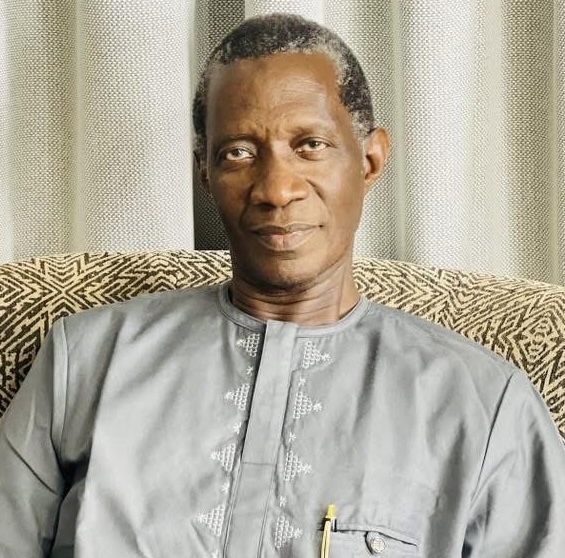
By Fatou Sillah
A senior official of the United Democratic Party said this week that the opposition party now commands a larger political base than the ruling National People’s Party, asserting that the UDP is capable of defeating President Adama Barrow in next year’s election with or without a coalition.
Lamin Manneh, the UDP’s Assistant Senior Administrative Secretary for External Affairs, made the claim in an interview with West Coast Radio, arguing that the party’s support has grown steadily amid mounting public frustration with the Barrow administration.
“Today, UDP has the biggest political base in the country. Even including NPP,” Mr. Manneh said.
He attributed the shift to widespread economic hardship, saying disillusioned voters were increasingly turning to the UDP as confidence in the ruling party erodes.
“Their base is shrinking, people are suffering in this country, and they are beginning to see that this government will not cut it, so they are moving to UDP; we are getting that all the time,” he said.
Despite his confidence that the UDP could win the presidency on its own, Mr. Manneh said the party remained committed to ongoing talks aimed at forming an opposition coalition ahead of the December 2026 election, citing the advantages of a broader, more inclusive front.
“It is clear to some of us that with or without a coalition, it’s possible to beat Barrow because he is so unpopular these days, but it would be even better if we can have a coalition of people because whoever wins in 2026 December 5th, 2026, will have to work with every son and daughter of this country,” he said.
He argued that an inclusive governing approach would be essential to a future administration’s success.
“If you want a government that’s going to function properly, that’s going to achieve results, you must be inclusive, bring in all the talents from wherever they are in politics or not within the country, and without you have to bring in every talent,” he said.
While maintaining that the UDP believes it has the strength to win independently, Mr. Manneh said the party was careful not to overstate that position out of respect for its coalition partners.
“We believe we can, but we respect them and their position, so we don’t often emphasize that point,” he said. “The important thing right now is to set that possibility aside and focus on what a collective effort can accomplish.”
He added that a coalition victory would carry broader benefits for national unity and governance than a single-party win.
“The victory would be bigger, and the inclusivity would be far more meaningful for this country,” he said. “That is what we want—to unite this country.”
Comments are closed.