


By Makutu Manneh
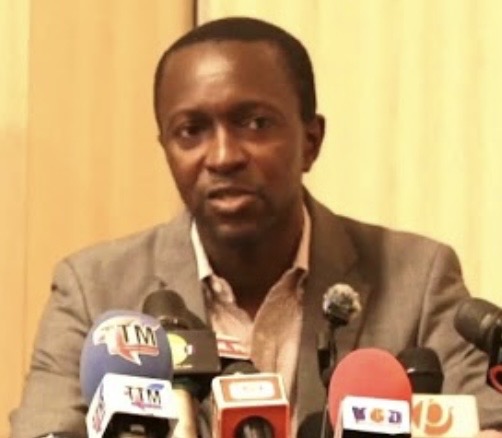
Sompou Ceesay, the Deputy Managing Director of the National Water and Electricity Company, said the widespread power outage currently affecting The Gambia is the result of a “glitch” rather than a broader system failure.
Speaking at a press conference organized by the Ministry of Information, Media and Broadcasting Services, Mr. Ceesay described the disruption as an unexpected development that the utility is working to resolve.
He said the outage comes amid a decade of rapid growth in electricity demand. In 2016, the country consumed roughly 300,000 megawatt-hours of electricity, at a time when it was not connected to any regional power grid and relied solely on domestic generation.
“When it comes to energy consumption, the sector is growing. In 2016, we were consuming around 300,000 energy megawatt-hours of energy, and this is energy where we were not interconnected with anybody. We were just producing this by NAWEC,” he stated.
By 2026, demand is projected to reach about 970,000 megawatt-hours, he said, marking more than a threefold increase over 10 years and an average annual growth rate of about 12 percent.
Mr. Ceesay noted that consumption patterns have also shifted, with households now accounting for the majority of electricity use. More than 61 percent of power is consumed by domestic users, he said, while industry is no longer the largest consumer.
“The energy sector has grown significantly over the last 10 years, and it is important to understand that we are operating within a policy framework. We have a roadmap which outlines the vision of the sector over the next 40 years, and this is a long-term plan,” he said.
He said the roadmap includes provisions for maintaining local generation capacity. Of the country’s 10 power plants, seven are currently operational, though several are ageing, and some engines are out of service.
Over the past year, the company has focused on accelerating maintenance efforts, spending more than $1 million on repairs, he said. Total procurement for maintenance is estimated at between $2 million and $3 million, though payments are pending as some spare parts have yet to arrive.
Comments are closed.