


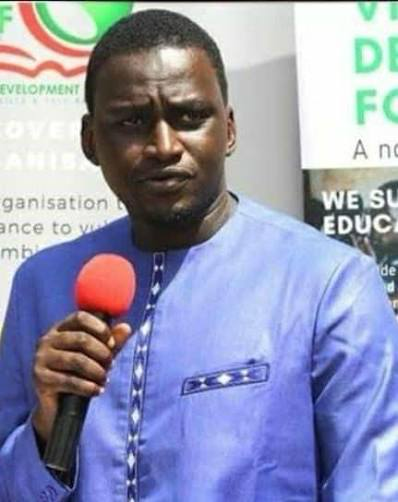
By Fatou Sillah
Dr. Mustapha Bittaye, Chief Medical Director of the Edward Francis Small Teaching Hospital (EFSTH), has defended the recent increase in hospital fees, describing it as a necessary measure to ensure the long-term sustainability of healthcare services in The Gambia.
Speaking in an interview with West Coast Radio on Tuesday, Dr. Bittaye explained that the revision follows years of advocacy by health sector leaders who argued that the previous fee structure was no longer viable for maintaining hospital operations and delivering quality care.
“As hospital and health leaders, we have been at the forefront of advocating for these changes because they are essential for sustainability,” he said.
According to Dr. Bittaye, discussions on adjusting the fees have been ongoing for more than two years. He emphasized that the initiative was not solely driven by the government, but also by healthcare professionals concerned about the financial viability of the system.
“This has been in the works for more than two years. It is just ripening now, and it is very easy to allow the government just to take the fall, but this is actually advocacy from health systems trying to tell the government that what is happening is not sustainable,” he noted.
Despite the increases, Dr. Bittaye maintained that public healthcare costs in The Gambia remain relatively low compared to private facilities and services in neighboring countries. He cited the example of transurethral resection of the prostate (TURP), which costs about D7,500 in public hospitals, compared to between D80,000 and D120,000 in private clinics.
“For example, if you look at some of the charges for a whole TURP at our hospitals, we put there D7,500. If you go to a private clinic in The Gambia, for them to make a minimum amount, they will charge maybe D80,000 to D100,000 or D120,000,” He Said
He also pointed to advancements such as laparoscopic surgery, which previously required patients to travel abroad, particularly to Senegal, at significantly higher costs.
“Before, we didn’t have it, so people go to Dakar; they were paying the equivalent of just to see the doctor, D85,000 in Senegal, but that excludes their flight, their hotels, and all. It was too expensive. Now, to have these things in the country and be sustainable, it is very important,” he said.
Dr. Bittaye further explained that consultation fees—recently increased from D25 to D100—had not been reviewed in nearly two decades, making the adjustment long overdue.
He added that surgical fees have also been revised, with major surgeries for Gambians now costing D4,000, up from D2,000, while minor procedures are set at D2,000. Non-Gambian patients, he noted, are subject to higher charges.
Despite these changes, he stressed that the government continues to heavily subsidize healthcare services, often absorbing costs far beyond what patients are charged.
“In many cases, procedures cost between D18,000 and D20,000 to perform, yet patients are charged only D4,000,” he said.
Looking ahead, Dr. Bittaye revealed plans to introduce specialized and private services at EFSTH. These would cater to patients seeking faster access to specialists and improved accommodation, with additional revenue used to support care for disadvantaged patients.
“Those who can afford to pay more will do so, and that revenue will help subsidize services for poorer patients,” he explained.
He also highlighted existing social protection mechanisms that allow hospitals to identify and exempt vulnerable patients from fees.
“We have systems in place that enable us to verify eligibility within 30 minutes. Once confirmed, patients can be exempted and provided with the necessary care,” he said.
Comments are closed.