

High Court Sentences Uncle to Life Imprisonment for Rape of Teenage Niece

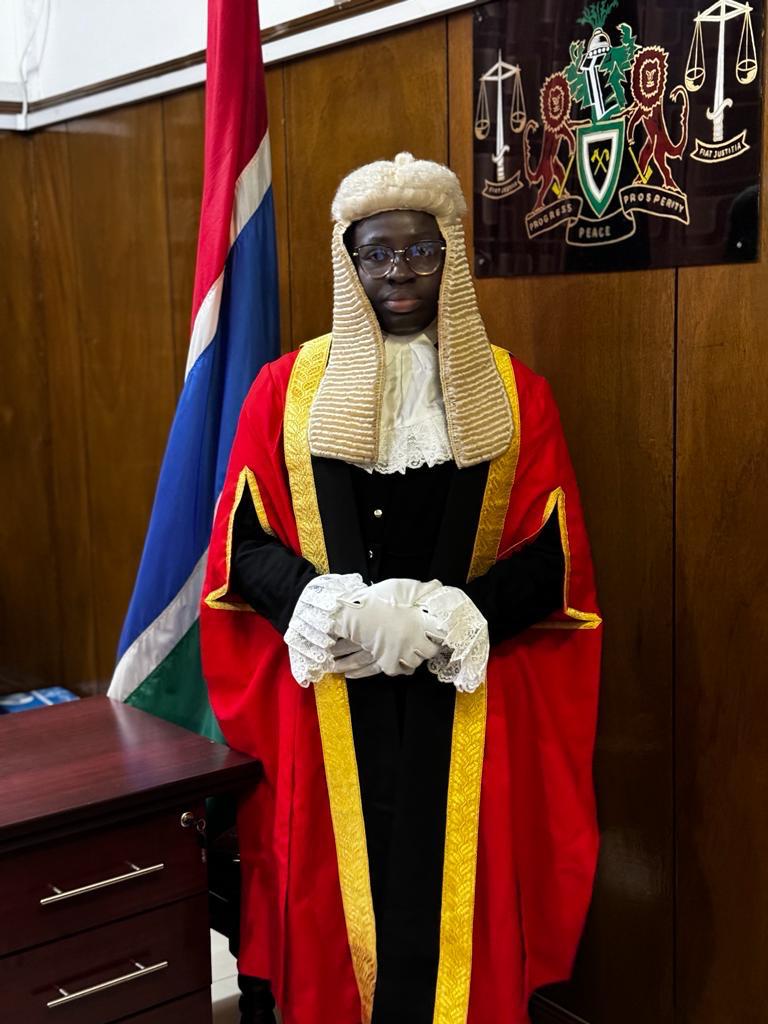
The High Court in Bundung has sentenced Mbye Manneh to life imprisonment for the rape of his 14-year-old niece, an act committed inside the victim’s family home. Manneh, who lived in the same compound and was regarded by the girl as a father figure, also threatened to kill her if she ever disclosed the assault.
The conviction was handed down on Tuesday, 5th May 2026, by Her Ladyship Justice I. Janneh, under Section 3(2)(b) of the Sexual Offences Act, 2013. The life sentence is mandatory under the law when the victim is under 18 years of age, and the offender holds a position of trust and authority.
The case had been before the courts since January 2024, following an information filed by the State on 27th November 2023. The offence occurred in March 2023 at Kunkujang Keitaya.
The victim, then a 15-year-old student who testified in camera and cannot be legally identified, told the court that on the afternoon of the incident, around 5:00 p.m., she returned from school and was washing her uniform when Manneh called her to his room, claiming he had a shirt for her to wash. When she reached the door, she said, he pulled her inside, pushed her onto the bed, covered her face and mouth with a towel, removed her underwear, and raped her.
“Papa Mbye, it is painful, it is painful, but he used his hand and covered my mouth whilst the towel was still there,” she testified. She cried out in pain, addressing him by the name she had always known as a father figure, but he pinned her down and warned her that she would die if she told anyone. No other family members were home at the time. Her evidence remained unshaken under cross-examination.
Following the assault, the victim initially remained silent but went to her grandmother’s house, where her physical condition drew concern. The grandmother (PW2) testified that the girl appeared unwell, withdrawn, and in pain, unable to sit properly and spending much of her time lying down. She also noticed a wet discharge on the girl’s skirt.
After gentle questioning, the victim disclosed what had happened. The grandmother attempted to resolve the matter within the family, and Manneh’s relatives reportedly sought forgiveness and proposed internal discussions, including funding medical treatment. When delays persisted, the grandmother took the girl to Fajikunda Health Centre.
A medical examination confirmed penetration. The girl was referred to the Child Welfare Unit, and the grandmother eventually filed a police report. Manneh was arrested at his workplace at Brusubi Turntable.
The medical certificate (Exhibit C), prepared by Dr. Awa Sanyang and presented through PW4 Dr. Ramatoulie Kamara, recorded a ruptured hymen, watery vaginal discharge, and a labia that appeared emotionally soft. The examination was conducted on 29th May 2023.
The defence argued that a broken hymen could result from causes other than penetration, and that the author of the medical report was not available for cross-examination. Justice Janneh acknowledged these limitations but found that, taken alongside the victim’s consistent and direct testimony, the medical findings provided meaningful corroboration of penetration.
Citing the Sexual Offences Act, 2013, and Nigerian Supreme Court authority Ali v. State (2020), which sets the threshold for penetration at “the slightest degree,” the court ruled that the evidence collectively satisfied that standard.
Manneh, the sole defence witness, denied the allegations entirely, claiming he was at work on the day of the incident. He also alleged that the victim’s grandmother had demanded D25,000 for medical treatment and that the accusation was financially motivated. Justice Janneh found his testimony riddled with contradictions, including conflicting statements about whether others were home, whether he was at work, and whether he had moved residence before or after his arrest. His alibi defence was dismissed as vague, unsupported, and raised too late.
A procedural issue arose when the first prosecution witness, Detective Sub-Inspector Salif O. Sanneh, was never brought back for cross-examination. Citing Nigerian authority Adedapo v. The State (2014), Justice Janneh expunged the witness’s entire testimony and the cautionary and voluntary statements derived from it. The prosecution nevertheless prevailed on the remaining evidence: the victim’s testimony, the grandmother’s corroborative observations, and the medical findings.
Following the conviction, defence counsel M.N.M. Jane urged leniency on grounds that the convict was a first-time offender, a family man, and the breadwinner of his household. The prosecution, led by W.S. Madu with W.M.K. Drammeh, argued that the breach of trust was especially egregious, noting that Manneh had maintained his innocence and shown no genuine remorse.
Justice Janneh, applying the Sentencing Guidelines for Rape issued by the Chief Justice on 10th October 2023, found that the case fell squarely within the mandatory life imprisonment category under Section 4(1)(a)(iii)(cc) of the Sexual Offences Act. Aggravating factors included the victim’s age (14), the abuse of trust, the use of coercion and a death threat, the location within the family home, and the lasting emotional and social harm suffered by the victim.
The court found that the mitigating factors—first-time offender status and family responsibilities—did not amount to the “substantial and compelling circumstances” required under Section 4(2) of the Act to justify departure from the mandatory sentence.
Manneh was sentenced to life imprisonment and reminded of his right to appeal against both conviction and sentence.
In her testimony, the victim spoke of enduring social consequences: knowledge of the assault had spread through her community, and people would discuss it whenever she walked past. She said she felt deeply ashamed and no longer wished to return to her father’s compound. At the time of giving evidence, she remained a teenager navigating those consequences.
Comments are closed.