


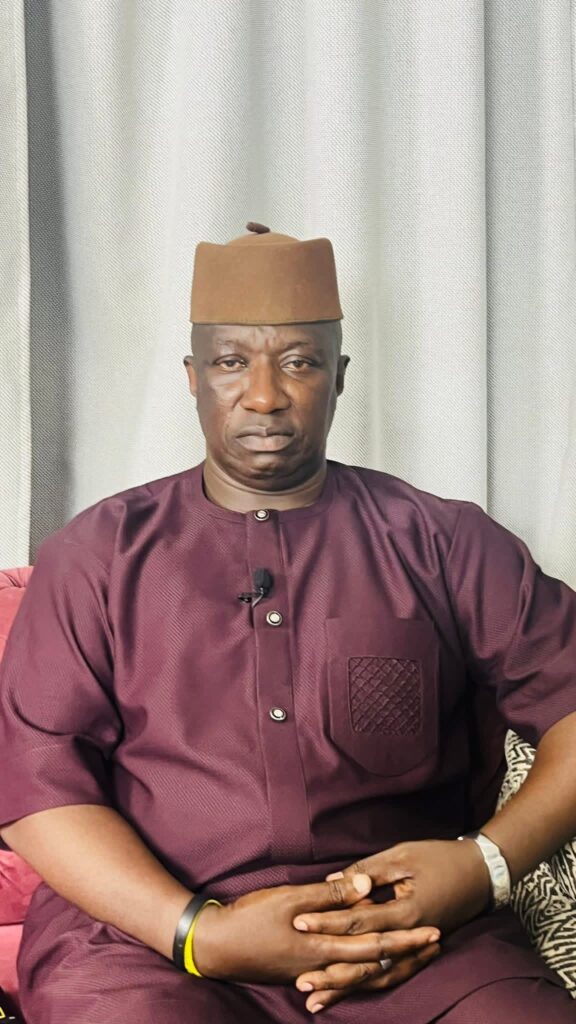
By Seedy Jobe
The National Campaign Manager of the main opposition United Democratic Party (UDP), Pa Manneh, has defended the candidacy of party leader ANM Ousainu Darboe, describing him as a principled and steadfast figure capable of driving meaningful reforms and strengthening national institutions.
Speaking during an appearance on Kerr Fatou on Thursday, April 23, 2026, Hon. Manneh argued that Darboe’s character and track record distinguish him from other political leaders.
“There’s nothing that can entice Ousainu,” Mr. Manneh said, referring to the party leader, Ousainu Darboe. “Position doesn’t entice him, and he isn’t enticed by wealth. The way he thinks, he just wants to set an example.”
Mr. Manneh argued that Mr. Darboe’s approach to leadership would help reshape how politics is perceived by younger generations, presenting it as a public service rather than a path to personal gain.
“He is someone who can lead by example, and that is essential for young people to see a different approach to politics,” he added.
Manneh further argued that Darboe is supported by a capable team with the vision to establish durable governance systems. “What the country needs is a strong framework. Ousainou has a team that can develop systems that will endure beyond individual leaders,” he said.
Highlighting the challenges of reform, Manneh stressed the importance of firm and decisive leadership.
“Meaningful reform requires someone who is steadfast and willing to stand firm to ensure implementation without fear or favour. Without that, progress will be difficult,” he stated.
He added that Darboe’s leadership could lay the foundation for long-term institutional stability. “It is important to bring in someone who can set the pace, so that even after his tenure, a solid framework remains in place for others to build upon.”
Addressing criticism over the UDP’s legislative record during its majority in the National Assembly in 2016/2017, Manneh rejected claims that the party failed to advance electoral reforms.
“It is easy to point fingers, but such views are often limited,” he said.
He referenced the 2016 protests led by the late Solo Sandeng, noting that electoral reform was a central demand at the time.
“The protests were driven by a broader reform agenda, but electoral reform was particularly prominent,” Manneh explained.
Marking the 10th anniversary of the demonstrations alongside the ongoing supplementary voter registration process, he expressed concern over the pace of change.
“Frankly, we have not seen a significant transformation in the electoral system,” he said.
Manneh also stressed that the push for reform was a national effort rather than a partisan initiative.
“In 2016, this was not solely a UDP undertaking. Invitations were extended to all political parties, and representatives from other parties, including the NRP, participated. We have always viewed it as a national cause,” he noted.
He added that despite last-minute withdrawals by some groups, UDP supporters proceeded with the protests.
“When others stepped back, UDP members moved forward because they had committed to doing so. The outcome contributed to the change that people speak about today,” he said. “That change belongs to the nation, not to the UDP alone.”
Comments are closed.