

Suwaibou Touray Says Opposition Needs Grand Alliance to Defeat Barrow
By Fatou Sillah
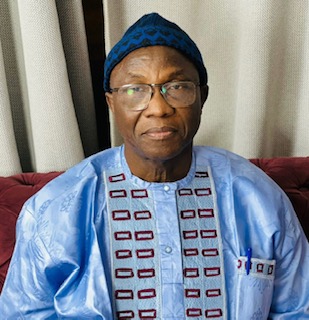
Suwaibou Touray, the secretary general and party leader of the People’s Democratic Organisation for Independence and Socialism, or PDOIS, says opposition groups broadly recognize that defeating President Adama Barrow in the 2026 presidential election will require a grand alliance.
Speaking in an interview with Eye Africa, Touray said the various opposition coalitions taking shape should not be viewed as final arrangements, noting that political parties and other groups are still holding discussions and weighing their options ahead of the election.
“None of these people believe that they can bring about change without that grand alliance,” Touray said. “Yes, I am 100 percent sure.”
Touray suggested that some of the emerging alliances may be intended to strengthen the bargaining positions of their members as broader negotiations continue. The current political groupings, he said, could still shift considerably before the election.
He described the political landscape as more complicated than it was in 2016, when opposition parties united behind a single candidate to challenge the longtime president, Yahya Jammeh. Today, he said, there are more political parties and political movements seeking to challenge the government, making the path toward a unified opposition more difficult.
Touray also cautioned against relying solely on previous election results to measure the strength of political parties. Turnout and voting patterns, he said, have varied across presidential, parliamentary, and local government elections, making past results an imperfect measure of what could happen in 2026.
He pointed to recent shifts within the opposition and governing camps, including the emergence of Talib Bensouda as a national political figure, Lamin J. Darboe’s departure from the United Democratic Party, and Kebba Madi’s exit from the National People’s Party. Such developments, he said, have made the political landscape increasingly difficult to predict.
Touray acknowledged that government development projects, including new roads and the expansion of electricity to rural communities, could influence voters. But he argued that the election campaign should ultimately center on a more immediate concern: whether Gambians believe their lives are improving.
“The economy is key,” he said. “How are the people’s livelihoods taking place? That should be the key to the campaign, and you come up with a formidable program that you can convince the Gambian people that you can make their lives better within five years.”
For the opposition, Touray said, forming alliances alone will not be enough. Parties seeking to unseat Barrow must also present voters with a credible program and persuade them that they can deliver meaningful improvements in their daily lives.
Comments are closed.