


By Seedy Jobe
A senior official of the United Democratic Party (UDP) has warned that the party could withdraw from ongoing opposition coalition negotiations if participating parties reject its proposal for a party-led coalition in favor of a candidate-led arrangement.
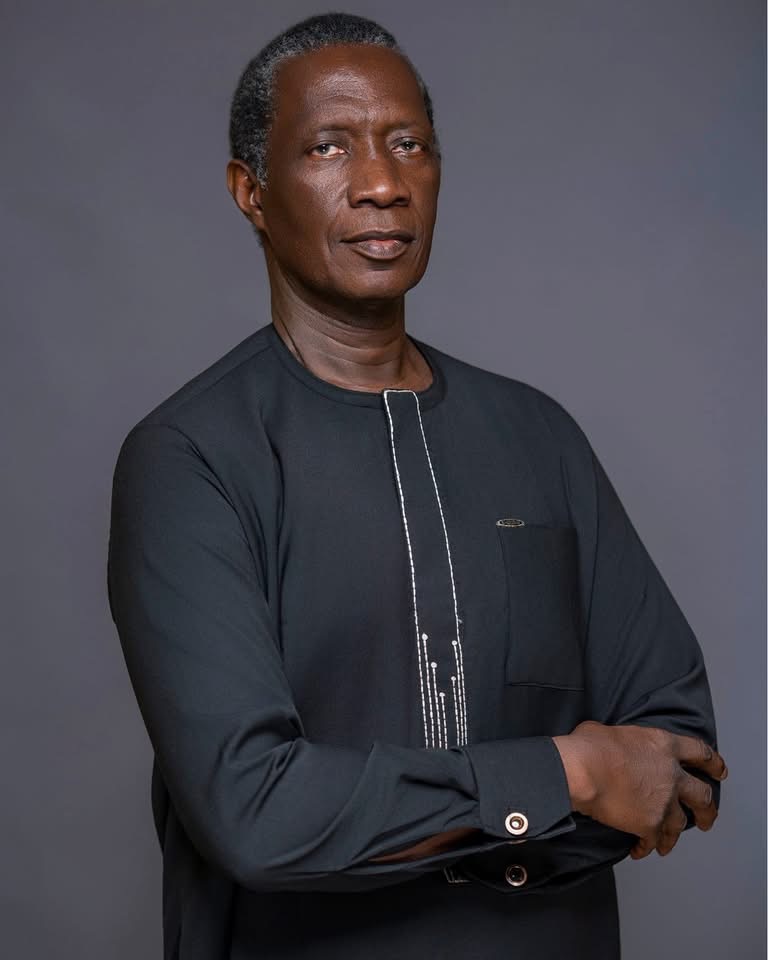
Speaking on Kerr Fatou’s Politic Kaacha program on Tuesday, Lamin Manneh, the UDP’s Deputy Administrative Secretary for External Affairs, said the party would not support a coalition framework that, in its view, fails to reflect its electoral strength.
Mr. Manneh argued that coalition arrangements should be guided by the relative strength of participating parties, contending that smaller parties should align behind the largest opposition party rather than expect it to follow them.
Citing the results of the 2021 presidential election, he said the UDP received approximately 238,000 votes—well ahead of other opposition parties—and questioned the rationale for asking the party to cede leadership to groups with significantly smaller electoral support.
“Some of them were not even in this. They have never voted. They never campaigned. They never stood for anything. And now they are saying we should give them our place to lead us while we follow them. How is that possible? That cannot be done,” Mr. Manneh said.
He also criticized the candidate-led coalition model, arguing that it contributed to challenges following the opposition’s 2016 electoral victory. According to him, then-coalition candidate Adama Barrow was required to resign from the UDP and contest the election as an independent, a model he said ultimately weakened the party despite its role as the coalition’s largest political force.
Mr. Manneh said the coalition negotiations have now split into two camps. He identified the UDP, the Alliance for Democracy and Development (ADD), the People’s Progressive Party (PPP), the People’s Alliance Party (PAP), and the Gambia Action for National Unity (GANU) as supporting a party-led coalition.
He said the Alliance for Patriotic Reorientation and Construction (APP-Sobeyaa), the Gambia Democratic Congress (GDC), and UNITE Party favor a candidate-led process. He added that several political movements participating in the discussions have also aligned with the candidate-led position.
According to Mr. Manneh, the push for a candidate-led arrangement appears designed to place the UDP in the minority during the negotiations.
Asked whether the UDP would walk away from the talks if no agreement is reached by the August 8 deadline, Mr. Manneh said the possibility remains.
“Yes. We came for a discussion to form a coalition. Why would we be there if we do not agree on the terms?” he said.
Mr. Manneh also rejected suggestions that the UDP had undermined the coalition process by allowing the PPP to endorse its presidential candidate while negotiations were ongoing.
He accused other political parties of applying double standards, pointing to existing political alliances involving GANU, the National Unity Party (NUP), and the National Democratic Party (NDP), as well as the merger between the Gambia for All (GFA) and Ousman Gagigo’s political party during the coalition discussions.
“You see, even if the UDP dances in water, they will say we are raising dust. Others can do it, but when we do it, it’s a problem. Why?” Mr. Manneh said.
His remarks underscore growing tensions within the opposition’s coalition negotiations as parties continue to debate whether the alliance should be anchored on the strength of political parties or the selection of a consensus presidential candidate ahead of the 2026 elections.
Comments are closed.