


By Seedy Jobe
The Kanifing Municipal Council (KMC) on Tuesday, June 9, 2026, officially launched a new initiative titled “Leveraging Digital Addresses for Evidence-Based Policymaking in Kanifing,” aimed at strengthening public service delivery and improving revenue generation through digital innovation.
The project seeks to enhance key municipal functions, including waste management, property tax collection, and overall urban service delivery, by introducing a comprehensive digital addressing system.
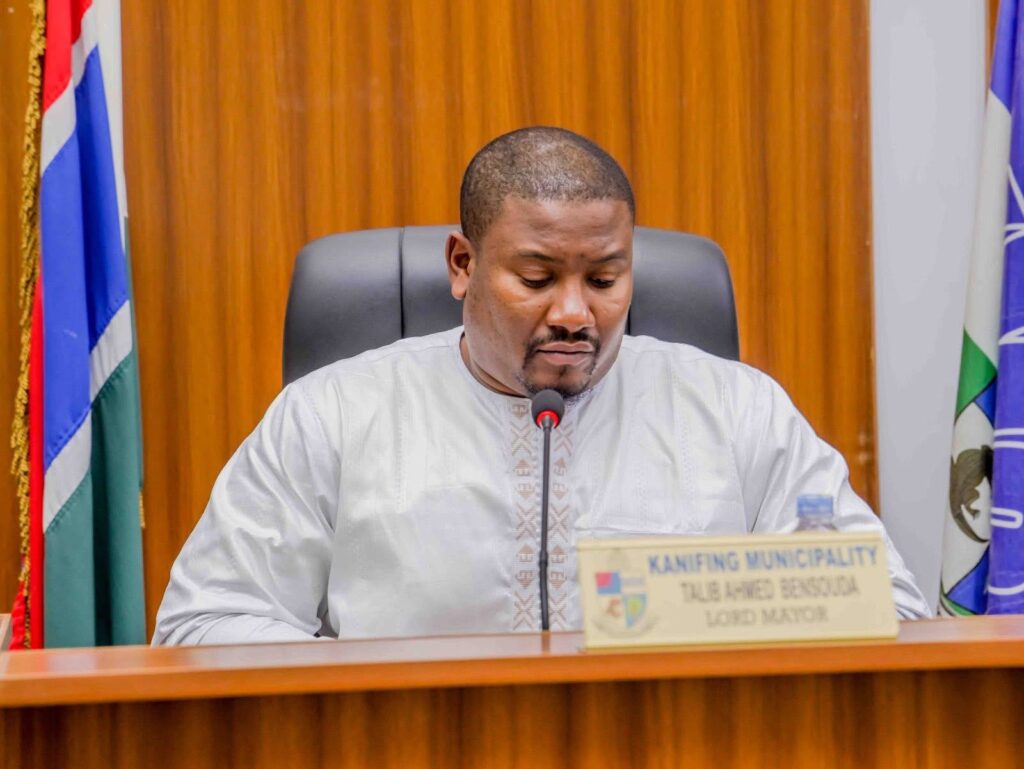
The launch ceremony, held at KMC’s headquarters in Kanifing, was attended by the Lord Mayor, Talib Ahmed Bensouda; representatives from the Fund for Innovation in Development (FID) and the French Development Agency (AFD); Alkalos; councillors; KMC staff; and members of the media.
Funded by the Fund for Innovation in Development (FID), the project is being implemented in collaboration with researchers from Paris Dauphine University, Sciences Po Paris, and the University of The Gambia.
Speaking at the event, Mayor Talib Ahmed Bensouda emphasized that the initiative goes beyond technology, describing it as a step toward building a smarter, more efficient, and responsive municipality driven by innovation, data, and strategic partnerships.
“Our ambition is simple: to ensure that decisions are guided not by assumptions but by accurate data and the real needs of our people,” he said.
The mayor noted that KMC has made significant progress in modernizing local governance in recent years, with digital mapping tools already contributing to improved decision-making and service delivery.
He also expressed appreciation to development partners, particularly the French diplomatic mission, acknowledging their continued support.
“This project is ultimately about people,” Mayor Bensouda added. “It is about improving service delivery, strengthening trust between citizens and institutions, and building a municipality that is cleaner, smarter, and more accountable.”
In his welcome remarks, KMC Chief Executive Officer Pa Sait Ceesay highlighted that the pilot phase focused on addressing practical challenges faced by local governments. He noted that the initiative aims to improve service delivery, enhance operational monitoring, strengthen identification of properties and businesses, and promote better interdepartmental coordination.
“As Kanifing Municipality continues to grow, demand for services is expanding rapidly, while resources remain limited. These realities require us to continuously improve the way we plan, the way we manage, and the way we deliver services to the people,” he said.
Mr. Ceesay added that over the past two years, KMC and its partners have explored digital addressing systems as a means of making municipal operations more data-driven and efficient.
Also speaking at the event, Research Coordinator Sabina Lee explained that the project originated in 2024 in response to rapid urban growth and rising demand for services in Kanifing.
“How can the municipality provide better service to a growing population? How can limited resources be allocated effectively? How can managers monitor operations across a large and dynamic urban area?” she said.
Ms. Lee emphasized that the project’s goal extends beyond technology, focusing on how improved data and digital addressing can enhance service delivery and build trust with residents.
She outlined key lessons from the pilot phase, particularly in waste management, where tools such as Google Plus Codes, GPS monitoring, and operational incentives helped identify underserved areas and improve service coverage.
“Previously underserved areas received significantly more embodied visits. During the project period, operational monitoring improved. Managers gained better visibility over field activities,” she said.
Ms. Lee also noted a shift from paper-based systems to digital tools, with field officers now using tablets and digital compliance maps to carry out their duties.
The introduction of digital addresses is expected to transform informal settlements into structured, measurable data, enabling more targeted service delivery. KMC officials say the initiative will contribute to socio-economic development, strengthen revenue collection, and support evidence-based policymaking across the municipality.
Comments are closed.