
Darboe Unveils Gambia First Coalition Manifesto, Pledges One-Term Presidency and Sweeping Reforms

By Seedy Jobe
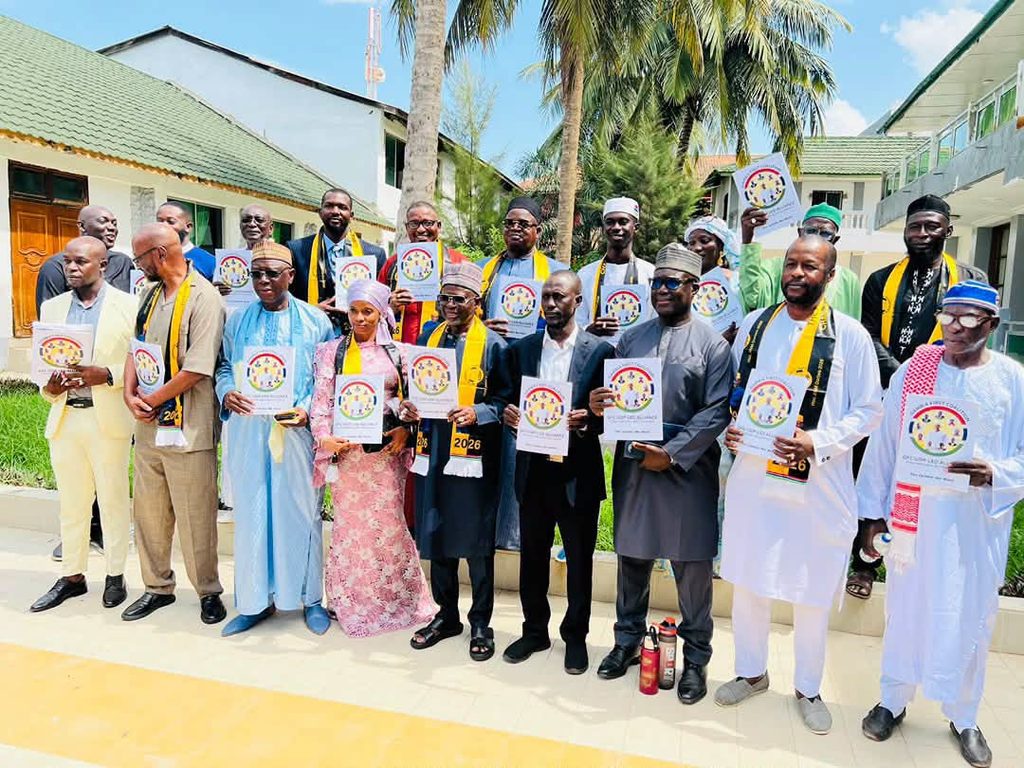
The Secretary-General and Party Leader of the United Democratic Party (UDP), ANM Ousainou Darboe, has formally launched the Gambia First Alliance (GFA)-UDP-led coalition’s manifesto, outlining an ambitious agenda for economic recovery, constitutional reform, improved public services and greater government accountability ahead of the December 5 presidential election.
Speaking at the manifesto launch held at Paradise Suites Hotel, Mr. Darboe presented the coalition’s vision, titled “The Gambia We Want,” describing the upcoming election as a defining moment that would determine the country’s political and economic future.
The veteran opposition leader pledged to serve only one five-year term if elected president, promising to introduce sweeping reforms aimed at restoring public confidence in government and improving the living conditions of ordinary Gambians.
As an early demonstration of his commitment to fiscal discipline, Mr. Darboe announced that within his first 100 days in office, he would reduce the budget of the Office of the President and take a 20 percent cut in his presidential salary.
He argued that political leaders must demonstrate personal sacrifice before asking ordinary citizens to endure economic hardship.
According to him, it would be unjust to demand sacrifices from market vendors, farmers, and struggling families while political officeholders continue to enjoy extravagant privileges at public expense.
Addressing the economic difficulties facing the country, Mr. Darboe said Gambians have endured years of rising food prices, unreliable and increasingly expensive electricity, limited employment opportunities, and inadequate access to affordable healthcare.
He questioned how long families should be expected to tolerate worsening living conditions while waiting for meaningful government intervention.
Mr. Darboe said Gambians deserve more than repeated political promises, emphasizing the need for a government that listens to citizens, delivers essential services and creates opportunities for economic advancement.
He described the coalition’s manifesto as a national agenda for renewal, justice, opportunity and dignity, structured around key reform priorities.
Outlining his first major priority, Mr. Darboe pledged to pursue economic reforms designed to stimulate domestic production, create employment and reduce the country’s dependence on imported goods.
He said his administration would undertake a comprehensive review of the national budget to eliminate wasteful expenditure and redirect public resources toward critical development priorities.
The proposed measures include increased investment in irrigation, agricultural mechanization, food processing, and affordable financing for women engaged in farming and other productive activities.
Mr. Darboe also promised to expand economic opportunities for young people, strengthen the fisheries and tourism industries, and support local businesses and entrepreneurs.
He said the coalition’s economic strategy would prioritize sustainable growth while addressing the country’s mounting debt burden.
The guiding principle, he explained, would be to ensure that the Gambian economy grows faster than the national debt.
He emphasized that economic opportunities should extend to all Gambians, including market vendors in Brikama, vegetable growers in Bakau, entrepreneurs in Kanifing, farmers in the Central River Region and fishing communities along the Atlantic coast.
Constitutional renewal forms the second major pillar of the coalition’s manifesto.
Mr. Darboe pledged that within the first year of his administration, his government would introduce a new draft constitution based on the principles of the 2020 draft constitution, which was rejected by the National Assembly.
He said constitutional reform would be central to strengthening democratic governance, protecting fundamental rights and ensuring that public institutions operate independently and in accordance with the law.
The UDP leader emphasized that the presidency should be regarded as an institution of public service rather than a position of personal privilege.
He maintained that no president should be above the law or the Constitution, stressing that every Gambian, regardless of geographical location, political affiliation or social status, deserves equal protection under the law.
Mr. Darboe said his administration would work to establish institutions that serve the national interest rather than the political interests of those in power.
Turning to national security, Mr. Darboe identified comprehensive security sector reform as his third major priority.
He pledged to build professional, properly equipped and accountable security institutions capable of protecting citizens and upholding constitutional order.
According to him, security personnel must remain politically neutral and should never be used to advance partisan interests.
He said Gambians, whether living in Farafenni, Banjul, Kuntaur or Foni, deserve to go about their daily lives without fear.
Mr. Darboe emphasized that the primary responsibility of the security services must be to protect the population and defend the Constitution, rather than serve the interests of political leaders.
Public service reform constitutes the fourth pillar of the coalition’s agenda.
Mr. Darboe promised to introduce merit-based recruitment, strengthen professional development and establish accountability mechanisms across government institutions.
He said employment and advancement within the public service should be determined by competence and qualifications rather than political affiliation.
The opposition leader also pledged to improve the working conditions of civil servants and ensure they have the resources and institutional support necessary to deliver services effectively.
He cited the challenges facing teachers in provincial communities, nurses in rural health facilities, graduates seeking public employment and citizens attempting to obtain government documents as examples of areas requiring urgent reform.
Mr. Darboe said an efficient and impartial public administration would be essential to restoring public confidence in government.
Beyond institutional reforms, Mr. Darboe pledged to prioritize access to affordable healthcare, quality education, reliable electricity and clean water.
He questioned the effectiveness of government when families in Basse struggle to obtain medical care, students in Janjanbureh face limited educational opportunities and households in urban communities experience persistent electricity and water shortages.
He promised to strengthen service delivery and ensure that development initiatives benefit communities across the country rather than remain concentrated in the Greater Banjul Area.
Mr. Darboe also pledged to empower local councils to play a more effective role in development planning and service delivery.
He further recognized Gambians living abroad as important partners in national development, saying the diaspora would have a meaningful role in advancing the coalition’s economic and social priorities.
Mr. Darboe described the coalition’s manifesto as more than a collection of campaign promises, presenting it instead as a social contract between the Gambia First Coalition and the Gambian people.
He pledged that his administration would establish mechanisms for monitoring government performance, publishing progress reports and holding public officials accountable for their commitments.
According to him, public trust must be earned through measurable achievements rather than political speeches.
He urged Gambians to carefully examine the manifesto, scrutinize its proposals and demand accountability from the coalition if it forms the next government.
Mr. Darboe said citizens should not hesitate to question political leaders or challenge their performance, emphasizing that accountability must remain a central feature of democratic governance.
Concluding his address, Mr. Darboe framed the December 5 presidential election as a choice about the future direction of The Gambia rather than a personal contest between himself and President Adama Barrow.
He said the election should not simply result in replacing one political group with another, but should provide an opportunity to fundamentally change how the country is governed.
The coalition’s objective, he explained, is to restore public ownership of government, ensure that national resources are used for the benefit of citizens and create opportunities that allow Gambians to live with dignity.
Throughout his address, Mr. Darboe appealed to communities across the country, including Niamina, Wuli, Sandu, the North Bank and Lower River regions, emphasizing that every Gambian deserves the opportunity to build a better future for their family.
He reiterated that the coalition’s proposed reforms were intended to establish a government that is responsive, accountable and committed to the welfare of its citizens.
Mr. Darboe formally declared the Gambia First Coalition manifesto, “The Gambia We Want,” launched, thanking supporters, attendees and Gambians following the event on social media.
He concluded by emphasizing that the December 5 election would be a defining moment in determining the country’s future.
Comments are closed.