

Dr. Ceesay Suggests Darboe’s Legal Threat Kept Barrow in Power Beyond Three-Year Pledge

By Fatou Sillah
Dr. Ismaila Ceesay, the Gambia’s Minister of Information, Media, and Broadcasting Services, has suggested that the threat of legal action by United Democratic Party (UDP) leader Ousainou Darboe may have influenced President Adama Barrow’s decision to remain in office beyond the three-year transitional period initially envisaged following his election.
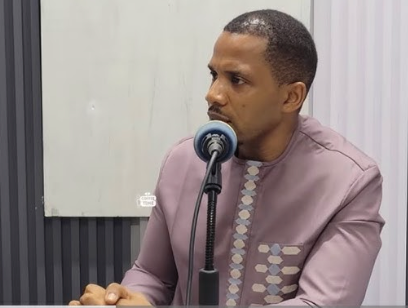
Speaking in an interview with West Coast, Ceesay said Darboe’s reputation as one of the country’s leading lawyers may have weighed heavily on Barrow’s decision not to step down after three years.
“He’s one of the finest lawyers in the country. If he threatens to take you to court, you’ll think twice,” Ceesay said.
The minister suggested that Barrow may have feared a legal challenge from Darboe had he relinquished power at the end of the proposed three-year transition.
“Even Barrow was afraid that Darboe would take him to court if he had decided to step down after three years, and that’s why he stayed—perhaps, maybe that is why,” he said.
Ceesay’s remarks offer a new interpretation of the controversy surrounding Barrow’s decision to serve the full five-year constitutional term despite the three-year commitment associated with the political coalition that brought him to power in 2016.
Turning to economic matters, Ceesay defended the government’s management of the economy, citing what he described as improvements in currency stability and inflation.
He said government policies had helped stabilize the Dalasi against major foreign currencies, arguing that the currency was no longer experiencing the persistent daily depreciation witnessed in previous periods.
Although he acknowledged that exchange rates remained high, Ceesay maintained that the government had succeeded in bringing greater stability to the foreign exchange market.
He also credited the administration with reducing inflation from 17 percent to 6.7 percent, presenting the decline as evidence of progress in managing the economy.
The minister challenged Darboe and the UDP to outline specific economic policies they would pursue if elected, particularly measures aimed at controlling inflation and strengthening the Dalasi.
“If you are providing an alternative to government, you need to give us that alternative. You need to tell us; you cannot just come and tell us, make blanket statements,” Ceesay said.
Ceesay also defended the administration’s record on industrial development, claiming that industrial growth under Barrow had exceeded levels recorded over the preceding five decades.
The minister did not provide comparative figures in the reported remarks to substantiate that claim.
Comments are closed.