

NAWEC Says Electricity Supply Is Improving as Regional Imports and Local Generation Recover

By Seedy Jobe
Officials of the National Water and Electricity Company said Wednesday that electricity supply has improved significantly in the Greater Banjul Area and across The Gambia, following weeks of disruptions caused by problems with domestic generators and regional power suppliers.
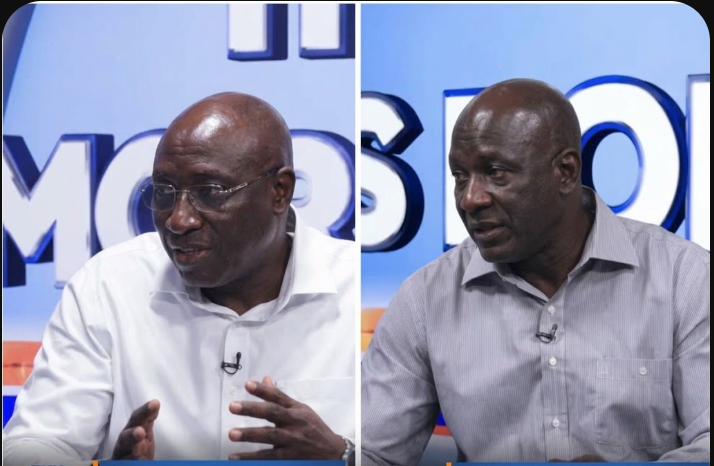
Speaking on QTV’s “This Morning” program, NAWEC officials said electricity imports from Senegal and Guinea-Conakry had largely recovered, easing a power shortage that led to widespread outages and complaints from consumers.
Pierre Silva, NAWEC’s public relations officer, said the recent crisis resulted from a combination of problems with the company’s own generators and difficulties affecting The Gambia’s two principal external suppliers—SENELEC in Senegal and Électricité de Guinée, or EDG, in Guinea.
According to Mr. Silva, SENELEC experienced problems at one of its largest generating stations, which has a capacity of between 140 and 240 megawatts. In Guinea, low rainfall affected a dam and disrupted the evacuation of electricity to The Gambia.
Those problems, he said, have largely been resolved.
“We have seen massive improvement,” Mr. Silva said, adding that SENELEC had addressed its generation problems and that Guinea was again supplying electricity to The Gambia.
NAWEC is also working to return more of its own generating units to service, he said. Electricity imported through the regional network is used not only in the Greater Banjul Area but also to supply communities in other parts of the country.
Mr. Silva apologized to customers for the disruptions and said the utility would continue providing updates on the power situation.
Regional Imports Carry Much of the Load
Sanna Darboe, NAWEC’s system operations manager, said The Gambia was now receiving substantial amounts of electricity through the regional grid.
During the day, he said, the country receives about 15 megawatts from Guinea, rising to as much as 45 megawatts in the evening. At peak periods, imports from regional suppliers can reach roughly 110 megawatts.
Domestic thermal generators provide about 20 megawatts, while solar facilities contribute nearly another 20 megawatts during daylight hours, bringing local generation to roughly 40 megawatts when solar production is available.
Several NAWEC generators, however, remain out of service for maintenance.
At the Kotu power station, the G5 generator is undergoing maintenance, Mr. Darboe said. Generating sets at the Brikama 1 and Brikama 3 stations are also being serviced, although one unit at Brikama 3 is currently operating.
Mr. Darboe said the utility expects domestic generation to improve substantially before the end of the year.
An additional 24 megawatts of generating capacity is on its way to The Gambia, he said, adding that the equipment was most recently tracked in Senegal. Contractors are preparing the platform and connections so that installation can proceed quickly once the equipment arrives.
NAWEC is also looking to a larger regional solar project in Soma to increase supply.
Mr. Darboe said the planned project would have a total capacity of 150 megawatts. Its first phase, which would produce 50 megawatts exclusively for The Gambia, has moved beyond the tender stage. A second phase is expected to produce electricity for the wider regional market.
“There is light at the end of the tunnel,” he said.
Why The Gambia Imports Electricity
Mr. Silva rejected the suggestion that relying on electricity from neighboring countries should necessarily be viewed as a temporary arrangement, saying cross-border electricity trading is common internationally.
NAWEC’s calculations, he said, show that importing electricity from Senegal and Guinea through the Organisation pour la Mise en Valeur du Fleuve Gambie, or OMVG, network is cheaper than relying entirely on local thermal generators.
Still, he said, The Gambia needs sufficient domestic generating capacity to serve as a backup when neighboring countries experience shortages or technical problems.
The recent disruptions, he added, demonstrated the risks of depending too heavily on outside supply.
Generation is only one part of The Gambia’s electricity challenge, NAWEC officials said.
Mr. Silva said aging and overloaded transmission and distribution infrastructure can cause outages even when sufficient electricity is available.
Even if the country had 1,000 megawatts of generation capacity, he said, overloaded transformers and feeders could still prevent that electricity from reaching consumers reliably.
During periods of high demand, NAWEC sometimes has to temporarily disconnect certain areas to protect transformers from damage, he said. Replacing a single transformer can cost more than $500,000, according to Mr. Silva.
The utility is working to upgrade overloaded transformers and strengthen the distribution network, he said.
Mr. Darboe said the OMVG regional electricity network, which has previously been described by officials as a potential “game changer,” is also intended to give The Gambia greater flexibility in where it purchases electricity.
As The Gambia’s transmission system operator, NAWEC ultimately wants access to a regional electricity market in which it can purchase power from different countries based on availability and price rather than depending primarily on Senegal and Guinea, he said.
Plans to fully interconnect the electricity systems of the 15 ECOWAS member states had initially targeted June and later August, Mr. Darboe said. The process was delayed because several countries had not met the required technical standards.
He said officials now expect the broader regional connection to be completed by December.
Mr. Darboe said the regional grid has already produced one significant benefit: greater system stability.
Before The Gambia joined the regional network, he said, the national electricity system experienced roughly 20 total blackouts a month. Since the connection, system-wide collapses have fallen to almost zero, although localized outages caused by distribution problems continue.
Greater grid stability also reduces pressure on NAWEC’s generators and can help extend their operating life, he said.
NAWEC is also considering a greater role for private companies in electricity generation.
Mr. Darboe said utilities in many countries are increasingly relying on independent power producers, or IPPs, rather than trying to handle generation, transmission and distribution entirely on their own.
Managing all three functions can place considerable financial and operational pressure on a utility, he said.
Senegal has increasingly adopted the independent-producer model, Mr. Darboe said, adding that NAWEC is exploring a similar approach as The Gambia seeks to expand generation capacity and build a more reliable electricity system.
Comments are closed.