

Dr. Isatou Touray Says Gambia Can End FGM Within a Generation Through Education, Community Action

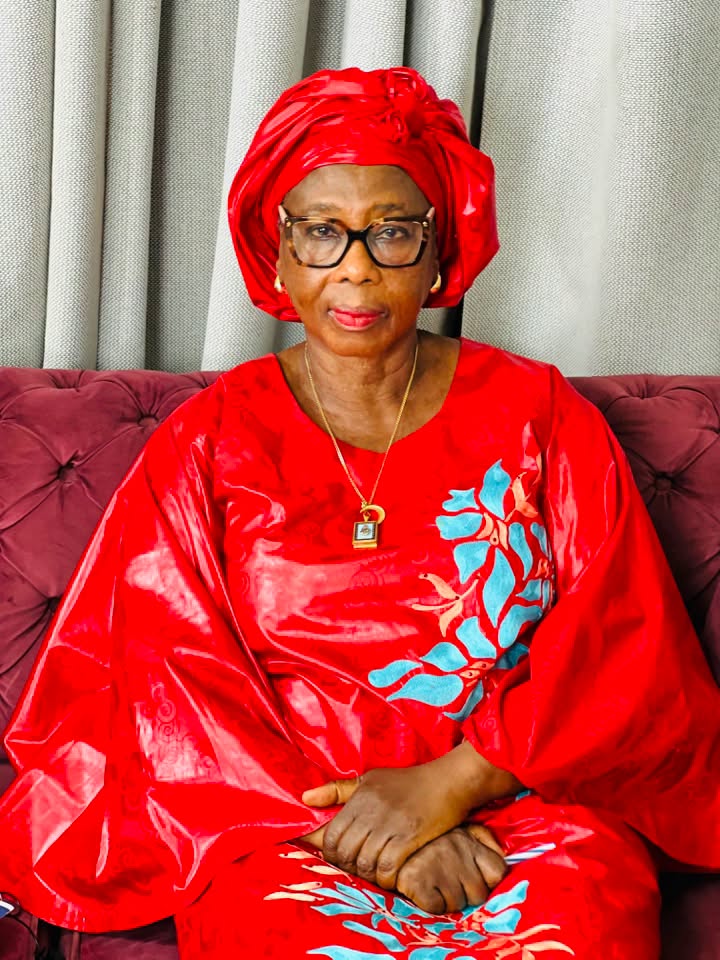
By Seedy Jobe
Former Vice President and presidential aspirant Dr. Isatou Touray, one of The Gambia’s most prominent campaigners against female genital mutilation, says the country can eliminate the practice within a generation if sustained education and community engagement remain at the heart of the effort.
Speaking in an interview with Atlantic TV, Dr. Touray said decades of advocacy had demonstrated that attitudes toward FGM could change when communities were given accurate information, particularly in languages they understood and through people they trusted.
For years, she said, one of the greatest obstacles confronting campaigners was the widespread belief that FGM was a religious obligation. Her own academic research, she said, found no basis for that assertion in either the Quran or the Bible.
“FGM is not a religious injunction,” Dr. Touray said. “There is nowhere it is mentioned in the Quran, and there is nowhere it is mentioned in any Bible, and it is a misinterpretation of our religion.”
Instead, she said, the practice has endured largely because of deeply rooted social customs, gender expectations, and misinformation passed from one generation to another.
Dr. Touray said her campaign against FGM was shaped not only by her academic work but also by personal experience. She comes from an ethnic community where the practice has historically been widespread and said she underwent FGM herself.
Her research into the practice and its consequences, she said, convinced her that those with firsthand experience and knowledge had a responsibility to speak out, particularly because of the implications for reproductive health and the rights of women and girls.
But Dr. Touray cautioned against portraying parents who subjected their daughters to FGM as deliberately abusive. In many cases, she said, families believed they were fulfilling a religious and cultural responsibility.
“They were not doing it to harm us,” she said. “They thought it was a divine responsibility. Now that we have got the knowledge, it is our duty to create awareness.”
Changing those beliefs, however, proved difficult.
Dr. Touray recalled encountering resistance from religious figures and communities that regarded public discussion of FGM as an attack on religion or an exposure of private cultural traditions.
“Who are you to talk about this secret thing? You are exposing our culture,” she recalled being told.
Campaigners also struggled with limited resources and the broader challenge of confronting a practice that had been entrenched for generations. During the government of former President Yahya Jammeh, Dr. Touray said, information provided to the presidency by some religious scholars contributed to public threats that placed activists at risk.
Still, she said, years of patient, evidence-based advocacy gradually changed attitudes.
Campaigners worked village by village, communicating in local languages and bringing elders, women leaders, mothers’ clubs, and young people into discussions. Rather than simply demanding that communities abandon the practice, activists sought to address the religious, cultural, and social arguments used to sustain it.
That approach, Dr. Touray said, eventually helped generate grassroots support for legislation prohibiting FGM.
She said communities themselves began calling for legal protection after years of consultations. A draft law was developed with legal assistance from lawyer Amie Bensouda, she said, and ultimately gained support from chiefs, women and youth leaders, as well as former circumcisers who had renounced the practice.
By the time Dr. Touray left GAMCOTRAP, the organization she helped establish to campaign for the rights of women and girls, she said 1,056 of The Gambia’s 1,881 villages had publicly declared that they had abandoned FGM.
For Dr. Touray, the growing involvement of younger Gambians offers perhaps the strongest reason for optimism.
A new generation of activists, nongovernmental organizations, women and survivors is increasingly leading public education efforts, she said. She believes that greater awareness among young Gambians will translate into parents choosing not to subject their daughters to the practice.
“So I believe that we will end FGM, as I am talking now, in a generation from now,” she said.
Dr. Touray pointed to her own family as an example of generational change, saying none of her three daughters or her grandchildren had undergone FGM.
The debate over the practice, however, remains unsettled.
Recent efforts to repeal the country’s prohibition on FGM have demonstrated that the issue remains politically and socially contentious. Dr. Touray said attempts to reverse the law were exploiting lingering misinformation, but argued that decades of advocacy had left Gambians better equipped to scrutinize arguments in favor of the practice.
She also rejected the contention that preserving FGM was necessary to protect Gambian culture.
“Culture is not static,” she said. “Culture changes, and we must be ready to move forward, to bring progress to our country, to bring progress to our children.”
Dr. Touray credited communities, traditional and religious leaders, women, young people and activists with driving the progress made so far, describing the campaign as a collective effort rather than the achievement of any single organization or individual.
For the next generation, she said, the central task remains much the same as when the campaign began: confronting deeply held beliefs with information, conversation and education.
Comments are closed.