

Gambia Participates: Executive Director Accuses Government of Lacking Political Will to Operationalize Anti-Corruption Commission

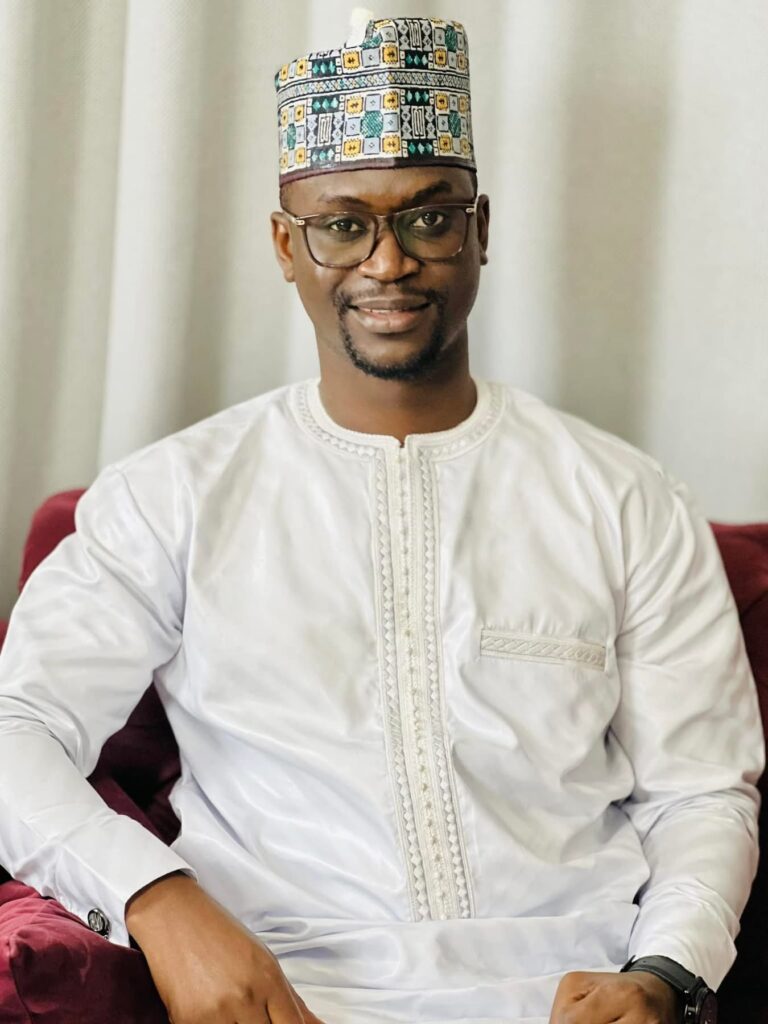
By Makutu Manneh
The Executive Director of Gambia Participates, Marr Nyang, has accused the government of lacking the political will to operationalize the Anti-Corruption Commission, arguing that some public officials fear scrutiny and possible prosecution under the body’s mandate.
Speaking during an appearance on Coffee Time with Peter Gomez, Nyang said recent developments have reinforced his organization’s belief that authorities are deliberately delaying the implementation of the Anti-Corruption Commission Act despite the legislation having already been passed by the National Assembly.
According to Nyang, the swearing-in and operationalization of the commission should not be subject to political discretion.
“The Anti-Corruption Commission was established by an Act of the National Assembly. Its operationalization is non-negotiable,” he said. “The people responsible for implementing it are the same people who could potentially be investigated and prosecuted under it.”
Nyang argued that successive corruption allegations involving public institutions have exposed weaknesses in accountability mechanisms and raised concerns about the government’s commitment to tackling high-level corruption.
“There are a series of corruption allegations, and some of them have even been proven. Whenever these issues arise, we hear promises of investigations. The petty cases get prosecuted, but the grand corruption cases are often swept under the carpet,” he said.
To support his argument, Nyang cited allegations involving approximately D300 million at the Gambia Ports Authority (GPA). He noted that the authority had indicated that the matter was referred to the Attorney General’s Chambers, but said the public remains unaware of any outcome.
He also referenced the Russian oil scandal, which the National Assembly investigated. According to Nyang, the government dismissed the Assembly’s findings as biased despite concerns raised in the report.
He further claimed that the parliamentary inquiry indicated that a police investigation into the matter was prematurely halted due to political interference.
Nyang also raised concerns about fees charged to travellers entering and leaving the country, questioning the rationale for a D1,000 charge that he described as a form of double payment since similar costs are already incorporated into airline ticket prices.
Additionally, he cited audit findings highlighting alleged financial mismanagement and procurement irregularities in public institutions. He criticized the government’s response to such findings, noting that some reports had been dismissed as incomplete or lacking credibility.
The civil society advocate further questioned the value and quality of a reported D4 million renovation project at the Banjul International Airport, citing incidents of flooding and persistent operational challenges, including unreliable electricity supply and excessive heat within parts of the facility.
Nyang argued that public officials who fail to act on credible allegations of corruption contribute to the problem by allowing misconduct to go unchecked.
“Any person who has the authority to hold people accountable and fails to do so is effectively aiding and abetting corruption,” he said. “You do not necessarily have to be directly involved in corruption to be complicit. If you have the responsibility to act and choose not to, then you become part of the problem.”
Comments are closed.