


By Seedy Jobe
The National Assembly on Thursday, June 4, 2026, convened a press briefing to provide an update on the Second Ordinary Session of the 2026 legislative year, reaffirming its commitment to transparency and public accountability.
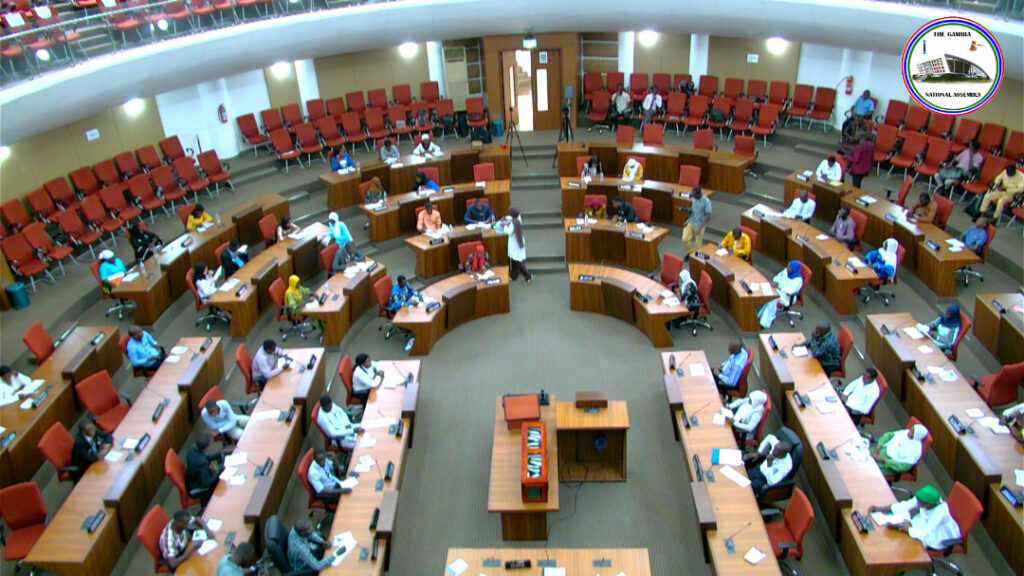
Held at the Assembly’s Auditorium, the briefing brought together the Speaker, Members of the National Assembly, parliamentary staff, and members of the media. The session outlined the legislative agenda and procedural roadmap for the Second Ordinary Session, scheduled to commence on Monday, June 8, and conclude on Wednesday, July 1, 2026.
Delivering his remarks, the Speaker of the National Assembly, Hon. Fabakary Tombong Jatta, underscored that the briefing forms part of the institution’s ongoing Open Parliament agenda—an initiative aimed at strengthening transparency, enhancing public understanding of parliamentary processes, and fostering greater trust in democratic governance.
“Through these briefings, we seek to ensure that the people of The Gambia remain informed not only about the decisions of Parliament but also about the processes through which those decisions are made,” Hon. Jatta stated.
He disclosed that the upcoming session will open with a quarterly oral ministerial statement by the Minister for Finance and Economic Affairs on the implementation of the 2026 National Budget. According to him, the engagement will enable members to scrutinize budget performance, assess expenditure trends, and obtain timely updates on the utilization of public resources.
The Speaker further indicated that, under Standing Order 100, ministers and public officials will appear before the Assembly to respond to committee recommendations concerning state-owned enterprises, land administration, foreign missions, security installations, and social welfare institutions.
Hon. Jatta emphasized that the legislative agenda remains both extensive and significant, with members expected to deliberate on key bills designed to modernize the legal framework, strengthen governance systems, enhance national security, and promote economic growth.
“Among the bills scheduled for consideration are the Gambia Immigration Bill 2026, the Urban Market Bill 2026, the Cybercrime Bill 2026, the Prerogative of Mercy Bill 2026, and the Intellectual Property Bill 2026. These legislative instruments address critical policy areas and reflect the Assembly’s determination to ensure that our laws remain responsive to contemporary governance challenges and emerging realities,” he noted.
A major highlight of the session, he added, will be on Tuesday, June 30, 2026, when the Vice President is expected to present the Government’s response to the report of the Special Select Committee that investigated the sale and disposal of assets identified by the Janneh Commission of Inquiry.
“This will represent an important moment in the Assembly’s oversight journey and reaffirm Parliament’s constitutional responsibility as a guardian of public accountability and the protector of the public interest,” Hon. Jatta said.
The Assembly is also expected to consider several motions related to governance, institutional accountability, and human rights. Notably, Members will deliberate on the ratification of the African Union Convention on Ending Violence Against Women and Girls, described as a landmark instrument aimed at strengthening protections for women and girls across the continent.
Additionally, a motion will be introduced by the Majority Leader for the establishment of a Standing Committee on Governance Assurances—a proposed mechanism to monitor, track, and evaluate commitments made by the Executive before Parliament.
“A permanent mechanism designed to monitor, track, and evaluate commitments made by the Executive before Parliament. This proposed reform presents a major step towards institutionalizing follow up mechanisms and strengthening executive accountability.”
In his remarks, the Clerk of the National Assembly, Mr. Kalipha M. M. Mbye, assured that extensive preparations have been undertaken to ensure the smooth conduct of parliamentary business. He described pre-session briefings as an institutionalized practice reflecting the Assembly’s commitment to transparency, procedural predictability, and accountability.
“As parliament prepares to convene on Monday 8th, the office of the clerk has undertaken extensive procedural, logistical, and administrative preparations to ensure that the smooth and efficient conduct of business goes free throughout this session,” Mr. Mbye said.
He further noted that a modern parliament must go beyond legislation and oversight, emphasizing the need to communicate effectively, anticipate challenges, and respond proactively to matters of national importance.
Mr. Mbye added that the session’s programme has been carefully structured in line with constitutional provisions, Standing Orders, and established parliamentary best practices, with the Order Paper designed to balance legislative work, ministerial engagements, committee oversight, and motions.
“The legislative agenda before the assembly is both substantial, as you could see in the agenda that has been published already, and consequential in our governance structure of the state,” he said.
The briefing concluded with a question-and-answer session. Majority Leader Hon. Billay G. Tunkara reaffirmed the Assembly’s commitment to addressing issues affecting Gambians, while Minority Leader Hon. Alagie S. Darboe emphasized the importance of ensuring that all key matters are thoroughly debated before the close of the session.
Comments are closed.