


By Seedy Jobe
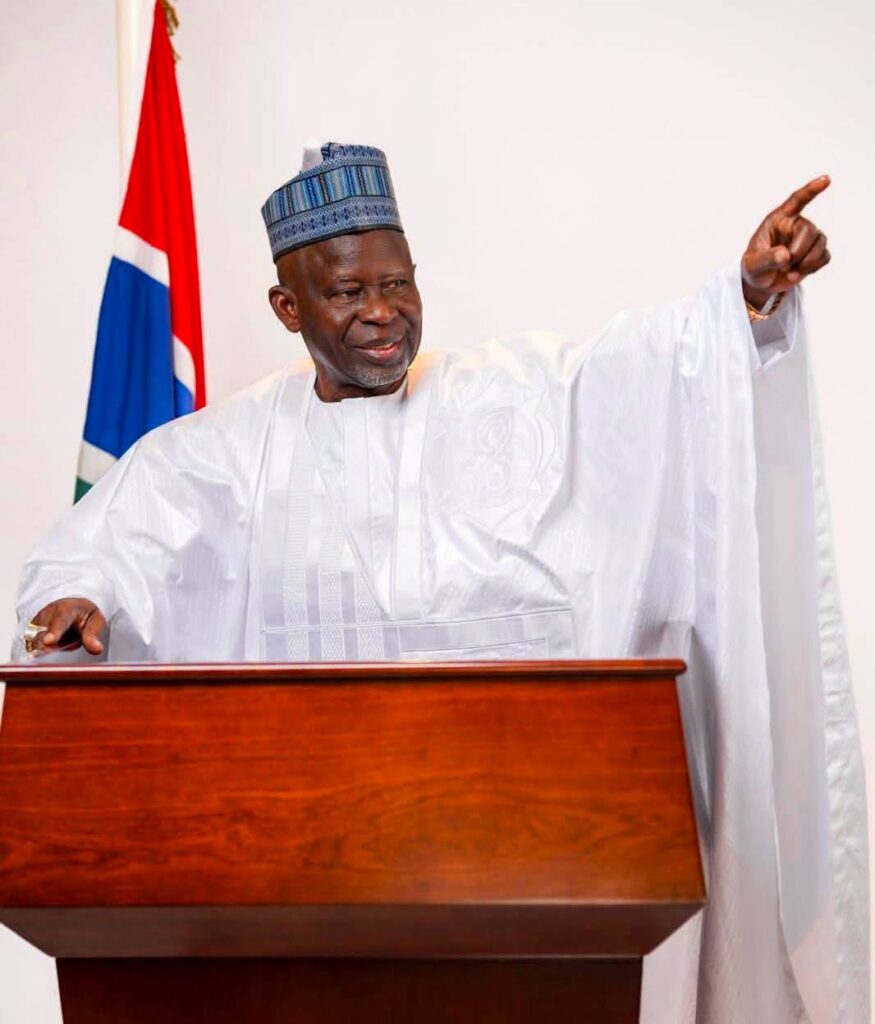
The United Democratic Party (UDP) has withdrawn from Coalition 2026 negotiations, with its leader, Ousainu Darboe, saying the opposition alliance should be built on constitutional principles rather than political expediency.
Announcing the decision at a news conference on Tuesday, Mr. Darboe said the move followed extensive consultations within the party’s leadership and was reached only after careful deliberation.
He said discussions among coalition participants had centered on two competing models for selecting a presidential candidate.
Under the proposal backed by the UDP, registered political parties would form the foundation of the coalition, and the presidential candidate would emerge from one of those parties while remaining accountable to both the coalition and the political party under the framework of the Constitution.
The alternative proposal, which Mr. Darboe said received majority support during the negotiations, called for prospective candidates to resign from their political parties, apply to a mediation committee, and contest the election as independent candidates under a candidate-led coalition.
Mr. Darboe argued that The Gambia’s experience following the 2016 presidential election demonstrated the risks of such an arrangement.
“We should learn from our national experience, not repeat it,” he said.
He maintained that when a president becomes politically detached from the parties that brought him or her to office, the coalition loses its ability to enforce accountability.
“We believe Gambians have already witnessed the consequences of such an arrangement. The experience of the 2016 coalition demonstrated that once a candidate becomes politically independent of the institutions that brought him or her to office, the coalition itself loses its ability to ensure political accountability,” Mr. Darboe said.
Mr. Darboe also criticized a proposal to establish a governing council to oversee the presidency, describing it as an extra-constitutional body that would exercise powers not contemplated by the Constitution.
“No extra-constitutional body should exercise powers not contemplated by the Constitution,” he said.
He further objected to a proposed decision-making structure that would give civil society organizations and political movements voting power equal to that of registered political parties. Mr. Darboe argued that democratic legitimacy should be derived from electoral mandates earned at the ballot box and said the UDP could not disregard the nationwide support and organizational structure it has built over the years.
The UDP leader also expressed concern that coalition discussions had increasingly focused on the distribution of ministerial positions and other government appointments rather than policy priorities such as unemployment, the rising cost of living, healthcare, education, and constitutional reform.
“Offices should be the consequence of serving the national interest, not the starting point of coalition negotiations,” he said.
Despite the party’s withdrawal, Mr. Darboe said the UDP remained respectful of the other participants in the talks and rejected suggestions that it had undermined opposition unity. He pointed to the party’s long record in the struggle for democratic change, saying its commitment to national reform should not be questioned.
He said the UDP would instead pursue discussions with like-minded political parties, democratic movements and other stakeholders to build what he described as a principled alliance grounded in constitutional governance, accountability and democratic values.
Mr. Darboe said coalition-building should be viewed as a means of delivering credible government rather than an end in itself, warning that an alliance formed without clear principles could create new political challenges instead of resolving existing ones.
“Our door remains open to every individual, political party, movement, and organization that shares these principles,” he said. “Unity remains our objective. But unity must rest upon principles, not expediency.”
Concluding his remarks, Mr. Darboe recalled the sacrifices made by UDP members during The Gambia’s struggle for democracy, including imprisonment, exile, and the loss of lives, and said the party remained committed to democratic governance.
“Time is no longer on our side,” he said. “The Gambian people deserve clarity. They deserve leadership. They deserve hope.”
Comments are closed.