


By Seedy Jobe
The Government of The Gambia is finalizing plans for the construction of a modern 2,000-capacity correctional and rehabilitation facility in Brikama Nyambikala, a project aimed at transforming the country’s prison system from a punitive model to one focused on rehabilitation and reintegration.
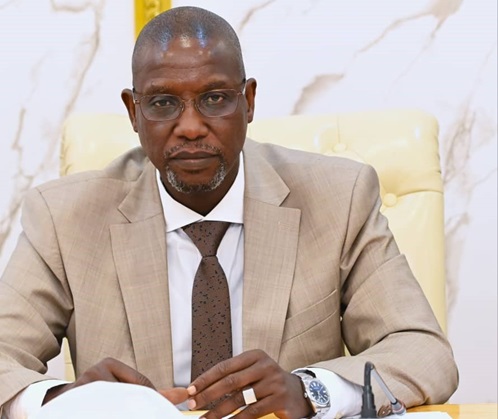
Speaking on GRTS Radio’s Minister Talks programme on Wednesday, Interior Minister Abdoulie Sanyang said the proposed facility is being designed in line with international human rights standards and best practices in corrections management.
According to the minister, the new facility will eventually serve as the country’s primary correctional center, reducing the long-term reliance on existing detention facilities.
“Once you establish such a facility, the existing detention centers will become temporary holding facilities. The question is, when people are sentenced, where will they be accommodated?” Sanyang said.
He revealed that the government had initially considered expanding the prison cells at the Jeshwang facility. However, President Adama Barrow directed authorities to pursue a more comprehensive solution that would address the broader objectives of correction and rehabilitation.
“The President made it clear that simply expanding the cells in Jeshwang would not achieve the desired outcome. His vision is to move away from a purely punitive system toward a correctional and rehabilitative approach,” Sanyang explained.
As a result, the government developed plans for a correctional and rehabilitation complex and allocated land for the project behind Brikama.
“We are currently working on the design, and it is nearly complete,” he added.
The minister said the facility will consist of three main sections, including a dedicated juvenile wing designed to operate similarly to a boarding school. Juvenile offenders will continue their education up to Grade 12 while receiving vocational and life-skills training.
“The only thing taken away from them is their freedom. We will train them in skills and other things, because we are not trying to punish them to the point of losing their livelihoods. We will make sure the kids come out as responsible citizens,” he said.
The complex will also include separate accommodation blocks for male and female inmates, as well as a maximum-security unit for high-risk offenders. “There are certain criminals you cannot change, but they will also have a protective and secure site,” Sanyang noted.
To reduce the financial burden associated with operating correctional facilities, the minister disclosed that the project will feature an industrial and production center intended to help make the institution more self-sustaining.
While acknowledging that some countries have adopted privatized prison models, Sanyang stressed that the Gambian facility will remain under government ownership and oversight.
“Ours will not be privatized. It will remain under government control, with a partner who will run the production side.”
The facility is also expected to house modern vocational workshops specializing in auto mechanics, carpentry, tailoring, and other trades. These workshops will support the maintenance of government vehicles and equipment while providing inmates with marketable skills.
In addition, the correctional center will incorporate smart agriculture initiatives aimed at boosting local food production.
“Our land is fertile, and we have abundant water resources. Yet many of the vegetables sold in our markets come from neighboring Senegal. We can produce these ourselves. The facility will implement smart agriculture systems to supply vegetables to the market,” Sanyang said.
He emphasized that the project is being designed to meet the country’s correctional and rehabilitation needs for the next five to fifteen years, while promoting a more humane and productive approach to incarceration.
Comments are closed.