

Former Trade Minister Keita Defends Joint Venture Deal Amid Allegations of Favoritism

By Makutu Manneh
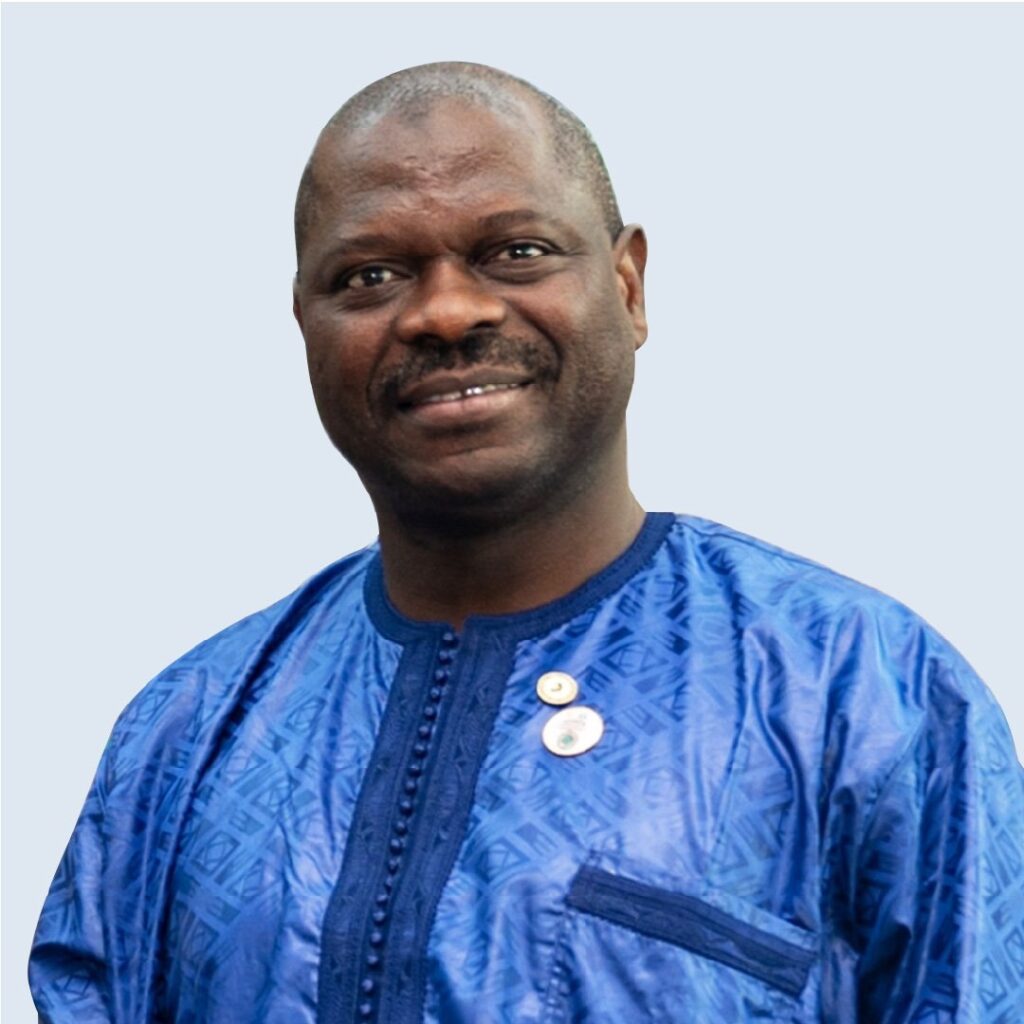
Former Trade Minister Seedy Keita has denied allegations that the government favored President Adama Barrow’s nephew, Amadou Sanneh, in a controversial multi-million dalasis joint venture deal on rice importation.
Speaking on The Brunch program on Saturday, Keita responded to The Republic’s September 17, 2025, investigative report, which suggested that Sanneh was unduly favored in the arrangement.
“We never signed the joint venture agreement with Amadou or JV. We signed with Win-Win. We never started working out solely to partner with Amadou Sanneh,” Keita clarified.
He explained that following the failed transaction with Win-Win, Mega Bank notified them of a D15 million liability the bank had underwritten.
According to Keita, the bank further indicated that a new partner was prepared to assume responsibility for that liability and requested that the facility initially designated for Win-Win be transferred to the new entity to allow the project to proceed.
He emphasized that, based on Win-Win’s shareholding structure at the time, Amadou was not among its members.
“So, even with JV, it is not the government that selected JV; it is the bank. It was a private arrangement with them and the bank,” he said.
Addressing concerns about financial regulatory guidelines when dealing with individuals with political connections, Abdoulie Jammeh, Deputy Permanent Secretary at the Ministry of Trade, explained that the ministry treats companies strictly as legal entities.
“We do not go into finding out who their shareholders are. We deal with companies as registered businesses in the Gambia,” Jammeh stated
Former Trade Minister Seedy Keita added that in cases involving politically exposed persons (PEPs), the responsibility lies with the banks to assess and manage potential risks. “Being politically exposed does not mean you are excluded from the economic system,” he noted.
Keita emphasized the role of financial institutions in safeguarding transactions. “When a private bank board sits over a transaction and now feels that it is good enough to go, particularly in resuscitating a failed transaction. I won’t fault the Ministry of Trade. Particularly, the bank has looked through and recommended that,” he said.
Challenging the narrative of risk-free benefits, Keita remarked, “How can you have benefits at zero risk? The first risk this company assumed was taking on a liability they had no part in creating.”
“That is the biggest risk. They started with a liability of D15 million, which was a default from Win-Win,” he stressed.
He was challenged with the suggestion that Amadou Sanneh may have taken the financial risk because he felt assured of government backing. The former minister dismissed this claim, stressing that Sanneh was not involved at the outset of the transaction.
Keita explained that without the joint venture, the government would have been liable to cover the D15 million, adding that the arrangement with JV effectively rescued the entire process.
His remarks were in direct response to The Republic’s investigative report of September 17, 2025, which noted that before President Adama Barrow assumed office, his nephew Amadou Sanneh worked as a cashier at Barrow’s company—an enterprise with an estimated 2020 turnover of D1 million. The report highlighted that Sanneh now oversees a multi-million-dollar food importation business.