


By Makutu Manneh
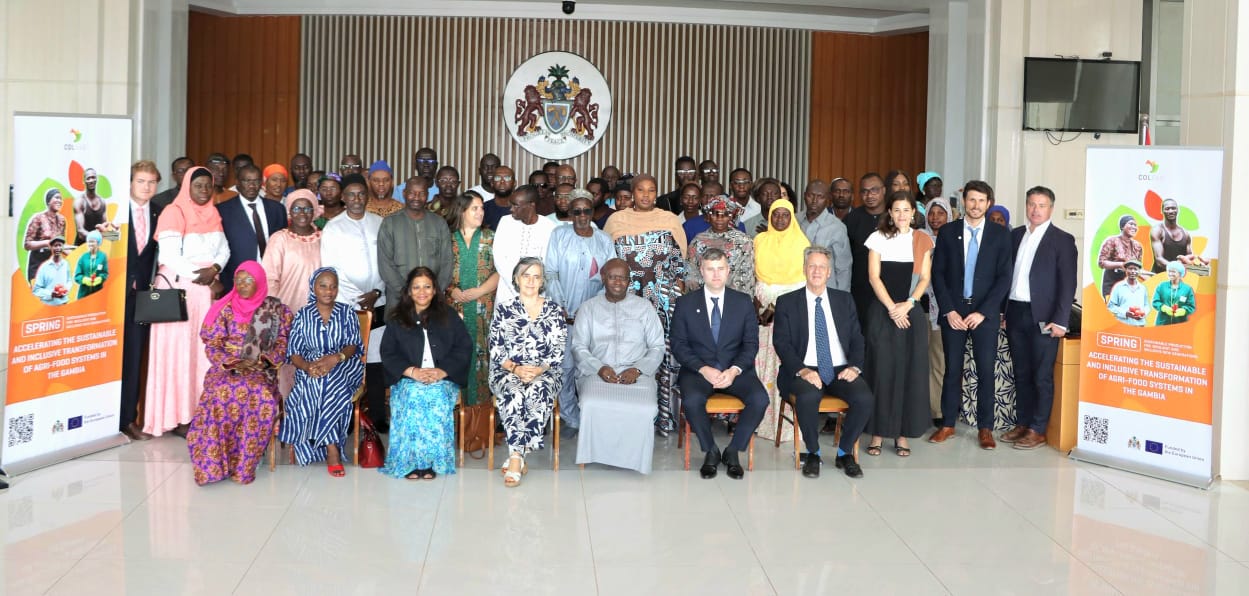
The European Union and the Government of The Gambia on Tuesday launched a new multi-year initiative valued at more than 1.6 billion dalasis, aimed at strengthening the country’s agri-food sector and reducing its dependence on food imports.
The programme, known as the Sustainable Production for Resilient and Inclusive New Generation (SPRING), will run for five years and is aligned with the government’s National Development Plan (2023–2027).
At the launch ceremony, the European Union ambassador to The Gambia, Immaculada Roca i Cortès, said the initiative is intended to increase local production, enhance competitiveness, and expand economic opportunities in rural communities. She added that it also seeks to improve access to safe, high-quality, and nutritious food.
“SPRING is going to be focusing on eight selected value chains that have maximum impact in the country,” she said. “The programme is designed to address very concrete and well-identified bottlenecks.”
The permanent secretary at the Ministry of Finance and Economic Affairs, Mod Seck, said the government envisions positioning The Gambia as a stronger supplier of agricultural products for both domestic consumption and export markets. He said the programme would support inclusive and sustainable poverty reduction while contributing to broader economic growth objectives.
He added that the initiative aligns with the United Nations Sustainable Development Goals, particularly Goals 2, 5, 12, and 14, and outlined what he described as four key strategic approaches to achieving the government’s vision.
Officials from the Ministry of Agriculture, Livestock, and Food Security and the Ministry of Environment, Climate Change, and Natural Resources also spoke at the event. Deputy permanent secretaries Fatou Jammeh Touray and Ndey Fatou Jobe expressed appreciation for the European Union’s continued support for national development efforts.
The SPRING programme places particular emphasis on women and young people, with a focus on supporting women- and youth-led enterprises, promoting entrepreneurship, and expanding opportunities across the agri-food value chain.
Comments are closed.