

Darboe Submits Final Presidential Nomination Papers, Pledges One Term to Deliver Reforms

By Makutu Manneh
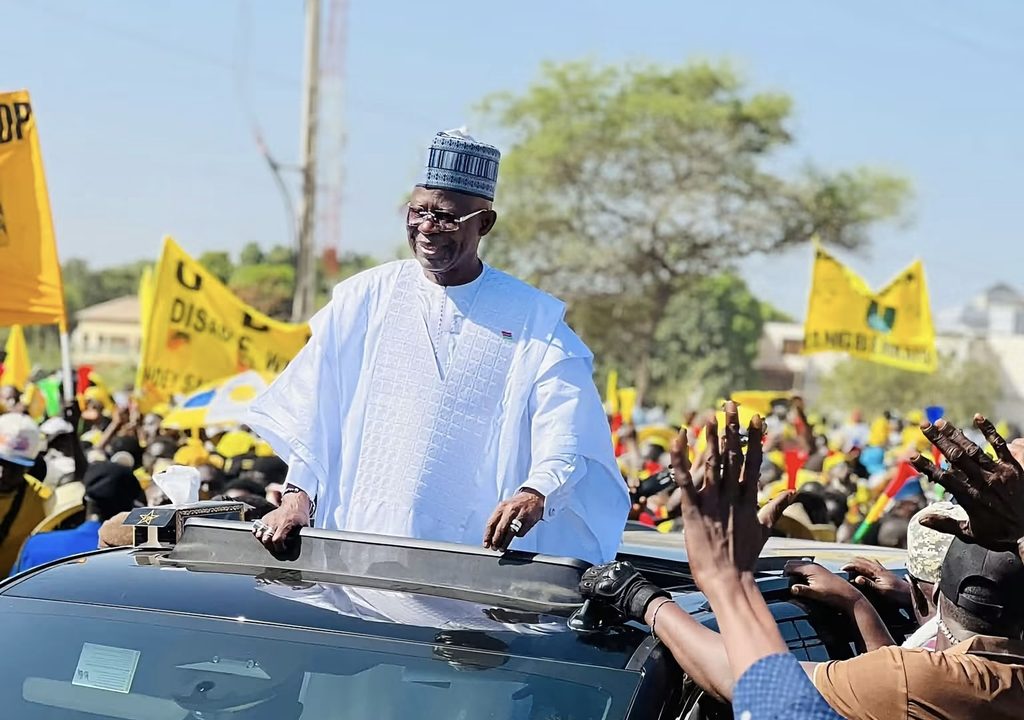
Veteran opposition leader Ousainu Darboe has announced that Monday’s submission of his presidential nomination papers to the Independent Electoral Commission (IEC) will be his last, marking a significant moment in a political career spanning three decades at the helm of the United Democratic Party (UDP).
Mr. Darboe, who has led the UDP since its formation in 1996, described the occasion as historic and deeply significant, signaling that the December 5 presidential election would be his final attempt to secure the country’s highest office.
“This is very historic for some of us because it will be the last time I will present my nomination papers to this august institution. So it is a very significant day,” Mr. Darboe told journalists after submitting his documents.
The longtime opposition leader used the occasion to outline his vision for a single presidential term, promising sweeping constitutional, institutional, and economic reforms aimed at strengthening democratic governance and laying the foundation for national development.
Mr. Darboe pledged that, if elected, he would serve only one term, during which he intends to establish what he described as a lasting legacy for the country.
Central to his agenda is the introduction of a new constitution that reflects the aspirations of Gambians and provides stronger safeguards for democratic governance.
He also promised comprehensive security sector reforms designed to improve professionalism, working conditions, and institutional accountability within the country’s security services.
According to Mr. Darboe, the reforms would ensure that men and women serving in uniform are treated with dignity and provided with the conditions necessary to take pride in their service.
On the economy, the UDP leader pledged to introduce progressive policies aimed at laying the groundwork for The Gambia’s transformation from a least developed country into a middle-income economy.
He acknowledged, however, that meaningful economic transformation would require sustained efforts beyond a single presidential term.
“These are achievable, except for the economic transformation, which is a continuous process,” he said.
Mr. Darboe also promised far-reaching civil service and public sector reforms, emphasizing merit-based appointments, fair treatment of public employees, and a more efficient government administration.
He said his administration would establish a public service system in which employees are treated fairly, appointments are based on qualifications and competence, and no public servant feels disadvantaged or unjustly treated.
Addressing corruption, Mr. Darboe maintained that the UDP has consistently challenged financial misconduct and the misuse of public resources since its establishment in 1996.
He credited the party with exposing major financial controversies, including allegations involving $3 million allegedly transferred to Switzerland by the former chairman of the Armed Forces Provisional Ruling Council (AFPRC).
Mr. Darboe also cited the country’s crude oil scandal as another example of financial irregularities that he said the UDP helped bring to public attention.
He argued that the party’s longstanding opposition to corruption demonstrated its commitment to accountability and responsible management of public resources.
Turning to the challenges facing young Gambians, Mr. Darboe expressed concern over irregular migration, particularly the dangerous sea journeys undertaken by young people seeking opportunities abroad.
He attributed the phenomenon largely to a lack of economic prospects and growing hopelessness among the country’s youth.
According to the UDP leader, many young Gambians risk their lives attempting to reach Europe because they see little prospect of building a better future at home.
His proposed economic reforms, he suggested, would seek to restore confidence among young people by creating conditions for greater economic opportunity and long-term national development.
As the country prepares for the December presidential election, Mr. Darboe appealed to Gambians to exercise restraint, reject emotionally driven political confrontations and safeguard the country’s peace and stability.
He urged citizens to approach the electoral process with reason, compassion and a shared commitment to the national interest.
The UDP leader cautioned against actions that could undermine public order or threaten the country’s longstanding tradition of peaceful political participation.
He emphasized that maintaining national tranquility was not solely the responsibility of political leaders or security institutions but a collective duty shared by all Gambians.
Mr. Darboe’s final presidential nomination submission marks a defining moment in his political journey, having spent nearly three decades as one of the country’s most prominent opposition figures.
His pledge to serve a single term places constitutional reform, security sector restructuring, public service accountability and economic transformation at the center of his final presidential campaign.
Comments are closed.