


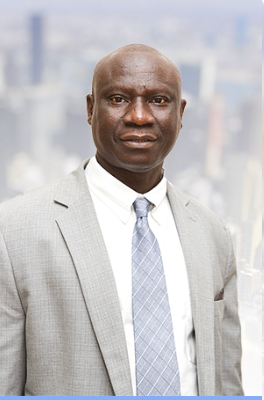
Buah Saidy, Governor Of The Central Bank of The Gambia
By Ramatoulie Jawo
Governor of the Central Bank of The Gambia, Buah Saidy, has clarified that MegaBank was not purchased by the Central Bank, but rather seized in a strategic move to protect depositors and stabilize the banking sector.
Speaking during an interview on Coffee Time with Peter Gomez, Governor Saidy emphasized that the seizure was necessary to prevent the total collapse of the bank, which had been mismanaged.“We do not purchase banks. When banks are having trouble before they collapse, we seize banks. We seize the bank to prevent it from collapsing and failing. When a bank fails totally, for instance, if Gambians could remember Continent Bank, that bank failed totally because we did not act on time, and it cost the government a lot of money because of the depositor’s money. A failed bank is the government who paid for its taxpayer’s money to refund depositors,” he said.
He noted that the Central Bank’s intervention in MegaBank was part of broader efforts to maintain financial sector stability and protect public funds.
Governor Saidy recalled that in 2008, the Central Bank raised the minimum capital requirement for commercial banks from GMD 60 million to GMD 200 million, to be implemented in two phases—D150 million by December 2010 and D200 million by December 2012. This was intended to strengthen banks’ ability to manage risks.
He explained that while some banks complied, two—Ozonic Bank Limited and Prime Bank Gambia Limited—chose voluntary liquidation rather than meeting the new requirements.
Other banks, however, faced more critical issues.
He added that the situation worsened when the Central Bank of Nigeria issued a directive prohibiting Nigerian banks from recapitalizing their foreign subsidiaries, including those in The Gambia.
“Now, owing to the confluence of reckless lending, poor board oversight and weak internal controls, Keystone Bank Gambia Limited and Access Bank Gambia Limited posed huge losses over the year, which in turn depleted their capital well below the minimum capital requirement. These worrying developments coincided with a directive from the Central Bank of Nigeria forbidding Nigerian banks from capitalizing their subsidiaries, including those in the Gambia,” Saidy said.
As a result, both Keystone and Access Banks became not only insolvent but also illiquid—unable to meet their financial obligations.
Given these developments, the Central Bank’s Board of Directors convened an extraordinary meeting on April 30, 2014, and resolved to seize both banks. The aim was to recapitalize and eventually merge them for potential sale to interested investors.
Following this resolution, Saidy noted that the Nigerian Central Bank reversed its earlier directive, allowing parent companies to recapitalize subsidiaries. Consequently, Access Bank’s parent company injected sufficient capital and regained control of the bank.“In the case of Keystone bank the parent Bank did not inject capital and to prevent further losses, the central of the Gambia in November 2014 petitioned the high court of the Gambia for an order to seize Keystone Bank. The high court on December 8,2014 granted the order. The Central Bank of the Gambia acting in accordance with the said order of the high court, reorganized Keystone Bank and obtained approval from the register of companies to change the name to Megabank and this was done,”he said.
Governor Saidy explained that following the court order, the Central Bank proceeded to reorganize MegaBank and developed a comprehensive plan to facilitate its sale— a plan that received approval from higher courts. He noted that the Bank made several efforts to dispose of and eventually privatize MegaBank.
As part of this process, in 2019, the Central Bank issued a call for expressions of interest from local audit firms. Respondents included Sahel Investment Management International, Accord Association, AA & Co., and DT Associates. After evaluating the proposals, the Bank’s contract committee recommended DT Associates based on their demonstrated expertise and experience.
However, Saidy disclosed that DT Associates’ proposed consultancy fee was deemed excessive, leading to the rejection of their bid. He added that two subsequent tender processes were also cancelled, as none of the applicants met the Central Bank’s criteria.“In September 2021, by then I became governor, the central bank obtained from the GPPA approval to appoint AT Associates to provide sales service advisory on privatization of megabank, following a competitive bidding process. Following an evaluation of the Megabank by DT associates a competitive bidding process for the sake of the in 2022 was done and DY Associates received five bids from the following investors, Access Bank Gambia limited, vista Bank Group holding SA, VFD group PLC, Brazil Bank and Afro board investment/GLM Investing Consulting and Real Estate,” he said.
He stated that the bidding process led to the selection of the most responsive bidder, Vista Bank, following an independent evaluation. The bank offered to acquire MegaBank for D900 million, equivalent to approximately $15 million.
Governor Saidy explained that after the share purchase agreement was drafted and finalized between Vista Bank Holdings SA and the Central Bank—facilitated by the consultant DG Associates—the Central Bank formally accepted the negotiated offer through a letter dated November 23, 2022.
However, the deal was later voided after Vista Bank failed to meet the full payment deadline and sought to alter the agreed payment terms. As a result, the funds already paid were refunded, and the Central Bank initiated a new bidding process, which saw KM Holdings Limited emerge as the successful bidder.
“They agreed to buy 100% of Megabank for the Five million two hundred and fifty thousand US dollars equivalent to D915 Million and have seen completed payment. The Bank is now under new management operating with oversight from the central bank.