

Bensouda Pledges Cabinet Representation, Accessibility Laws for Persons With Disabilities
By Seedy Jobe
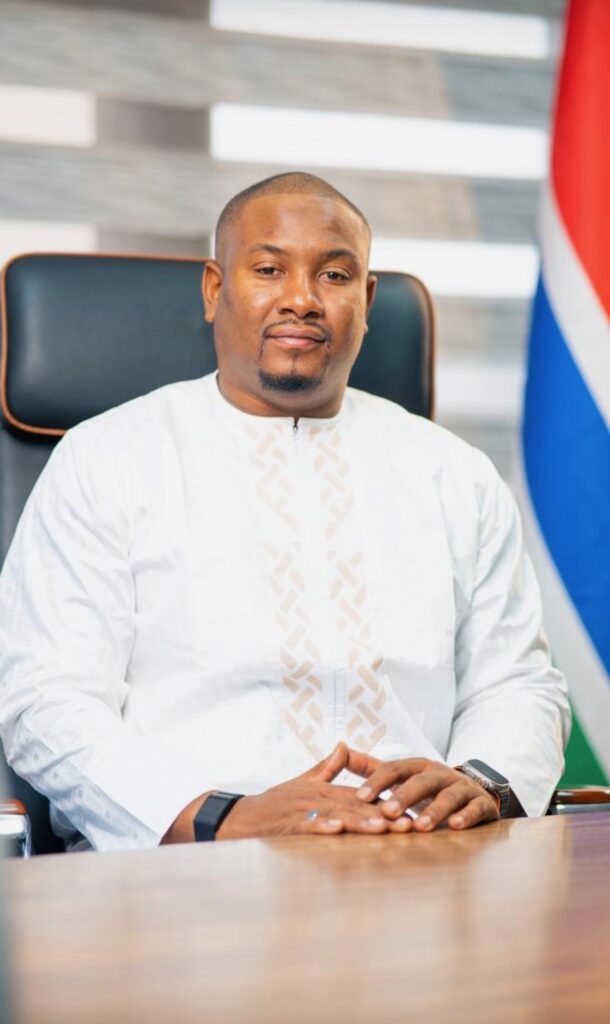
Talib Ahmed Bensouda, the mayor of Kanifing and leader of UNITE Party, has pledged to make disability inclusion a matter of law under a UNITE-led government, proposing representation for persons with disabilities in government and mandatory accessibility standards for public infrastructure.
Speaking in an interview with THD TV, Mr. Bensouda said he supported affirmative action for marginalized groups and argued that people from historically underrepresented communities should have a direct voice in government decision-making.
“As proof, I have done it before with KMC and the council,” he said. “We have done it again at the UMC executive. I nominated a person with disability to represent that sector.”
Mr. Bensouda said he wanted to institutionalize that approach across government, rather than rely on occasional appointments or gestures of inclusion.
He argued that meaningful inclusion must extend beyond political representation to the design of buildings, transportation systems, and public services. Drawing on his experience in Canada, he cited kneeling buses and wheelchair-accessible ramps as examples of infrastructure that allows people with mobility challenges to navigate public spaces more independently.
Such accommodations, he said, ultimately depend on government policy and budget priorities.
Mr. Bensouda pointed to the KMC municipal library as an example of his administration’s approach to accessibility. He said the facility was the first municipal building to provide disability-friendly toilets equipped with support handles and accessible flushing systems intended to allow users greater independence.
“For any human being, that is a very private and intimate moment,” he said. “So people with disabilities also, their dignity, they want to maintain that dignity. But how do we help them?”
Mr. Bensouda said legislation would be central to his proposed approach. He called for accessibility requirements covering public buildings and other facilities, including government offices, banks, and apartment buildings, with provisions for ramps, accessible toilets, and other accommodations.
“Our goal is, how do we legislate to institutionalize infrastructure, programs, and policies that help people with disabilities?” he said. “The issue is not just to make declarations or to make overtures that are very minimal or meaningless.”
He also proposed expanding specialized care and rehabilitation services and providing government subsidies to institutions serving persons with disabilities, including schools for people who are deaf or blind.
Mr. Bensouda said disability rights should ultimately be incorporated into the routine functions of government rather than treated primarily as a matter of charity or occasional assistance.
His proposals reflect a broader argument that accessibility should be established through enforceable standards, public investment, and representation, ensuring that persons with disabilities can participate more fully and independently in public life.
Comments are closed.