

Darboe Says UDP’s Anti-Corruption Campaign Dates to 1996, Vows to Preserve Party’s History

By Seedy Jobe
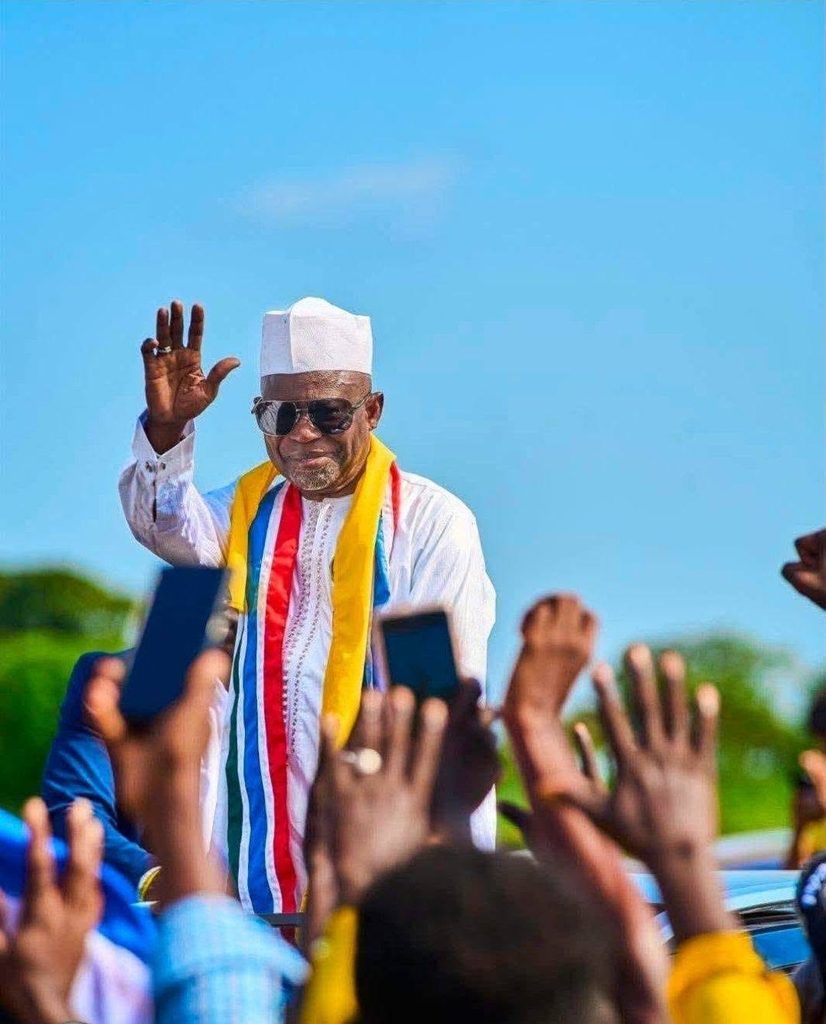
Ousainu Darboe, the leader of the United Democratic Party, said Sunday that the party’s campaign against corruption dates to its founding three decades ago, as he sought to place the UDP’s record of opposition to graft within the broader history of its struggle for political change in The Gambia.
Speaking at the UDP’s 30th anniversary celebration in Brikama, Mr. Darboe said the party would resist what he described as attempts by others to rewrite its history or claim credit for struggles in which they did not participate.
“We are not going to allow anyone to write the history of UDP,” Mr. Darboe said.
Mr. Darboe, the UDP’s secretary general and party leader, said the party would continue to recognize those who contributed to its political struggle, including members who died before seeing the end of former President Yahya Jammeh’s rule.
He singled out Binta Sabally and Majanko Samusa, among others, and recalled Mr. Samusa’s role in events at Chamoi Bridge. Mr. Darboe said such accounts should be preserved so that younger Gambians can understand the sacrifices made by an earlier generation of political activists.
He also credited Essa Faal, the leader of APP-Sobeyaa and former lead counsel of the Truth, Reconciliation, and Reparations Commission, for his role in helping establish a public record of the Jammeh era.
Mr. Darboe pointed to testimony before the commission by Amadou Sanneh, Fatoumatta Jawara, M.C. Cham Sr., and others, saying their accounts had helped document parts of the UDP’s history and the experiences of its members under the former government.
Much of Mr. Darboe’s address focused on corruption, an issue he said the UDP had confronted since 1996, the year the party was founded.
“We started the fight against corruption with vigor,” he said.
As an example, Mr. Darboe cited a $35 million loan that he said the Jammeh government obtained from Taiwan on behalf of The Gambia. He alleged that some of the funds were subsequently diverted to a Swiss bank account, an episode he said prompted the UDP to publicly challenge the government over the handling of state resources.
Mr. Darboe also revisited a controversy involving crude oil supplied by Nigeria to support The Gambia’s national budget. He said the UDP raised concerns over the management of the oil and pushed for the matter to be investigated by the National Assembly.
According to Mr. Darboe, Kemeseng Jammeh, who was then the minority leader in Parliament, introduced a motion seeking the establishment of a parliamentary committee to investigate what became known as the crude oil saga. The motion, he said, was blocked despite the UDP having seven members in the parliamentary minority at the time.
Mr. Darboe presented those episodes as evidence that the UDP’s anti-corruption position predates the current political debate over governance and accountability.
He also argued that The Gambia still lacks sufficiently strong legal safeguards to protect democratic institutions and public resources, saying the UDP would continue to advocate for reforms intended to strengthen accountability.
“So our fight against corruption is not just about talking,” Mr. Darboe said. “It is something we started in 1996, and we are continuing it.”
Comments are closed.