


By Makutu Manneh
The Central Bank of The Gambia has kept its benchmark interest rate unchanged at 14 percent, as policymakers balance relatively strong domestic economic growth against persistent inflationary pressures and growing uncertainty in the global economy.
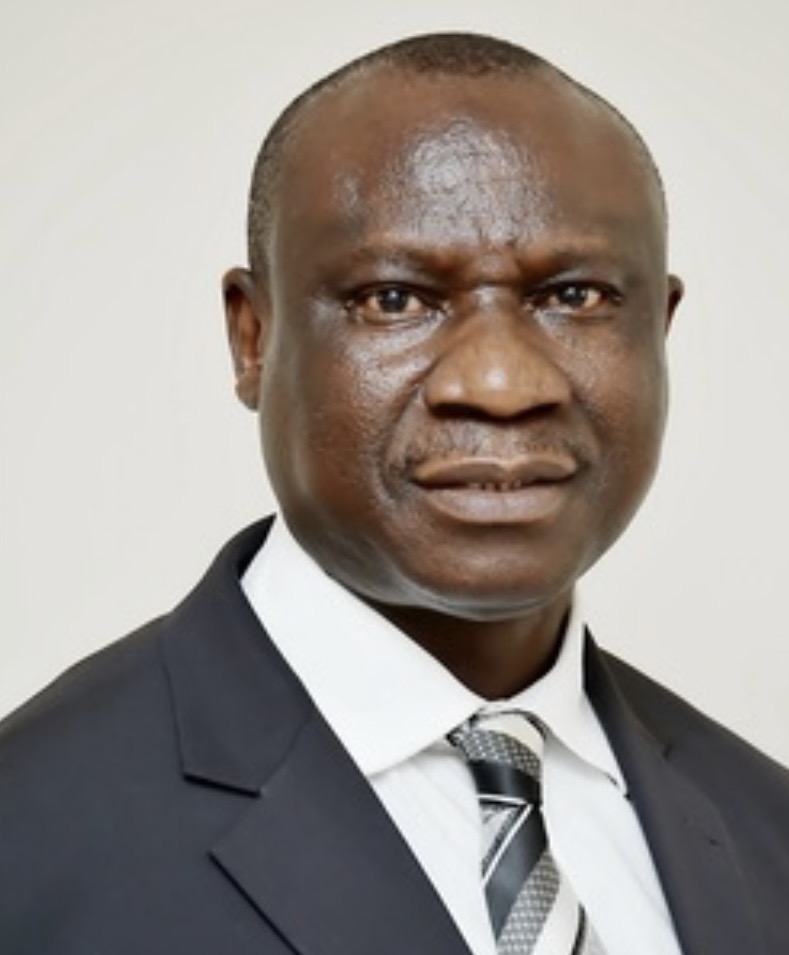
Buah Saidy, the governor of the Central Bank, announced the decision following a two-day meeting of the bank’s Monetary Policy Committee on Aug. 19 and 20. He said the committee opted to hold the monetary policy rate steady after assessing domestic and international economic conditions and the near-term outlook.
Mr. Saidy said global economic activity was expected to moderate in 2026, with heightened geopolitical tensions weighing on the outlook even as stronger activity in the technology sector provides some support.
Growth in sub-Saharan Africa is projected at 4.3 percent in 2026 and 4.5 percent in 2027, he said. But oil-importing and non-resource-intensive economies remain particularly vulnerable to high food and energy prices, limited policy space, and tighter external financing conditions.
Global progress in bringing down inflation has also stalled, according to Mr. Saidy. Citing projections from the International Monetary Fund, he said headline inflation was expected to reach 4.7 percent in 2026 — 0.3 percentage points higher than the IMF’s April forecast—before easing to 3.9 percent in 2027.
“The increase reflects higher energy and food prices associated with the Middle East conflict and related supply chain disruptions,” Mr. Saidy said. “Inflationary pressures are expected to be more pronounced in vulnerable energy- and food-importing economies.”
Despite those external pressures, Mr. Saidy said The Gambia’s economy had remained resilient.
Provisional estimates from the Gambia Bureau of Statistics show that real gross domestic product grew by 5.7 percent in 2025, driven by strong activity in tourism, construction, trade, and financial services, along with private investment and remittance inflows.
The Central Bank’s Composite Index of Economic Activity also indicates that the economy continued to expand through the second quarter of 2026, he said.
The bank now forecasts real GDP growth of 5.8 percent in 2026, an upward revision of 0.1 percentage points from its previous projection.
“The improved outlook reflects stronger-than-anticipated economic activity, supported by continued momentum in services and tourism, as well as ongoing public and private investment and remittance inflows,” Mr. Saidy said.
The foreign exchange market also remained stable and active during the second quarter, helped by improved supplies of foreign currency.
Aggregate purchases and sales of foreign currency rose to $773.7 million during the quarter, from $644.2 million in the first quarter of 2026, according to the governor.
Demand for foreign currency, nevertheless, remained elevated, partly because of increased payments for imports of food, fuel, and construction materials.
Against that backdrop, the Monetary Policy Committee said it would remain focused on bringing inflation back toward its target over the medium term while closely monitoring developments at home and abroad.
Mr. Saidy said the committee was prepared to adjust monetary policy if economic conditions warranted further action.
The committee is scheduled to hold its next meeting on Nov. 25.
Comments are closed.