


By Seedy Jobe
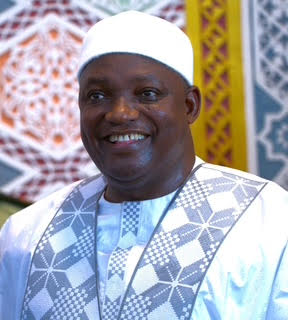
President Adama Barrow would lose a presidential election if it were held now, according to a new national opinion poll that points to widespread dissatisfaction with his performance, economic conditions, and concerns over a possible third term.
The findings were released on Thursday by the Center for Policy, Research, and Strategic Studies (CepRass) during a press conference in Banjul. The poll, conducted in November 2025 in partnership with the National Endowment for Democracy, surveyed 1,245 respondents nationwide and examined public attitudes toward governance, democratic institutions, and electoral processes ahead of the 2026 election.
According to the survey, only 34 percent of respondents said they would vote for Mr. Barrow if he ran against another candidate, while 49 percent said they would support someone else. The results suggest a difficult electoral path for the incumbent as the country approaches a pivotal election year.
The poll also revealed pronounced discontent among key voting blocs. More than half of women and more than half of young voters indicated an intention to vote for the opposition, signaling that significant segments of the electorate are seeking political change.
Overall assessments of Mr. Barrow’s tenure were similarly unfavorable. Fifty-eight percent of respondents said he had performed worse than previous presidents, while the economy emerged as a central source of frustration. Researchers noted that economic dissatisfaction remains one of the strongest predictors of electoral outcomes.
Concerns over democratic governance also featured prominently. A substantial share of respondents expressed opposition to any attempt by Mr. Barrow to seek a third term, with many viewing such a move as a potential threat to constitutional order and democratic norms.
The survey found strong skepticism toward the president’s “Meet the People Tour,” which respondents overwhelmingly viewed as a political exercise rather than a neutral governance initiative. Many cited concerns over the use of public resources beyond approved expenditures.
Beyond electoral preferences, the poll highlighted public demand for structural reforms. Respondents emphasized the need for a comprehensive integrity framework grounded in strong institutions, constitutional safeguards, and effective enforcement. Constitutional term limits and diaspora voting rights ranked far higher in public priority than technical changes to electoral procedures.
The findings also suggest that voters see opposition unity as essential. According to the poll, a united coalition is widely viewed as the most credible means of defeating the incumbent president.
Speaking at the press conference, Dr. Lamin B. Jammeh, the chief executive director of CepRass, underscored the independence and methodological rigor of the study, stressing that it was not intended to promote any political agenda.
“Perception studies are not about politics or partisanship,” Dr. Jammeh said. “They are about listening to citizens.”
He warned that ignoring public opinion could be an early sign of democratic erosion, noting that perceptions shape political behavior, civic engagement, and trust in institutions.
“Perceptions matter because they influence legitimacy,” he said. “Disregarding them is often the first step toward democratic decline.”
Dr. Jammeh reaffirmed CepRass’s commitment to nonpartisan research and called on the media to engage responsibly with the findings, emphasizing the role of evidence-based reporting in democratic accountability.
“The media are central to democratic oversight,” he said. “By reporting these findings responsibly, you help ensure that public debate is grounded in facts, not speculation.”
Comments are closed.