


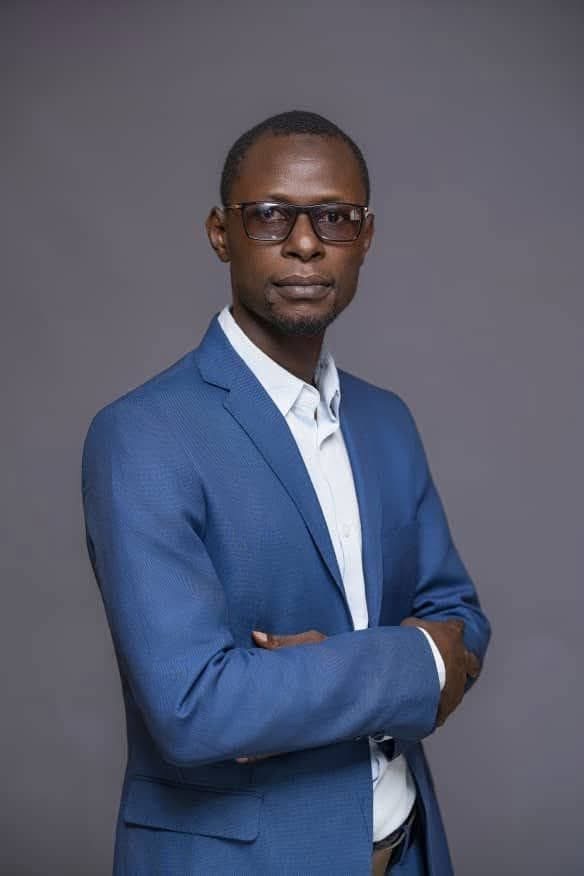
By Seedy Jobe
Hagi Suwaneh, the national youth president of the opposition United Democratic Party, has rejected key proposals under consideration in the Coalition 2026 negotiations, arguing that they could weaken constitutional governance and repeat mistakes made during the opposition alliance that brought President Adama Barrow to power in 2016.
His comments followed a warning from Lamin Manneh, a senior UDP official, that the party could withdraw from the negotiations if participants reject its proposal for a party-led coalition in favor of one organized around an individual candidate.
In a statement shared with Kerr Fatou on Wednesday, Mr. Suwaneh said the talks— involving eight registered political parties and 14 civil society organizations and unregistered movements— had produced two competing models for contesting the 2026 presidential election.
The UDP, along with the Alliance for Democracy and Development, the People’s Progressive Party, the Gambia Alliance for National Unity, and the People’s Alliance Party, supports a party-led coalition. Mr. Suwaneh argued that political parties, as the principal institutions through which voters grant electoral mandates, should determine the coalition’s leadership and direction.
The All People’s Party-Sobeyaa, the Gambia Democratic Congress, UNITE, and several civil society groups support a candidate-led model under which the coalition’s presidential nominee would be required to resign from his or her political party.
Mr. Suwaneh rejected that proposal, saying it resembled the 2016 coalition arrangement that selected Mr. Barrow as an independent candidate. He argued that the model contributed to mistrust, governance disputes, and the weakening of political parties after the election.
“Forcing a candidate to abandon their political party in the name of coalition is not wise strategic thinking,” he said.
Mr. Suwaneh also cited the political relationship between Senegalese President Bassirou Diomaye Faye and his political allies as evidence, in his view, that separating a candidate from the party that supported the candidacy could blur responsibility and weaken accountability.
He also objected to a proposed governing council that would oversee the presidency, arguing that such a body could conflict with The Gambia’s Constitution, which assigns specific powers and responsibilities to an elected president.
Mr. Suwaneh said the negotiations had placed too much emphasis on ministerial appointments, parliamentary seats, and the distribution of political power, rather than on developing a national program to address the country’s economic, governance, and institutional challenges.
He also criticized the decision-making process, saying it gave equal voting power to political parties, civil society organizations, and unregistered movements regardless of their electoral support. Such an arrangement, he argued, did not adequately reflect democratic legitimacy.
Despite his objections, Mr. Suwaneh said he remained committed to an opposition alliance that was constitutional, democratic, transparent and guided by the national interest. He said he would continue participating in the discussions in good faith.
He identified four principles that he said should guide any coalition seeking public confidence: fairness, respect for the Constitution, an honest recognition of each party’s electoral mandate and support base, and a commitment to the national interest over the distribution of political positions.
“I cannot endorse any arrangement that undermines constitutional governance, disregards democratic representation, or repeats the mistakes of past coalition experiments,” Mr. Suwaneh said.
Comments are closed.