

Sanna Manjang Opens Defense With Testimony on Military Service and Kanilai Patrol Duties

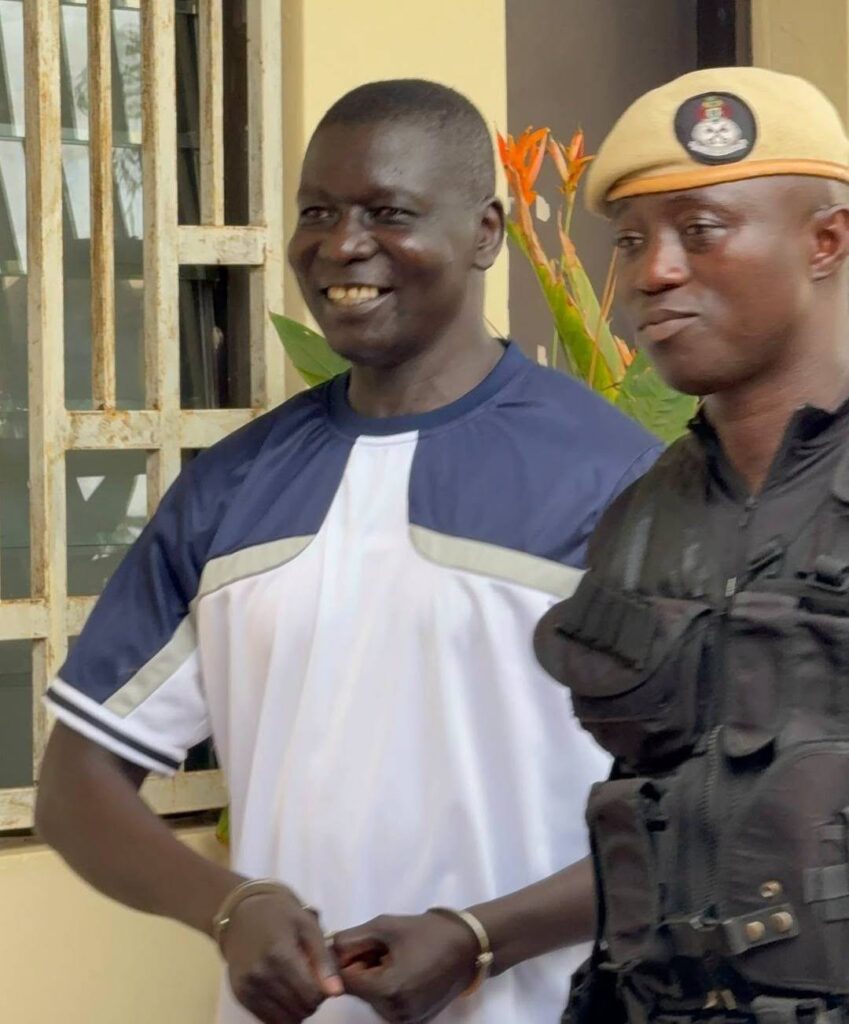
The defense in the trial of former soldier Sanna Manjang opened its case at the High Court in Banjul on Tuesday, with the accused taking the witness stand to describe his military career, his deployment to Kanilai, and his role leading border patrol operations along The Gambia’s southern frontier during the period covered by the charges against him.
The day’s proceedings also saw the withdrawal of Manjang’s pending bail application after the defense said it had insufficient time to respond to the State’s opposition before the court’s vacation.
When the matter was called, Deputy Director of Public Prosecutions E.R. Dougan appeared for the State, while Counsel S.K. Jobe represented the accused.
Justice S.K. Jobarteh informed the court that she had received both the defense’s notice of motion for bail and the State’s affidavit opposing the application. She asked whether the defense had filed a reply.
Counsel Jobe told the court that the affidavit in opposition had been served late the previous day, leaving him with inadequate time to review it or prepare the required response. He requested a 15-minute adjournment to consult with his client, a request the court granted.
When proceedings resumed, Counsel Jobe said the defense had decided to withdraw the bail application, which had been filed on July 25, 2026, explaining that the procedural requirements could not be met before the court’s vacation.
The prosecution raised no objection, and Justice Jobarteh struck the application from the record.
The defense then called Manjang as its first witness.
Testifying under oath, Manjang said he is a resident of Brikama, married with eight children, and served in the Gambia Armed Forces after enlisting in January 1994.
He told the court that following six months of military training, he was posted to Fajara Barracks as a regimental police officer. After serving there for two years, he was promoted to Lance Corporal and later advanced to the rank of Corporal in 2002.
Following that promotion, Manjang testified, he was sent to Libya for a three-month commando training program conducted by instructors from the Libyan Arab Jamahiriya. He described the training as “hard and deadly” and said he remained in Libya after completing the course to assist in training other military personnel because of his performance. He returned to The Gambia, he said, after relations between the two countries deteriorated.
Upon his return, Manjang testified that he briefly served at State House before being transferred to Kanilai after his name appeared on a military posting notice assigning personnel to the Kanilai patrol team.
Manjang told the court that after reporting to Kanilai, he was received by Khalifa Bajika, who assigned him responsibility for leading patrol operations and provided him with a vehicle for the assignment.
According to his testimony, there was no permanent patrol unit at the time. Instead, he assembled teams from personnel deployed to Kanilai, with soldiers rotating monthly from Banjul to participate in border patrol operations.
He said his responsibilities centered on securing the border region during a period of instability in neighboring Casamance, where armed rebel activity, he testified, posed risks to Gambian communities.
“Our responsibility was to ensure Gambians could go about their business without any threats,” Manjang told the court.
He testified that he led the patrols because of his familiarity with the border area, adding that personnel assigned to the operations were selected by senior military officers. At the time, he said, Ousman Badjie served as Commander of State House and oversaw the assignment of soldiers to the patrol teams.
Manjang testified that he remained with the Kanilai patrol unit until July 22, 2017, during which time he was promoted first to Staff Sergeant and later to Lieutenant.
During his testimony, Manjang recounted what he described as one of the most significant operations he led while stationed in Kanilai.
He told the court that seven Gambians had been captured by armed rebels operating near the border and that he was tasked with organizing a rescue mission. Coordination for the operation, he said, was facilitated through Bora Colley.
According to Manjang, he deployed with his team after consulting police officers stationed at Kalaji, who directed them toward the location where the captives were being held.
As his unit approached, he testified, an exchange of gunfire broke out between his team and the rebels.
Manjang told the court that the firefight lasted approximately 45 minutes before the rebels retreated, abandoning the captives. He said his team successfully rescued all seven Gambians, with only one person sustaining what he described as a minor injury to the mouth.
He further testified that he escorted the rescued individuals to the Kalaji Police Station, where they were handed over to police together with their belongings. He said official records of the incident should be available at the station.
At the conclusion of the day’s testimony, Counsel Jobe requested an adjournment to continue the defense’s case. The prosecution did not object.
Justice Jobarteh adjourned the matter until October 8, 2026, when the defense is expected to continue presenting its case.
Comments are closed.