

MoHERST Holds Consultative Workshop on Curriculum Design for TVET Centres of Excellence

By Seedy Jobe
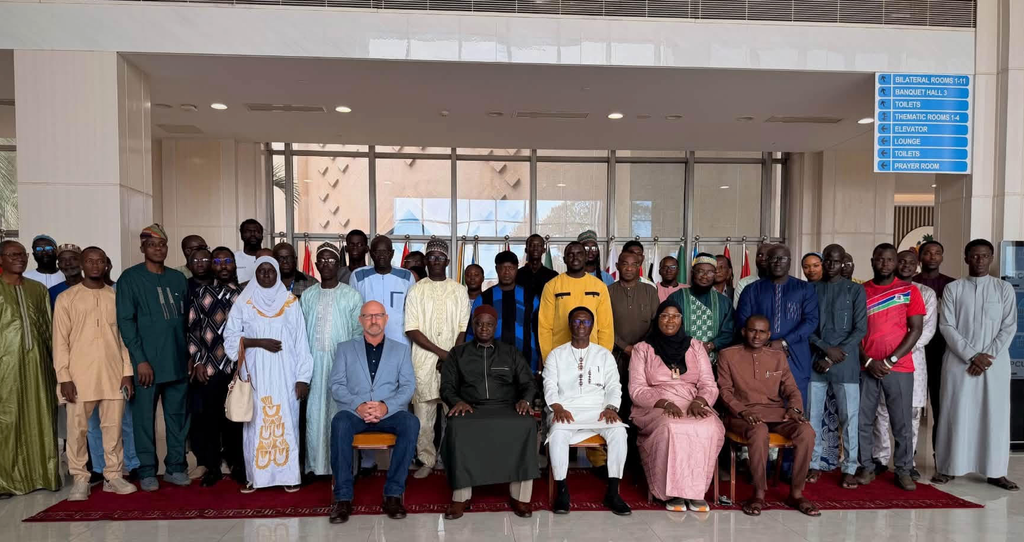
The Ministry of Higher Education, Research, Science, and Technology (MoHERST) on Friday held a one-day consultative workshop to help shape curricula for The Gambia’s Technical and Vocational Education and Training Centres of Excellence in agribusiness, fisheries, and aquaculture.
The workshop, held under the World Bank-funded RISE Project, brought together government officials and key stakeholders to review findings from a labour market analysis and provide recommendations for curricula designed to better align technical training with the country’s workforce needs.
The two Centres of Excellence, one in Ndemban, Foni Berefet, focusing on agribusiness, and another in Kombo South specializing in fisheries and aquaculture, are being developed through a $13 million investment in partnership with the World Bank.
The initiative is aimed at supporting economic diversification, strengthening food security, expanding sustainable employment opportunities for young people, and advancing The Gambia’s broader human capital development agenda.
In his welcoming remarks, Dr. Samba Sowe, deputy permanent secretary for technical matters at MoHERST, described the consultation as an important step toward strengthening collaboration between education and training institutions and the industries they are expected to serve.
He said stakeholder participation would help ensure that the curricula reflect the realities of The Gambia’s labour market and equip graduates with skills relevant to employers and emerging economic opportunities.
Dr. Sowe commended the consultancy team that prepared the labour market assessment, saying its findings would help guide the curriculum development process. He also thanked stakeholders and development partners for their continued support for the Centres of Excellence initiative.
The curricula, he said, are expected to align with The Gambia National Qualifications Framework and adopt a competency-based approach that emphasizes practical skills and workplace readiness.
Professor Pierre Gomez, the Minister of Higher Education, Research, Science, and Technology, said the curricula must respond directly to national development priorities, industry needs, and changing labour market demands.
He emphasized the importance of an inclusive curriculum development process that draws on the experience of both public- and private-sector stakeholders, including practitioners, farmers, fish processors, innovators, and other industry actors.
Professor Gomez urged participants to closely examine the labour market analysis and offer practical recommendations on existing skills gaps, emerging technologies, and new economic opportunities that should be incorporated into the training programs.
He said the initiative is consistent with The Gambia’s TVET Policy 2021–2030 and the Recovery-Focused National Development Plan 2023–2027 while also seeking to strengthen partnerships between training institutions and industry.
Professor Gomez reaffirmed the ministry’s ambition to establish Centres of Excellence that could serve as models for high-quality technical and vocational education not only in The Gambia but across the sub-region.
Once operational, the centres are expected to strengthen technical and vocational skills in key sectors, help address gaps in the labour market and contribute to the country’s long-term human capital and economic development.
Comments are closed.