


By Makutu Manneh
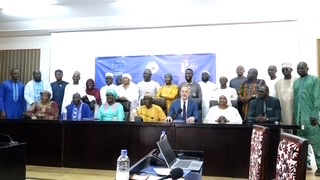
The International Institute for Democracy and Electoral Assistance (International IDEA), with support from the European Union (EU), has concluded a three-day consultation on the Draft Constitution (Amendment) Bill 2026, which proposes reserved seats for women and persons with disabilities (PWDs) in The Gambia’s National Assembly.
The consultations focused on building consensus around a constitutional amendment aimed at addressing long-standing gender and inclusion gaps in legislative representation. Women have remained significantly underrepresented in the National Assembly since independence, despite making up more than half of the population.
Members of the National Assembly’s Gender Committee used the sessions to review the proposed bill ahead of its tabling for debate and possible adoption. The bill proposes the reservation of 14 seats for women and two seats for persons with disabilities in future elections.
Opening the consultations, Speaker of the National Assembly Fabakary Tombong Jatta said women’s representation in national decision-making has remained disproportionately low, despite their central role in communities and the economy.
He described the Gender Committee’s move to introduce a committee bill on reserved seats as a necessary step toward correcting a historic imbalance and thanked the EU and International IDEA for their continued support to the legislature.
International IDEA Country Director Jainaba Faye said the proposed amendment represents a critical step toward a more inclusive and representative democracy.
“The proposed amendments are not just about numbers, but about legitimacy and effectiveness,” she said, noting that women, who constitute half of the population and the majority of voters, remain severely underrepresented in the National Assembly.
She added that reserving 14 seats for women would help address long-standing exclusion, while the allocation of two seats for persons with disabilities would fulfill The Gambia’s obligations under the UN Convention on the Rights of Persons with Disabilities.
An EU representative described the initiative as a milestone in The Gambia’s democratic journey, saying the proposed amendment sends a strong signal of the country’s commitment to improving women’s political representation.
He stressed that the EU is not interfering in the legislative choices of a sovereign nation, noting that decisions on constitutional amendments and representation rest with Gambian lawmakers.
Women currently occupy between three and five of the 58 seats in the National Assembly, depending on the electoral cycle.
Comments are closed.