


By Seedy Jobe
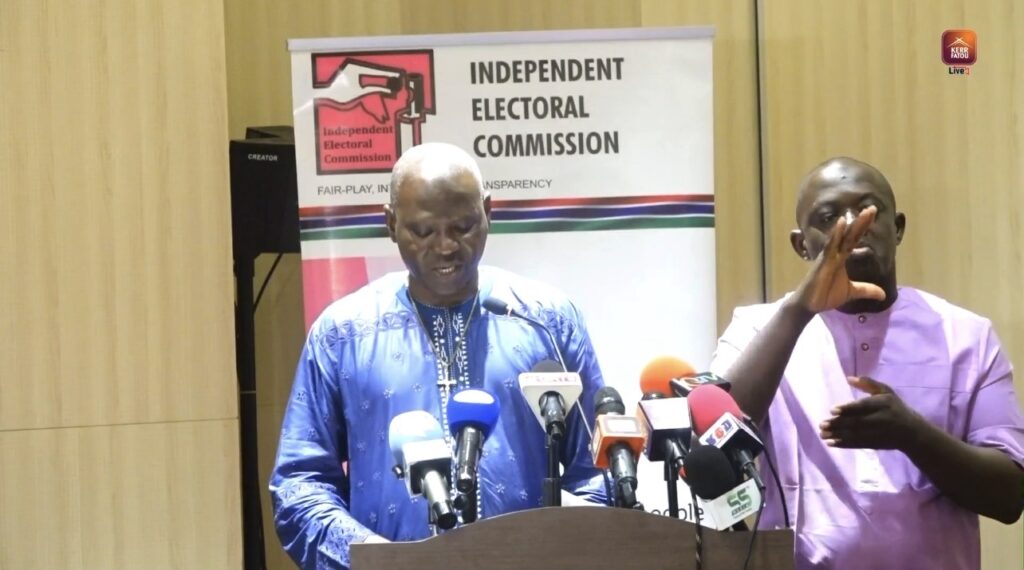
The Independent Electoral Commission (IEC) on Thursday reaffirmed its commitment to transparency and stakeholder engagement as it briefed political parties and development partners on post-registration preparations for The Gambia’s Dec. 5, 2026, presidential election.
The stakeholder forum, held at the Sir Dawda Kairaba Jawara International Conference Centre, brought together representatives of political parties, the European Union, the United Nations Development Programme, civil society organizations, and the media.
Addressing the gathering, IEC Chairman Joseph Colley said the commission would continue to operate under its longstanding open-door policy by providing timely information and updates throughout the electoral process.
“Pursuant to its open-door policy, the commission will not relent in sharing information and providing relevant updates to all the stakeholders as and when necessary,” Colley said.
He described the forum as an important platform for constructive dialogue, saying it enables stakeholders to discuss electoral issues interactively and transparently.
The meeting focused on activities following the conclusion of the 2026 Supplementary Voter Registration exercise, which ended on May 21. Colley said the registration process was monitored by political parties, civil society organizations, the media, and international partners and was conducted in accordance with the law requiring voters to be Gambian citizens who are at least 18 years old by election day.
The commission has since moved into the voter verification and adjudication phase, he said, thanking the IEC’s Information Technology Department and Electoral Services International for their role in producing the provisional voter register.
Colley said the register will undergo validation through the revising courts, where objections and appeals may be filed upon payment of the statutory D50 fee.
As part of its transparency measures, the IEC will publish the provisional voter lists at registration centers across the country beginning July 7, allowing voters to verify their information and report any errors.
“We therefore encourage voters and stakeholders to properly and meticulously scrutinize the lists for the purpose of corrections,” Colley said.
He added that each registered political party would receive a complimentary electronic copy of the provisional voter register following the forum.
On the issue of duplicate registrations, Colley said the adjudication process reduced the number of suspected duplicate registrations from 24,058 to 14,334 individuals. Following consultations with representatives of 15 political parties on June 29, the commission agreed to remove duplicate entries recorded during the 2026 supplementary registration while retaining the corresponding records from the 2021 voter register.
He warned that any cases involving suspected fraudulent registration would be referred for legal action to safeguard the integrity of the electoral roll.
The chairman also announced that the commission would open a limited period before the December election for voters to replace lost, damaged or mutilated voter cards, a measure intended to ensure that eligible citizens are not disenfranchised.
In collaboration with the ECOWAS Network of Electoral Commissions (ECONEC), the IEC will also conduct training sessions for journalists, civil society organizations, police officers, and other election stakeholders to support what Colley described as a smooth and incident-free electoral process.
“The commission would like to reassure the electorate and all its stakeholders of its continued commitment and resolve to deliver free, fair, transparent, credible and inclusive elections,” he said.
Comments are closed.