


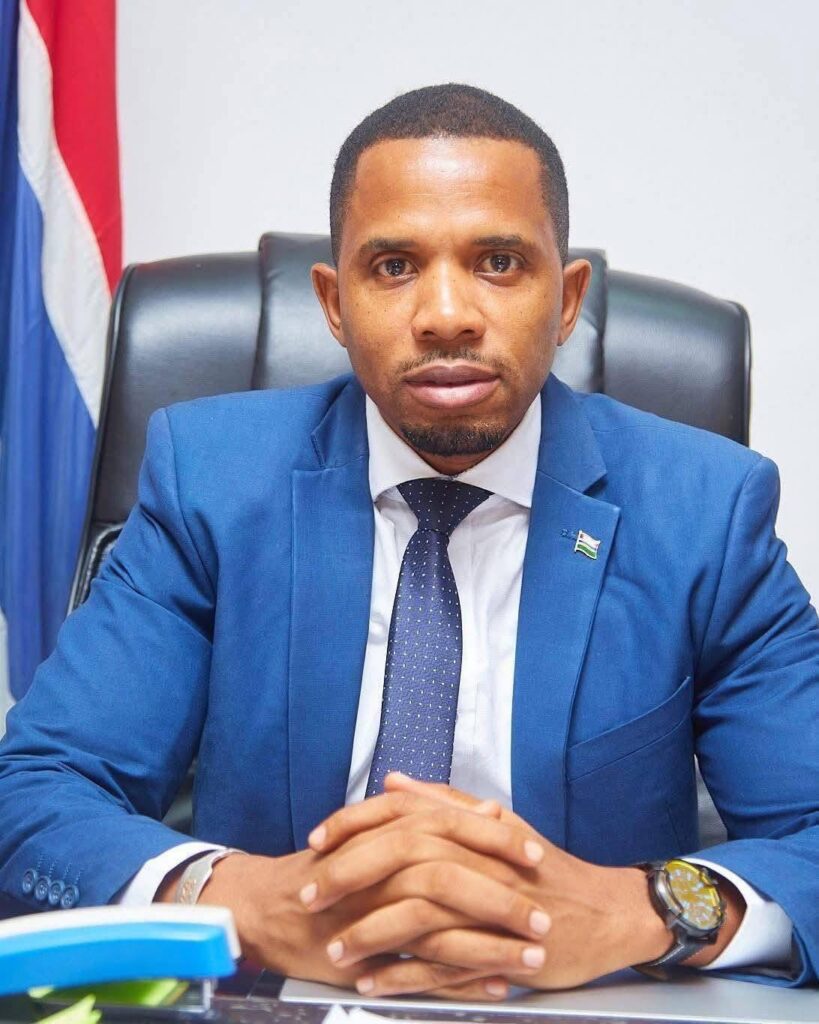
Dr. Ismaila Ceesay, Minister of Information
By Fatou Sillah
The Gambia government spent about D1 billion in 2025 to subsidize electricity, a move aimed at easing the cost of living for households and cushioning businesses from rising energy costs, the minister of information, media and broadcasting services said in a radio interview.
Dr. Ismaila Ceesay, speaking on West Coast Radio, said electricity tariffs paid by consumers do not reflect the true cost of supply because of sustained government intervention.
“We have spent a billion Dalasi government subsidy on electricity in 2025 alone,” he said.
He explained that without subsidies, the price consumers pay per kilowatt hour would be significantly higher. “What you pay per kilowatt, when you buy the cash power is not what you are supposed to pay, the government is subventing, It is supposed to be more than that.”
Dr. Ceesay said the policy mirrors government support in other sectors, including fuel and agriculture, where the state has intervened to limit price increases. Fuel prices, he said, remain beyond the reach of many Gambians without subsidies.
“That’s why we are subventing electricity just like we are subventing petrol in the pumps, just like we are subventing agriculture as well, fertilizer, seeds and so on and so forth,” he said.
The minister argued that electricity subsidies are critical because energy costs ripple through the wider economy. Higher electricity prices, he said, would drive up the cost of goods and services, as businesses pass operational expenses on to consumers. “If electricity is expensive, everything becomes expensive just like fuel in the pump.”
The minister said businesses typically transfer a portion of their operating costs to consumers, a dynamic that makes government subsidies critical to keeping prices affordable for households. “If you have a business and you produce something, part of your operational cost is passed on to consumers,” he said.
Dr. Ceesay added that the government had rolled out several measures to cushion citizens from the cost-of-living pressures that followed the Covid-19 pandemic. Among them, he said, was a sharp increase in civil servants’ salaries — by nearly 110 percent — alongside continued subsidies on fuel.
He also said access to electricity had expanded significantly nationwide, with about 75 percent of the country now connected to power. In addition, he defended the quality of fuel imported into The Gambia.
Comments are closed.