


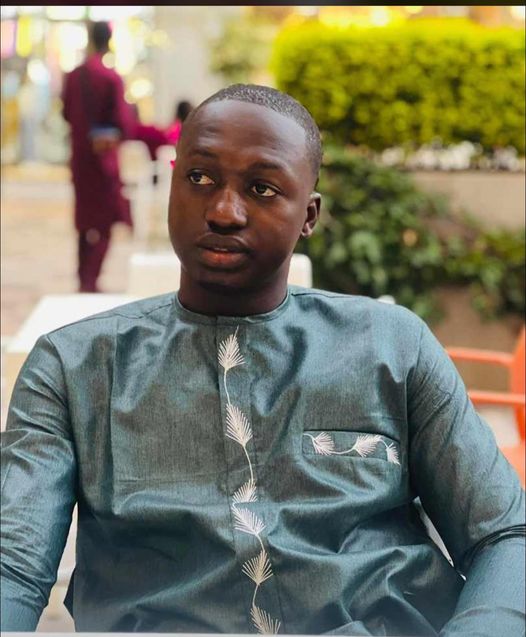
Journalist Bakary Mankajang was cross-examined by both defence and state counsels on the interview he conducted with Mama Jabbi, the first prosecution witness in the ongoing police shooting trial of Ousainou Bojang and Amie Bojang.
During the previous sitting, the court had ordered that the audio interview between Mankajang and Jabbi—originally recorded in Mandinka—be translated into English and shared with both the prosecution and defence for cross-examination purposes.
Ousainou Bojang and his sister, Amie Bojang, are on trial over the alleged shooting of three police officers. Two officers reportedly died, while one sustained injuries. Ousainou faces charges of murder, attempted murder, and committing a terrorist act, while Amie is charged as an accessory after the fact.
Defence Counsel Adama Sillah, representing the second accused, Amie Bojang, began by questioning Mankajang about his professional background.
“How long have you been a journalist,”? Sillah asked.
“4 to 5 years,” Mankajang replied.
The journalist told the court that the interview with Mama Jabbi lasted “about ten to eleven minutes” and took place “at a compound in Yarambamba, said to belong to the president’s sister.”
“How long did your interview with Mama Jabbi last,”? Counsel Sillah asked.
“It lasted for 10 to 11 minutes,” Mankajang confirmed.
“Mr Mankajang, would you be able to tell us where this interview was conducted?” Counsel Sillah pressed.
“The interview was conducted somewhere in Yarambamba, at the compound that Mama said is the compound of the sister of the president,” Mankajang specified.
“What’s the name of the president’s sister,” Counsel Sillah asked.
“The president’s sister’s name is Korka,” Mankajang replied.
When asked who selected the venue, Mankajang explained that Jabbi chose the location herself after he contacted her for the interview. He further revealed that, based on his background research, Jabbi was known to live in Sukuta but was staying at the president’s sister’s compound at the time of the interview.
“Who chose the place or location?” Counsel Sillah asked.
“Mama chose the location for the interview when I called her for the interview,” Mankajang replied.
“Did you have any idea where Mama Jabbi lives?” Counsel Sillah asked.
“During my background research before conducting the interview, I was told that she lives in Sukuta instead of Yarambamba. But within that particular duration, she lives with the sister of the president. Within the duration of the interview,” Mankajang explained.
“So you are then telling me that during or within the period of the interview, she stayed with the president’s sister,” Counsel Sillah clarified.
“Yes,” Mankajang responded.
“Who selected the location for the interview,” Counsel Sillah asked.
“Mama Jabbi,” Mankajang replied directly.
Counsel Sillah pressed further on whether the setting could have influenced Jabbi’s statements, to which Mankajang responded, “I have no knowledge about that.”
“Mr Mankajang, the fact that the interview was conducted at the president’s sister’s home, does it have any impact on the utterances of Mama Jabbi,”? Counsel Sillah asked.
“I have no knowledge about that,” Mankajang replied.
The interview, Mankajang said, was conducted on 14 September 2023, after the president had announced a bounty for information leading to the arrest of the suspect.
“When was the interview conducted?” Counsel Sillah asked.
“It was conducted on the 14th of September 2023,” Mankajang supplied the date.
“Were you aware of the presidential bounty?” Counsel Sillah asked.
“Yes, I’m aware,” Mankajang replied.
“Was the interview done before or after the declaration of the president’s bounty?” Counsel Sillah asked.
“It was after the president declared the bounty,” Mankajang responded.
Sillah suggested that Jabbi’s remarks during the interview were influenced by the bounty, implying she may have been motivated by the reward. Mankajang, however, declined to speculate, saying, “I cannot say anything about that.”
“The fact that the interview was conducted at the President’s sister’s home. The same was done after the declaration of the President’s bounty. I’m putting it to you that it was Mama Jabbi who made utterances in order to reach out or to get to the Presidential bounty,” Counsel asserted.
“Anyway, I cannot say anything about it,” Mankajang responded.
When asked whether Jabbi had prejudged the suspect, Mankajang confirmed that she had expressed suspicion about Ousainou Bojang before investigations were concluded. He also confirmed that Jabbi had stated in the interview that she acted “for the president.”
“Within the interview, Mama Jabbi told you that as soon as she saw the first accused, she formed an opinion and suspected that he must have done something. Is that correct?” Counsel Sillah asked.
“Yes she said, and the audio was played before the court, where we all heard her” Mankajang replied.
“Mr Mankajang, it could be safe to say that Mama Jabbi prejudged the suspect even before the investigations were done,” Counsel Sillah inquired.
“Well according to her, yes,” Mankajang acknowledged.
“And within the interview, Mama Jabbi, through her introductory remarks, stated that she did this for the President, is that correct?” Counsel Sillah asked.
“Yes, she said so,” Mankajang confirmed.
However, Mankajang clarified that Jabbi’s statements concerned only the first accused, noting, “The interview was based solely on her interaction with Ousainou Bojang.”
“Within the interview, was there any point where she had stated that she saw the second accused together with the first accused Amie Bojang,”? Counsel Sillah inquired.
“No, the interview was based solely on her interaction with the first accused Ousainou Bojang,” Mankajang clarified.
Cross-Examination by State Counsel AA Wakawa
State Counsel A.A. Wakawa then took over the cross-examination, focusing on Mankajang’s professional conduct and adherence to journalistic ethics.
When asked about his qualifications, Mankajang said he is pursuing an Advanced Diploma in Journalism and is familiar with the journalistic code of conduct.
“What are your qualifications in journalism?” Counsel Wakawa asked.
I’m doing an advanced diploma at the school of Journalism,” Mankajang replied.
“Are you familiar with the code of conduct of journalism ethics?” Counsel Wakawa inquired.
“Yes, I’m aware of the code of conduct,” Mankajang replied.
“How long have you been in the Journalism field?” Counsel Wakawa asked.
“4 to 5 years,” Mankajang replied.
“Are you aware that journalists are not investigators?” Counsel Wakawa challenged.
“Journalists investigate and they do all the normal journalistic work,” Mankajang countered.
The state counsel then asked whether Mankajang had shared any information about the case with the police. The journalist replied that he was arrested upon arrival and was not told the reason, though police accused him of “interfering with witnesses.”
“Did you at any point volunteer to give what other information you had to the police who was the body investigating this incident? Did you at any point volunteer?” Counsel AA Wakawa demanded.
“Before I found out about this incident, it was said everywhere. I cannot recall who said it, whether it was the president or the head of the police, but it was mentioned, and I completely remember that this was said that any individual who knows anything about this case, or who can do anything to lead to the arrest of the suspect and to go out and do what’s required,” Mankajang explained.
“Did you provide the information you got?” Counsel Wakawa asked.
“I was arrested upon arrival,” Mankajang responded.
“Did you know why you were arrested?” Counsel Wakawa asked.
“I cannot tell you why I was arrested” Mankajang replied.
“You cannot tell why? You mean the police did not tell you why you were arrested? Counsel Wakawa pressed.
“The police did not tell me why I was arrested. What they said was that I was interfering with their witnesses, and this matter was not before the court, and within their particular jurisdiction,” Mankajang replied.
Wakawa challenged Mankajang’s professionalism, accusing him of conducting “unprofessional journalism,” a charge the journalist denied.
“You were carrying out unprofessional journalism,” Counsel Wakawa accused.
“You cannot call that unprofessional journalism,” Mankajang denied.
‘Do you have any documents to show that the police said everybody can go ahead and arrest the suspect?” Counsel Wakawa inquired.
“I have no document, but you know, as I said, I think I can, produce audio where this was said,” Mankajang defended his position.
The counsel further suggested that Mankajang was acquainted with Mama Jabbi before the interview and that he may have sought the presidential bounty. Mankajang refuted both claims, stating, “I did not know Mama Jabbi before the interview. I found her contact after hearing her audio.”
“I will be correct to say that you were friends with Mama Jabbi before the conduct of the interview,” Counsel Wakawa asserted.
“I don’t know Mama Jabbi. I have never seen Mama Jabbi before, and I didn’t know Mama Jabbi existed before the interview,” Mankajang disagreed.
“How did you come to know Mama Jabbi?” Counsel Wakawa asked.
“After I came across Mama’s audio, I did my research to get her number,” Mankajang explained.
“Would it be correct to say that Mama gave you the interview without any information that you were a journalist or not?” Counsel Wakawa asked.
“She was aware that I’m a journalist because I informed her before the interview. And everyone within the compound knew that I was a journalist,” Mankajang clarified.
When pressed on whether he was a “social media content creator rather than a journalist,” Mankajang maintained, “I am a journalist — I do both.”
“So I will be correct to say that you are a social media content creator not a journalist,” Counsel Wakawa challenged.
“I am a journalist, and I do both as well,” Mankajang maintained.
“Will I be correct to say that you as a journalist was also looking for the bounty stated by the president, will I be correct to say that?” Counsel Wakawa inquired.
“That was not my intention,” Mankajang replied.
“Mankajang, again I put it to you that just like Mama Jabbi granted you the interview and information regarding the arrest of the first accused person, for the sake of the president and the betterment of the country,” Counsel Wakawa stated.
“I was doing my job for the betterment of the country, not the betterment of the president. We are answerable to the public, not the president or any institution,” Mankajang responded.
With no further questions from Counsel Wakawa, the court discharged Bakary Mankajang and adjourned the matter to October 21 for continuation.