


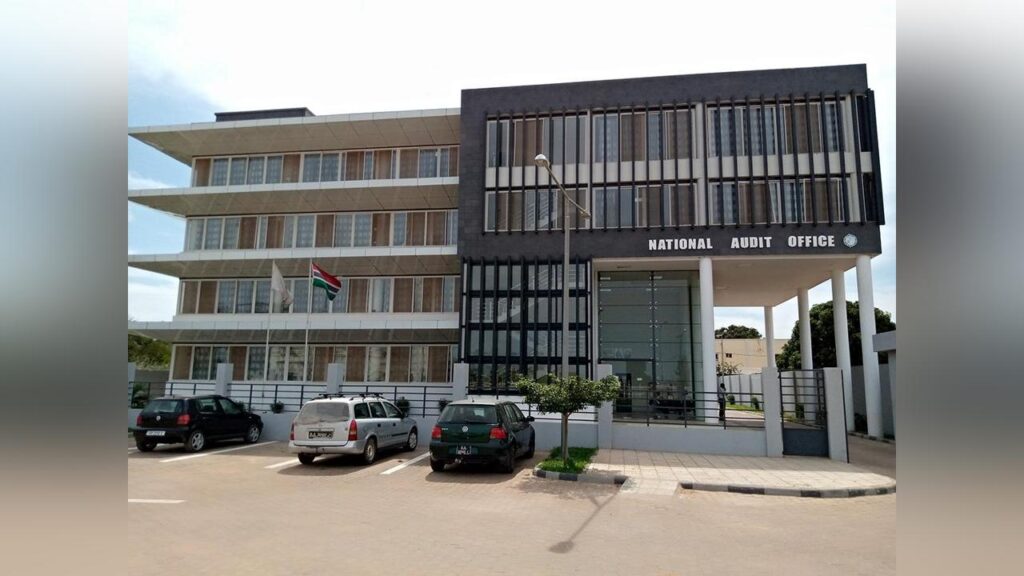
By Fatou Sillah
The 2024 Auditor General’s Report has raised concerns about the Geological Department’s handling of mining license fees, citing weak verification practices that could be undermining the accuracy of government revenue from surface rentals.
According to the report, the department lacks sufficient documentation to verify the annual surface rental fees paid by mining companies, casting doubt on both the amounts collected and the liabilities reflected in the government’s financial statements.
Auditors found that sketch plans submitted by the Geological Department for Gach Mining Company Limited—documents used to calculate annual rental charges—contained neither dimensions nor a defined scale. As a result, the auditors said, it was impossible to determine the precise land area covered by the mining license, making accurate fee assessments unachievable.
“Without the sketch plans, we cannot verify that the surface rental payables recorded in the financial statements are accurate,” the report stated.
The audit also identified underpayments by Sino Majilack Jalbak Investment and Development Company Limited (SMJ). Between 2019 and 2024, the company paid a total of GMD 278,000, an amount the auditors said fell short of its contractual obligations. When the 2024 rental fee is added, the total outstanding balance owed to the government rises to GMD 823,923.72.
Gach Mining Company was also cited for failing to pay surface rental fees for 2022 and 2023. The Auditor General recommended that the Geological Department recover all outstanding amounts and submit evidence of recovery for verification.
Beyond mining rentals, the report highlighted broader accounting concerns. It found that the inclusion of outstanding imprests in the Statement of Outstanding Commitments—totaling GMD 7,284,191—created a misleading picture of future spending obligations. Auditors said this practice overstated the statement and weakened its reliability.
“The issue remains unresolved, and maintaining outstanding imprests as a commitment contravenes the Financial Regulations and the IPSAS conceptual framework,” the report concluded.