


By Seedy Jobe
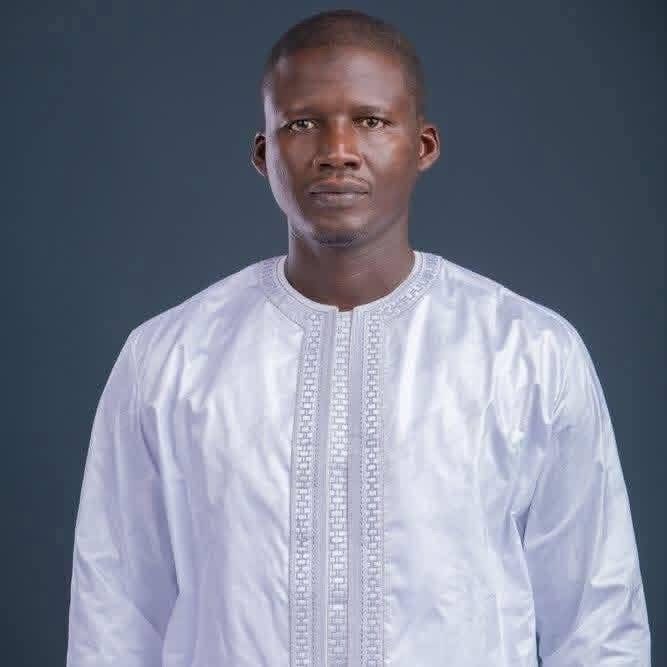
Alhaji Mamadi Kurang has responded to public criticism surrounding his departure from the People’s Democratic Organisation for Independence and Socialism (PDOIS) to the United Democratic Party (UDP), particularly allegations that his move reflects inconsistency on the issue of long-serving party flagbearers.
Speaking in an interview with Eye Africa TV on Friday, Kurang rejected claims that he had accused PDOIS of maintaining a perpetual flagbearer while joining a party with a similarly longstanding leader. He maintained that such assertions had been misattributed to him.
“I have never said it is only one person holding a flagbearership; that’s the reason why I jump from one party to another,” Kurang stated.
He further noted that he is unaware of any instance in which UDP leader Ousainou Darboe publicly indicated an intention to step aside as flagbearer and later reversed that position. According to Kurang, discussions around term limits for party leaders remain ongoing within Gambian political parties, adding that he actively participated in similar debates during his time in PDOIS.
Kurang argued that political leadership, particularly the role of a party leader or flagbearer, should not be viewed as a salaried position, but rather as a form of national service and personal sacrifice. As such, he said, the imposition of term limits may not be suitable for all political parties.
“A political party leader is not paid by taxpayers’ money; it’s not a salary job, it’s more like a sacrifice,” he said.
Highlighting the personal and financial challenges faced by party leaders and flagbearers, Kurang stressed that those in such positions often have to make significant sacrifices while relying on alternative means of livelihood. He also argued that governments have a responsibility to create an enabling environment for politicians, noting that elected officials ultimately benefit from public support.
Clarifying his earlier reference to “6 & 9,” Kurang explained that the phrase was used in the context of corruption and self-serving politics. He said it was directed at individuals who have left their parties after being elected on party mandates, citing figures such as Yaya Menteng Sanyang.
“That group of people who left, for what? You left, but the party gave you the mandate, yet you’re still enjoying that mandate. That’s what defines you. So, if you’re out of that party, you represent a thinking that’s the 6&9 out there, self-interest politics,” Kurang said. “What is 6 & 9? Your self-interest over the national interest.” He emphasized.
Addressing concerns related to age and leadership, Kurang dismissed the notion that age alone determines a leader’s effectiveness, pointing to examples of senior political figures in the United States, including President Joe Biden and former President Donald Trump.
The debate surrounding Kurang’s political stance has reignited broader discussions on transparency, accountability, and internal democracy in Gambian politics. A longstanding critic of the government’s management of public funds, Kurang has continued to draw both support and criticism for his outspoken positions.