

Saikouba Jarju Rejects Claims of Hunger in The Gambia, Credits Barrow With Sustaining Progress Amid Global Crises

By Seedy Jobe
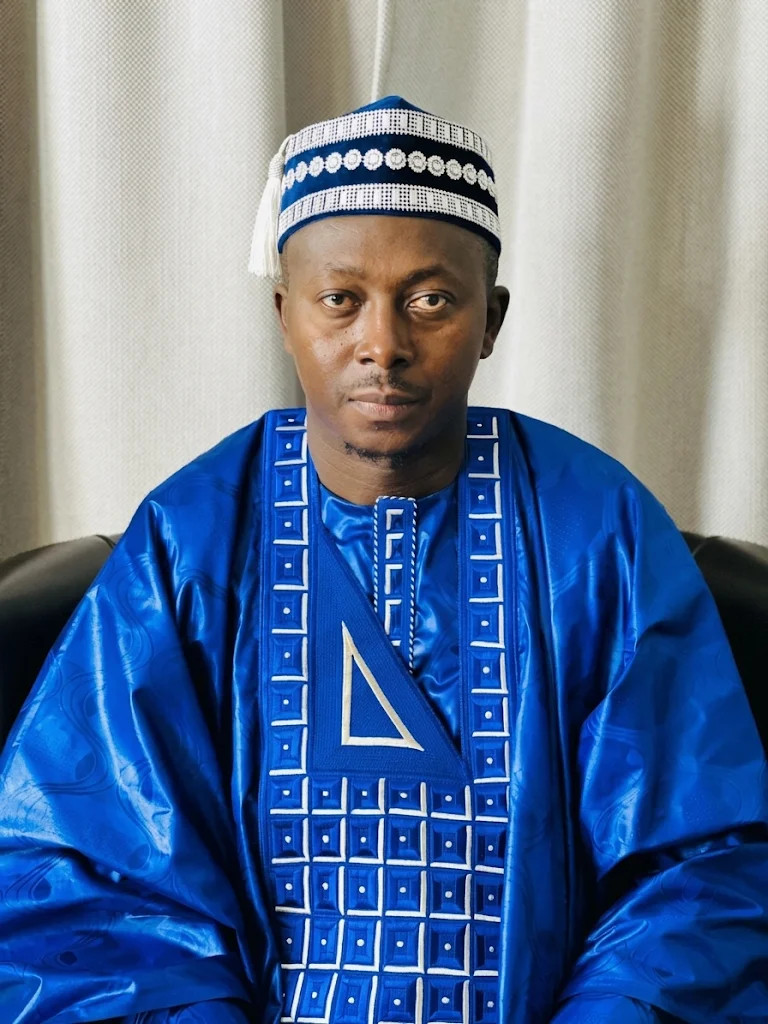
Saikouba Jarju, Deputy Head of Mission at The Gambia’s Embassy in Nouakchott, Mauritania, has rejected claims of widespread hunger in The Gambia, arguing that the country has made significant progress under President Adama Barrow despite economic challenges and successive global crises.
Speaking in an interview with Senn FM, Mr. Jarju defended the Barrow administration’s record, insisting that living conditions have improved considerably compared with previous years.
His remarks came in response to a question about how the government intends to convince Gambians who acknowledge the construction of roads, hospitals, and schools but maintain that many households continue to struggle to put food on the table.
Mr. Jarju dismissed that characterization, arguing that a comparison of past and present conditions would demonstrate the progress achieved under President Barrow.
He maintained that The Gambia is more developed today than at any previous point in its history and said President Barrow deserves recognition as the country’s best-performing leader.
Reflecting on the political developments that followed the 2016 presidential election, Mr. Jarju argued that President Barrow’s early years in office were complicated by internal divisions within the coalition that brought him to power.
He accused the United Democratic Party (UDP) of dominating the administration between 2016 and 2018, claiming that the party effectively controlled government affairs during that period.
According to him, the coalition’s eventual fragmentation in 2019 and the political disputes that followed undermined the country’s development prospects.
Mr. Jarju also blamed the Three Years Jotna movement, which emerged in 2019 to demand that President Barrow honor his initial pledge to serve three years, for disrupting the momentum generated by the Brussels donor conference.
He argued that the political unrest surrounding the movement contributed to the failure of development pledges made at the conference to materialize.
Turning to the economy, Mr. Jarju cited the COVID-19 pandemic, the Russia-Ukraine war, and the conflict involving Iran as major international developments that have placed pressure on economies worldwide.
Despite these challenges, he insisted that The Gambia has continued to function and make progress.
He pointed to the availability of essential commodities, including rice, bread, and fuel, as evidence that the country’s economic situation is not as dire as critics suggest.
Mr. Jarju argued that, regardless of rising prices and financial difficulties, Gambians can still find basic necessities in markets and shops.
Drawing comparisons with Mauritania, where he is stationed, he said access to fuel and other essential commodities can be more challenging there than in The Gambia.
He claimed that motorists in Mauritania often begin searching for fuel when their tanks are only half empty because of concerns about availability.
Mr. Jarju also highlighted what he described as improvements in the payment of public sector salaries under President Barrow.
He claimed that during former President Yahya Jammeh’s administration, civil servants sometimes waited until February or March to receive their December salaries.
By contrast, he said, government employees under President Barrow have occasionally received their monthly salaries as early as the 19th.
He argued that such improvements are frequently overlooked in public discussions about the government’s performance, despite their importance to workers’ welfare and the country’s development.
While acknowledging that rising living costs remain a concern, Mr. Jarju said economic hardship is not unique to The Gambia.
He cited Mauritania as an example, saying residents regularly demonstrate over difficult living conditions and that even foreign diplomats experience the effects of rising costs.
Comparing household expenses in the two countries, he said his monthly electricity expenditure in Mauritania amounts to about 10,000, while his entire family compound in The Gambia consumes approximately D2,000 worth of electricity a month.
He also cited the cost of rice, saying he pays the equivalent of D2,000 for a 25-kilogram bag in Mauritania.
Mr. Jarju acknowledged that prices in The Gambia have increased, citing the rise in the price of bread from D5 to D6 as an example. However, he argued that discussions about inflation should go beyond identifying price increases to examining their underlying causes.
He urged opposition politicians and intellectuals to distinguish between economic difficulties resulting from government policies and those driven by international developments.
According to him, the government should be held accountable when its decisions contribute to hardship, but political leaders and commentators also have a responsibility to explain when external factors are responsible.
Mr. Jarju maintained that a fair assessment of the Barrow administration must take into account both the country’s development gains and the extraordinary global economic challenges it has faced.
Comments are closed.