


By Seedy Jobe
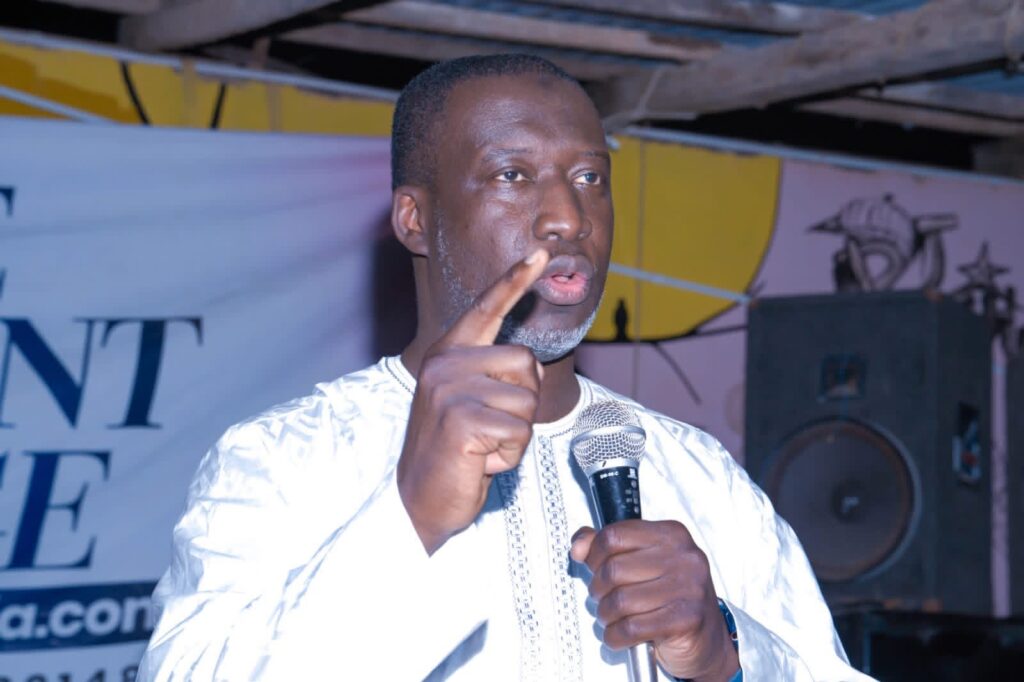
Ebrima Dibba, a member of the United Movement for Change (UMC), has strongly criticized President Adama Barrow and his administration, accusing them of neglecting the country’s youth and failing to address the underlying causes of irregular migration, commonly referred to as the “backway.”
In a WhatsApp audio message circulated on social media, Mr. Dibba said the government bears primary responsibility for the continued loss of young Gambian lives along irregular migration routes. He argued that the administration’s growing concern reflects its own failures, stating that the people should hold President Barrow and his government accountable for what he described as poor leadership and inaction.
While expressing condolences to families who have lost relatives on the backway journey and offering prayers for the deceased, Mr. Dibba maintained that governance failures lie at the heart of the crisis. “You are the ones leading the country,” he said, adding that leaders would ultimately be held responsible for how they govern and provide for their people.
Mr. Dibba further accused the President of failing to act decisively against individuals involved in facilitating irregular migration and of prioritizing personal and political interests over the welfare of citizens. He described what he termed a lack of effective leadership and suggested that if the government is unable to improve living conditions, it should allow others to take over.
Commending the Kanifing Municipal Council (KMC) for initiatives aimed at supporting young people, Mr. Dibba contrasted these efforts with what he described as the central government’s lack of tangible support for youth empowerment. He claimed that beneficiaries of a KMC program received over D200,000 each and challenged the national government to identify comparable interventions. He also questioned past promises made by President Barrow to create widespread wealth, asking the administration to point to concrete examples of such outcomes.
On the issue of presidential tenure, Mr. Dibba argued that ten years in office should be sufficient, citing what he described as a lack of vision and innovative ideas. He criticized the use of public funds—referencing the D116 million allocated toward a failed constitutional reform—and accused the government of misleading citizens on term limits. He further suggested that continued calls for extended leadership reflect self-interest rather than national development.
Addressing recent deportations involving the United States, Mr. Dibba said the Gambian government has not been transparent with citizens. He rejected claims that U.S. actions were driven by an unwillingness to return Gambians home, instead attributing the situation to governance shortcomings. He reiterated that leaders who cannot improve living standards should serve their term and step aside.
Mr. Dibba also faulted the President for missed economic opportunities, particularly in agriculture. He cited President Barrow’s participation in a conference in Brussels, arguing that the government should have prioritized investment in domestic rice production rather than seeking direct financial support. Referring to Jahally Pacharr as a potential agricultural hub, he noted that The Gambia spends an estimated $90 million annually on rice imports and argued that targeted investment in agriculture could enhance food security and national self-reliance.
“The more a country can feed itself, the more independent it becomes,” Mr. Dibba emphasized.
Comments are closed.