


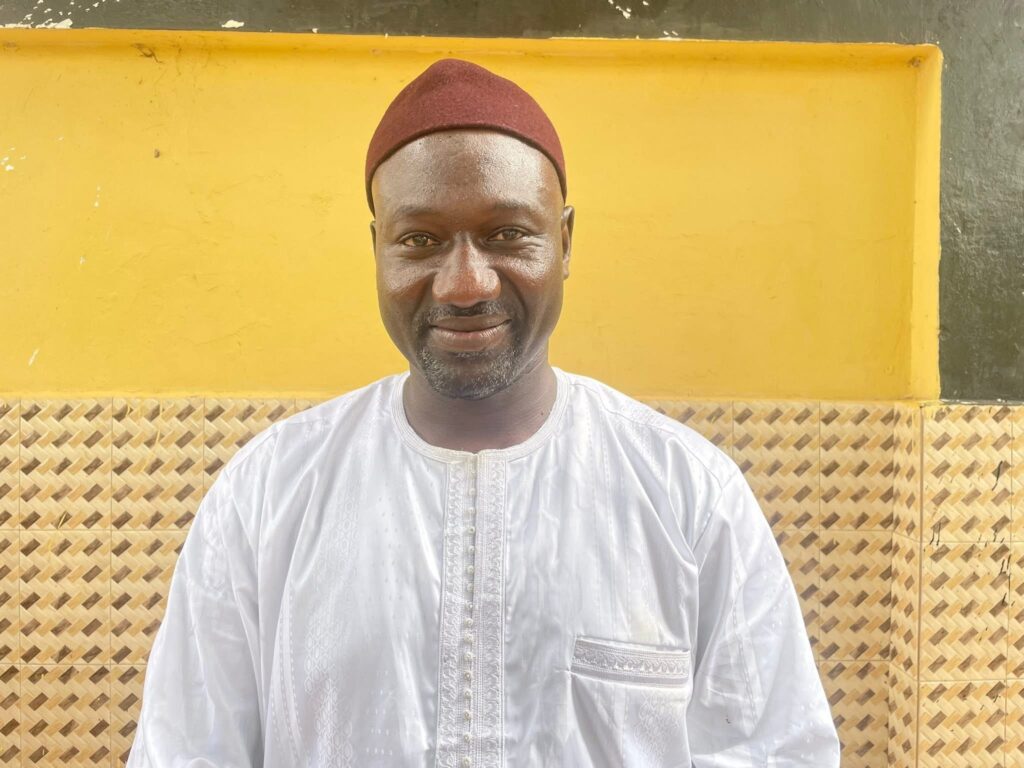
By Fatou Sillah
Sulayman Saho, a National Assembly member for Central Badibou and organizing secretary of the United Democratic Party, on Friday sharply criticized President Adama Barrow’s State of the Nation Address, arguing that it failed to reflect the economic and social realities facing Gambians.
In an interview with Kerr Fatou, Mr. Saho dismissed key elements of the president’s speech, including official figures on economic growth and inflation, and questioned the government’s account of progress across several sectors.
He went further, asserting—without providing details—that the next State of the Nation Address would not be delivered by Mr. Barrow but instead by the leader of his own party, ANM Ousainu Darboe.
“The content of the speech does not align with the realities on the ground,” Mr. Saho said. “You talk about GDP growth of 5.9 percent—is that the reality? You say inflation has declined, but prices are skyrocketing.”
Mr. Saho said the government’s economic narrative was at odds with the rising cost of living, which has become a central concern for many households.
He also raised doubts about the impact of government-backed agricultural initiatives, including projects aimed at improving food security. While the president cited progress in the sector, Mr. Saho said tangible results were not evident.
“We need to see the outcomes,” he said. “Farmers are still struggling to access seeds and fertilizers. Food security is not what is being portrayed.”
The lawmaker further criticized the government for what he described as a lack of transparency on fiscal measures, including a recent tax increase. He said the administration had not adequately explained the rationale behind the policy to the public.
“There are leakages in the system, and the recent tax increment was not properly justified,” he said.
Mr. Saho also questioned the state of the country’s health care system, acknowledging the construction of new facilities but arguing that many lacked the staffing and equipment necessary to function effectively.
“When you call something a hospital, it should meet certain standards,” he said. “The buildings alone are not enough.”
Comments are closed.