

NDP Leader Condemns Tribalism, Questions Alleged Arrest of Soldier Who Visited Him
By Seedy Jobe
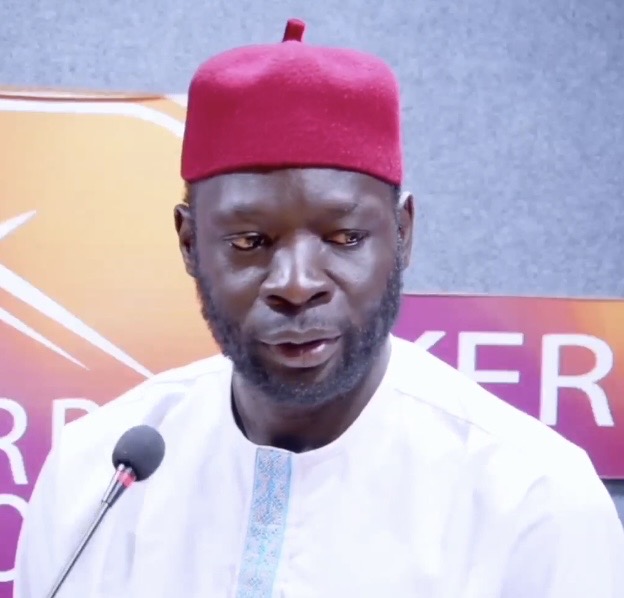
Kebba Madi Bojang, leader of the National Democratic Party, has condemned the use of tribal rhetoric in Gambian politics and called for the release of a soldier he said was arrested after visiting his residence.
Mr. Bojang made the remarks during his party’s weekly stakeholders’ engagement at his home in Jambur.
Addressing tribalism, Mr. Bojang said ethnic rhetoric has no place in Gambian politics, arguing that the country’s communities and families are too deeply interconnected for such divisions to serve any constructive purpose.
He said family and community relationships frequently cut across ethnic lines, making tribal rhetoric not only divisive but also likely to hurt people with close personal and familial ties. He added that he deliberately distances himself from people who promote tribalism.
Mr. Bojang also criticized President Adama Barrow’s Meet the People Tour, saying it should focus on the everyday concerns of Gambians, including their rights, livelihoods, and the effectiveness of government programs.
He argued that the tour should not be used as a platform for political self-promotion or campaigning ahead of the 2026 presidential election.
The NDP leader also raised concerns about what he described as the unjust arrest of a soldier, whom he identified as Sulayman Kurang.
According to Mr. Bojang, Mr. Kurang visited his residence seeking financial assistance with his child’s school fees. He said the soldier arrived in uniform, as he had done on several occasions when Mr. Bojang was still a member of President Barrow’s National People’s Party.
Mr. Bojang alleged that someone photographed Mr. Kurang entering his compound and that the soldier was subsequently arrested after reporting for duty. He said he was unaware of any clear justification for the alleged arrest.
The circumstances surrounding Mr. Kurang’s reported detention could not be independently verified, and Mr. Bojang did not specify what charges, if any, had been brought against him.
Mr. Bojang questioned whether his move to the opposition meant that members of the security services who are relatives, friends, or acquaintances of opposition figures could no longer associate with them.
“When I was in the NPP, that man always came here in uniform, but at that time he was not arrested,” Mr. Bojang said. “When I was in the NPP, soldiers and police always came here in their uniforms, and I never heard of any of them being charged.”
He appealed to the Chief of Defence Staff to intervene in the matter and secure Mr. Kurang’s release, warning that incidents of that nature could undermine public confidence in the armed forces.
Mr. Bojang said he decided to speak publicly about what would ordinarily be a private matter because he believed the soldier had been treated unfairly. He urged the military leadership to safeguard the public’s confidence in the institution and ensure that security personnel are treated fairly regardless of their personal associations.
Comments are closed.