


By Makutu Manneh
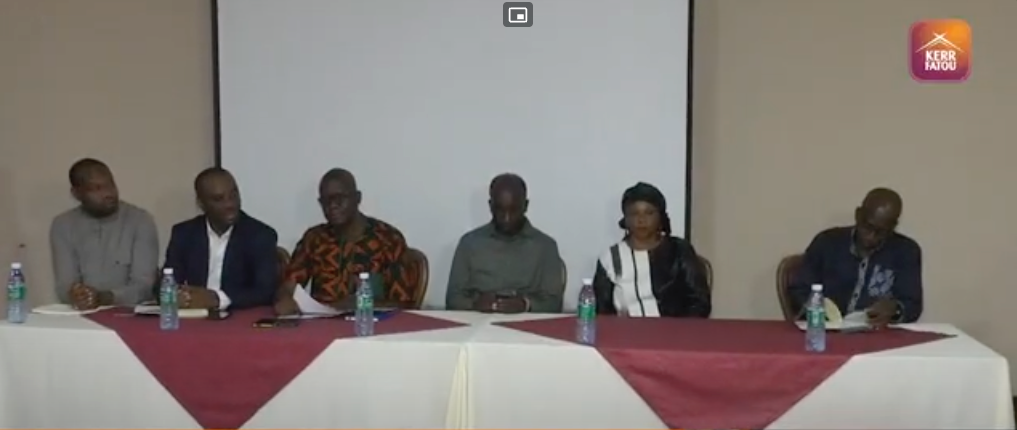
The Ministry of Health, in collaboration with the World Health Organization (WHO) Country Office, has launched a three-day capacity-building training for members of The Gambia’s National Immunization Technical Advisory Group (NITAG).
The initiative aims to strengthen NITAG’s ability to deliver evidence-based recommendations on immunization policies and practices, ensuring national decisions remain scientifically sound and responsive to the country’s health needs.
Speaking at the opening, the WHO representative praised The Gambia’s leadership in immunization performance across the subregion, stressing that NITAG’s role is pivotal in making immunization decisions that are both context-specific and scientifically rigorous.
“I have been informed and hope that the NITAG can convince me that you have excellent potential to excel in your work, including supporting other countries in the region,” he said.
He cited recent exchanges where Uganda’s country cooperative mechanism visited The Gambia to learn best practices, underscoring the country’s influence despite its size.
“A few months ago, the country cooperative mechanism of Uganda came to the Gambia to learn how to run a country cooperative mechanism. So don’t look at how small you are; you have what it takes,” he explained.
Dr. Alieu Sowe, Director of Public Health Services, highlighted the importance of self-assessment in NITAG’s work. He emphasized that the development of a standardized assessment tool would help identify strengths and weaknesses while providing a framework for continuous improvement.
“So these three days we should utilize to the maximum possible we can. The Gambia is the first country to prove that measles transmission can be interrupted through vaccination, and this was in 1967. And since then, a lot has been registered,” Dr. Sowe said.
Sidat Fofana, Program Manager of the Expanded Programme on Immunization, highlighted the resilience of the body, noting that although NITAG had been established earlier, its operations were significantly impacted by the COVID-19 pandemic and the CVDP initiative. He expressed optimism that the training would revitalize its work.
“So today we are here to orient the new NITAG members, so that makes it very important for us,” Fofana stated.
NITAGs are crucial in bridging global immunization guidance with local realities. Comprising independent national experts, these groups provide recommendations tailored to country-specific needs, ultimately fostering public confidence in vaccines, protecting lives, and advancing stronger public health outcomes.