

Rohey Malick Lowe, Mayor of Banjul
By Seedy Jobe
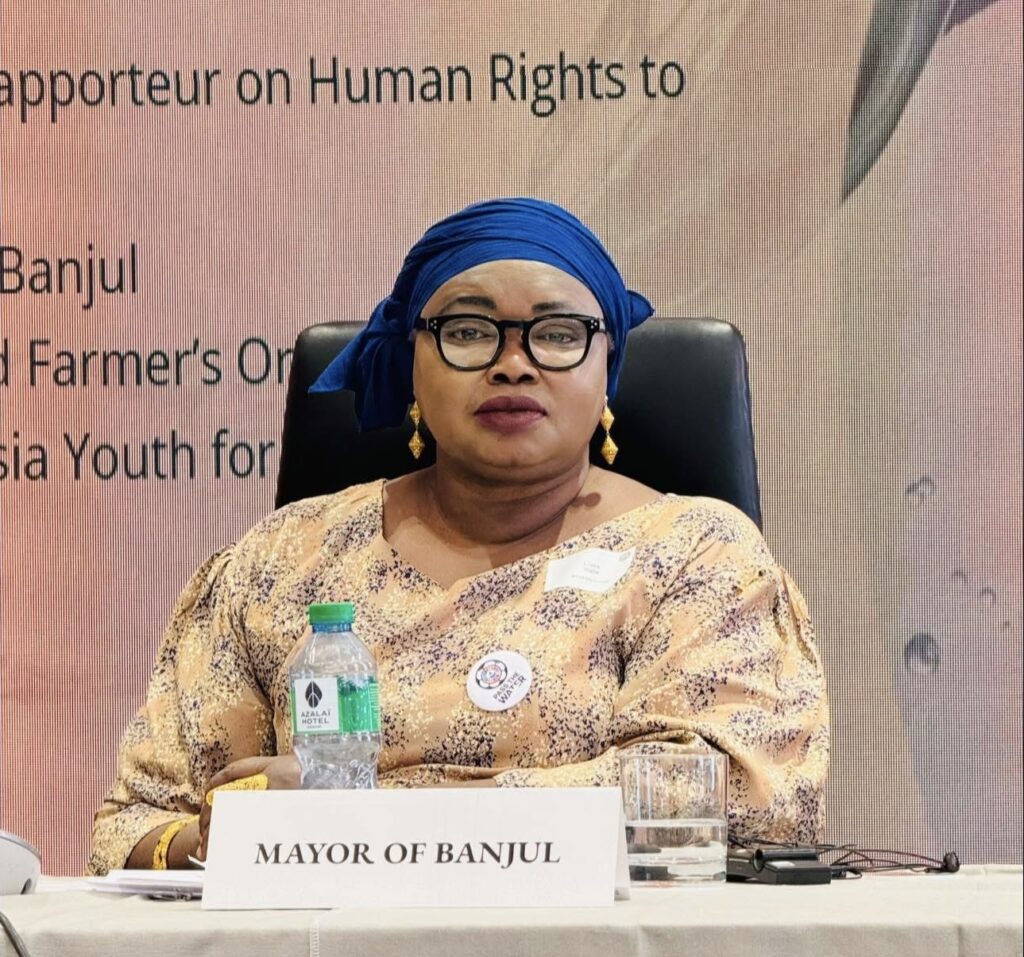
At the 2026 United Nations Water Conference on Sunday, Mayor Rohey Malick Lowe of Banjul called for a more inclusive and participatory approach to global water governance, arguing that responsibility for water management must begin at the local level.
Speaking during what she described as a “critical session” of the conference, Mayor Lowe said that while water challenges are global in scope, their most immediate consequences are felt in cities and communities. In a statement later shared on her Facebook page, she emphasized the need to elevate the role of local governments in shaping water policy.
“As Mayor of Banjul, I brought the voice of local governments to the global stage because water governance is not just a global issue, it is a local responsibility,” Lowe said.
Mayor Lowe outlined three principles she said were essential for meaningful inclusion of local authorities in international water discussions: participation should begin well before global conferences convene; it must be directly linked to implementation on the ground; and it should be sustained through continuity and trust beyond a single event.
She argued that local governments should be treated as decision-makers rather than merely implementers of policies developed elsewhere, noting that municipal leaders confront water delivery challenges and public health risks on a daily basis.
“I called for moving from consultation to co-decision and from declarations to real governance. Because when global water decisions fail, it is our communities that feel the impact first”, she noted
Mayor Lowe also underscored water’s fundamental importance, describing it as a human right, a public service, and a shared resource that must be governed in the public interest. Effective governance, she said, begins at the local level.
“Water, I emphasized, is a human right, a public service, and a shared resource. It must be governed in the public interest and that starts at the local level.”
She concluded with a call for the conference to go beyond symbolic inclusion.
Comments are closed.