

Former Bar Association Leader Says President Barrow’s Comments Risk Undermining Judicial Independence

By Fatou Sillah
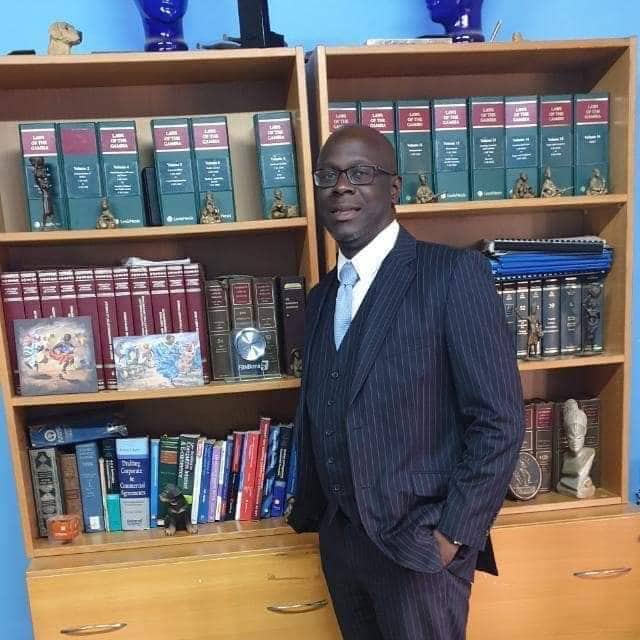
Lawyer Salieu Taal, the former president of the Gambia Bar Association, cautioned that recent remarks by President Adama Barrow regarding the high-profile double murder trial of Ousainou Bojang could erode public trust in the country’s judiciary.
In an interview with West Coast Radio, Mr. Taal emphasized the weight of presidential statements in shaping public perception. “What the president says carries a lot of weight; people listen to him,” he said.
He warned that such comments could compromise the perceived independence of the courts. “It’s just that, for one, there’s the optics of it; it really undermines the confidence in the judicial system. Because for the average man in the street, they don’t understand the distinction between the role of the president and the role of the judiciary, what the president says carries a lot of weight; people listen to him,” he added.
Mr. Taal called on President Barrow to retract his statements, arguing that they were inappropriate given the judiciary’s reputation.
“I believe that statement ought not to have been made, especially by him, and I think it should be retracted and put in context because one of the things that Gambia is now known for is having a very independent judiciary,” he said.
He stressed that legal determinations of guilt or innocence are solely the domain of the courts. “It is only a judge or court of law that can pronounce guilt or innocence,” he said, noting that the delivery of the Bojang verdict had been a testament to the judiciary’s independence and the country’s commitment to the rule of law.
“When the judgment was delivered, that was a testimony to the independence of our judiciary. It was a testimony to the fact that Gambia is a country that respects the rule of law,” he said.
Mr. Taal also urged the Attorney General’s Chambers and the courts to proceed without external interference. “The Attorney General’s chambers can handle the case, and the courts will decide either way whether a person is guilty or innocent, but it’s not up to the president,” he said.
Comments are closed.